

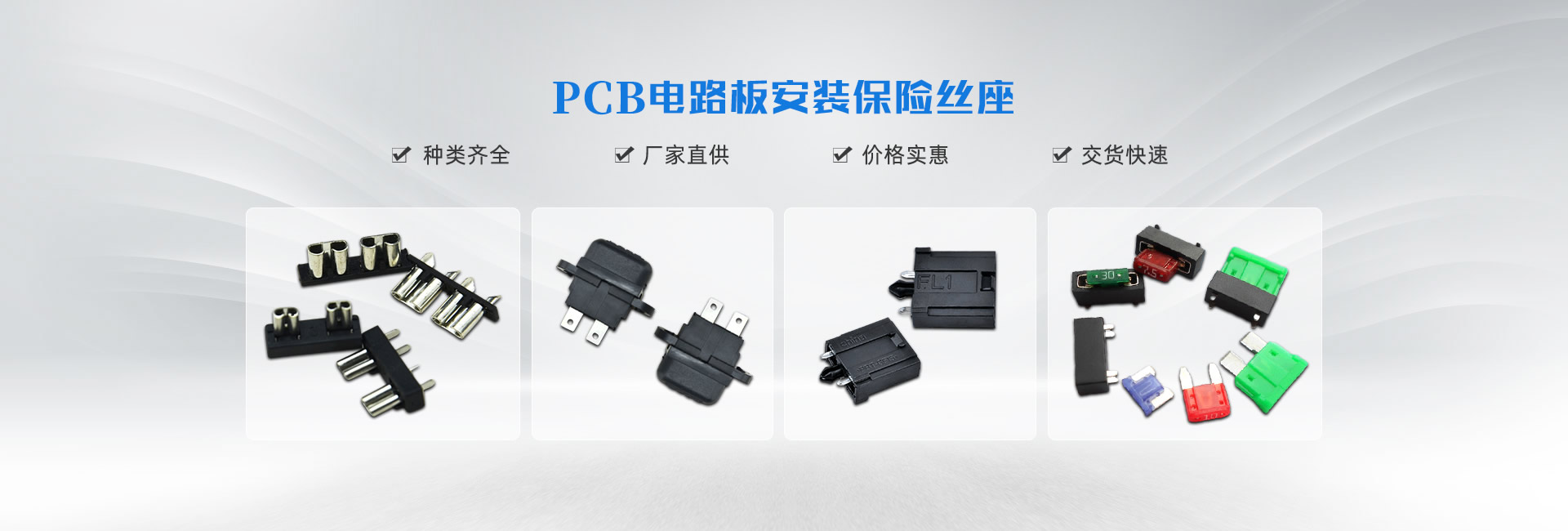
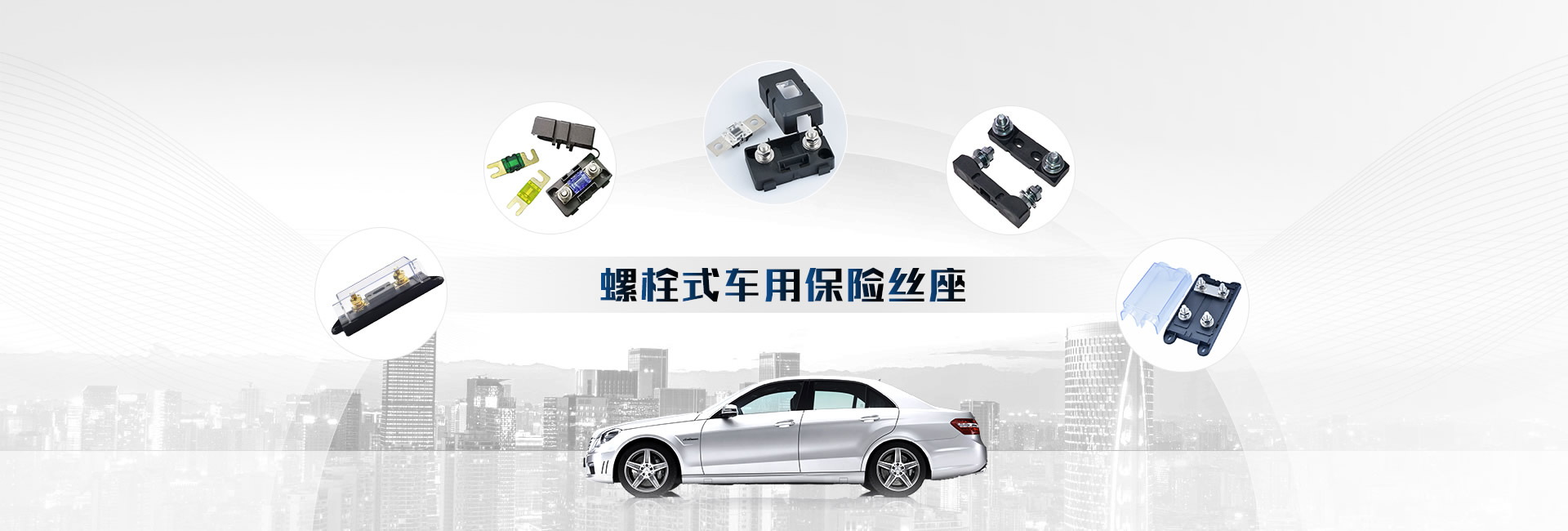

The fuse holder primarily refers to the base installed within a fuse, which can be mainly categorized into: wire-type fuse holders, panel-type fuse holders, and automotive fuse holders, among others. The panel-type fuse holder is commonly used in electrical equipment such as amplifiers, speakers, and massage chairs. Wire-type fuse holders are often found in small household appliances, primarily for connections or wiring harnesses in industrial machinery. Automotive fuse holders are mainly divided into wire-type and panel-mounted automotive fuse holders, with their usage scenarios differing significantly. Any type of fuse holder is highly resistant to current and voltage, and also has a high fire rating, typically requiring relevant certifications.
The structural improvement of the fuse holder primarily refers to the display condition of the fuse, without the need for replacement. It involves self-resetting fuse holders, which first connect multiple intercommunicating screw holes to a single conductor, securing each hole with a screw, or connecting multiple intercommunicating screw holes to a second conductor through the socket, securing each hole with a screw. Each connection is made electrically to the single conductor, and to the second conductor via a self-resetting fuse, which is conceptually equivalent. The only change is an appropriate structural improvement to ensure the fuse holder's usability.
