

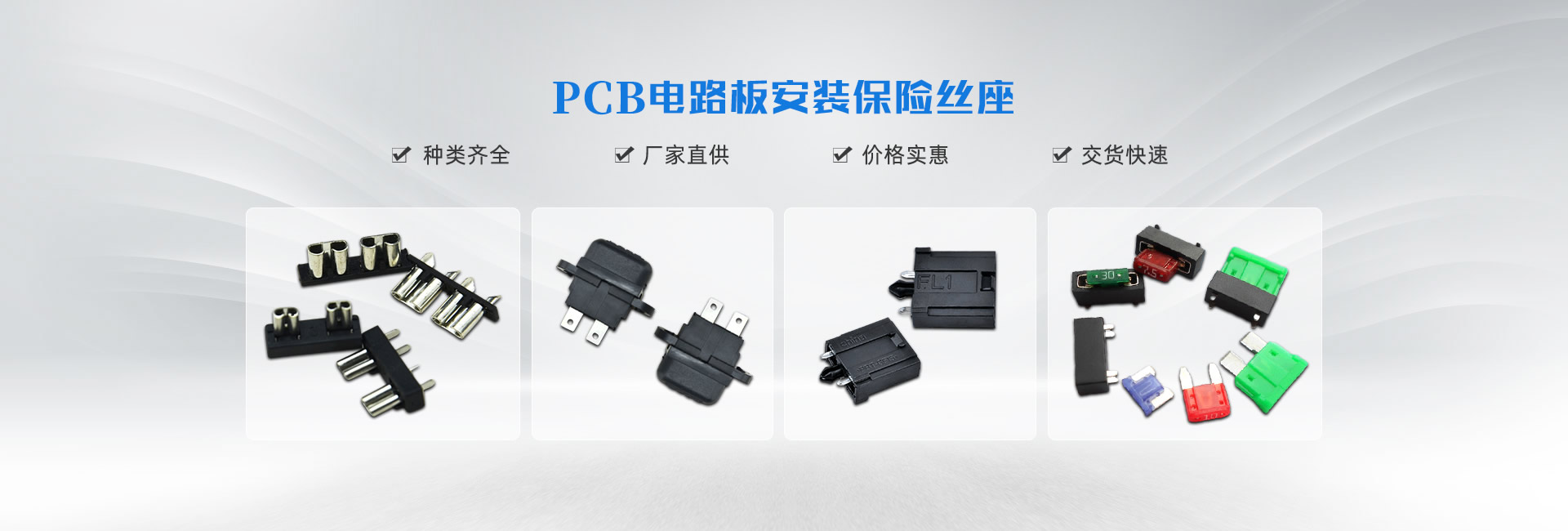
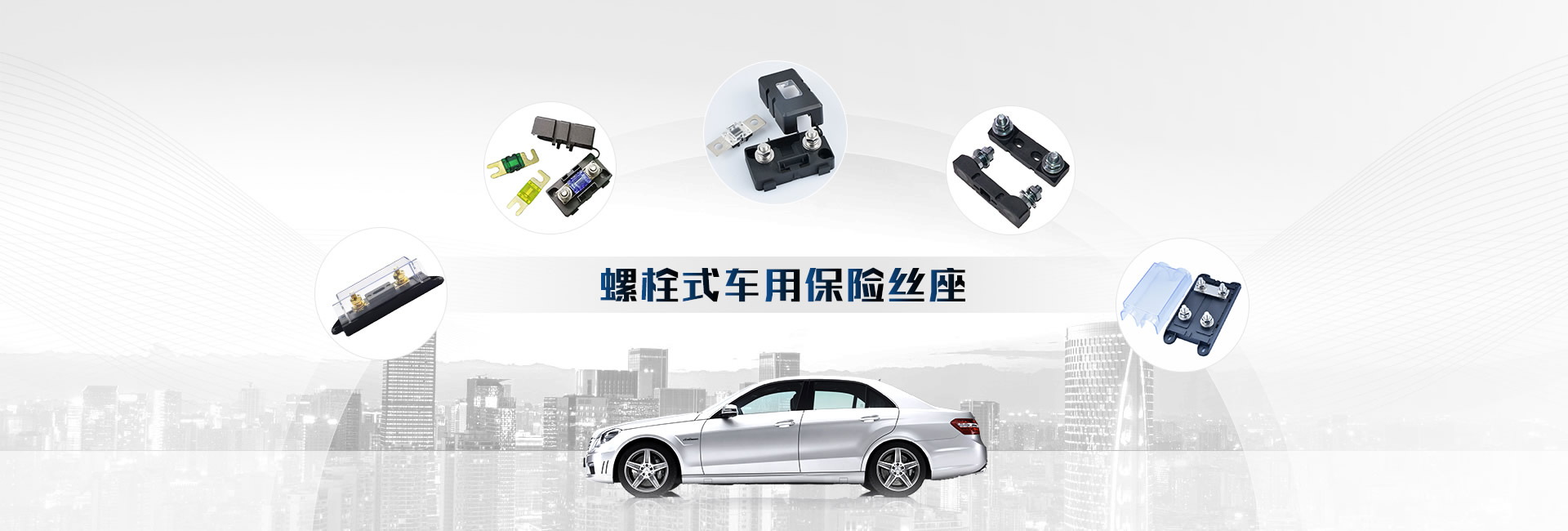

Regarding the fuse holder in ensuring and enhancing its stability, we must understand the challenges of the sealed fuse arc, as its contact conversion capability will decrease, leading to a higher driving voltage. Moreover, we can intensify the contact cold adhesion, which will expose the internal plastic, as well as the aging of insulating materials and metal components.
The following pertains to the technology of fuse holders for automotive applications, focusing on enhancing their stability. We can achieve this by increasing the contact surface film resistance to mitigate contact oxidation erosion, or by controlling temperature variations to address the functional requirements of the fuse holders.
Firstly, high temperatures accelerate the fuse holder chamber. Therefore, it is imperative that we strictly adhere to the PCB design specifications before use, as directly inserting fuses into the car fuse socket is incorrect. Moreover, it is crucial to design the PCB within its operating temperature range. The fuse socket must never be placed near a heat source.
In light of the aforementioned situation, we can temporarily suppress the resistive and capacitive circuit at both ends of the circuit, or just the resistor, or even a diode. Typically, in electrical engineering, when frost forms on the surface or when condensation or cold patches appear on the衔铁 surface, it can affect the normal conduction of the connection.
In these circumstances, we must ensure that the relay coil of the fuse box exists in a "transient" state, and the voltage peak limit must be set within a certain range, typically in kilovolts.
Regarding fuse holders, it's important to know that surge voltages can be applied to both fuses and power systems. This way, when other devices generate loops and energy storage functions, the coil inserted into the car fuse holder is disconnected, allowing the stored induced electromotive force to produce a voltage several times higher.
