

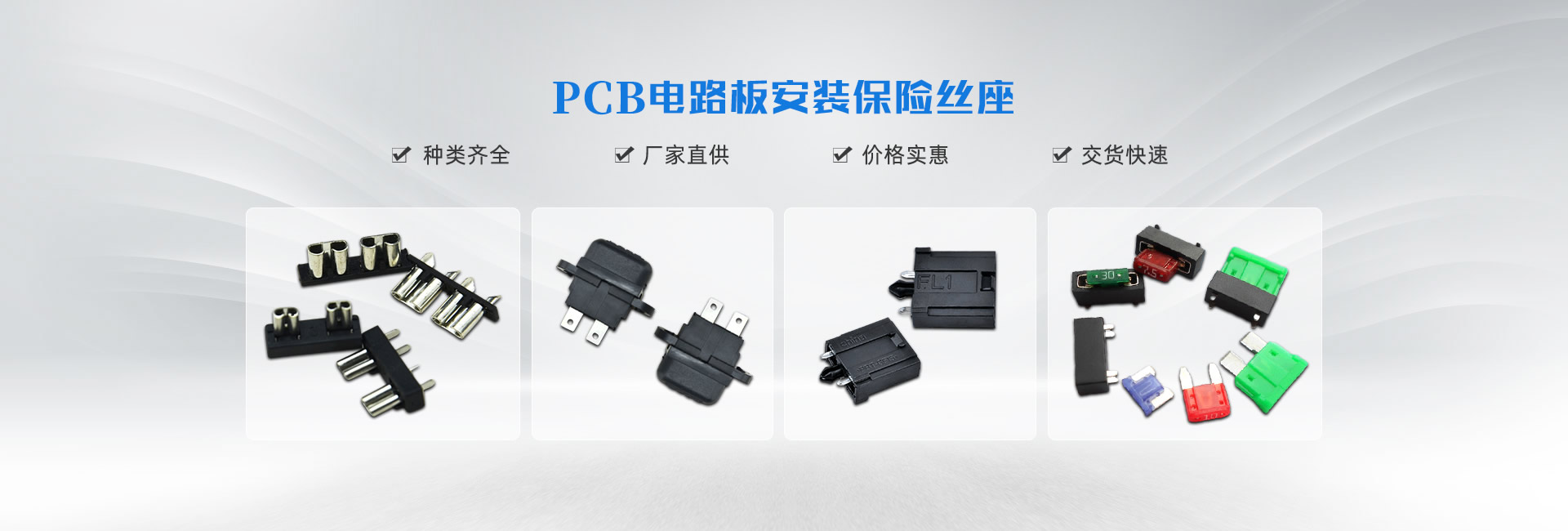


During operation, the main function of the automotive fuse holder is to effectively monitor the increasing current when a circuit fault or abnormal condition occurs. The rising current within the device may potentially damage certain important or valuable components within the circuit.
An increased current in the fuse box can very likely damage the circuit or even cause a fire. Our products are not susceptible to current damage during use and can also prevent severe harm to electronic devices caused by internal failures. Therefore, each fuse has a rated specification, and it will melt when the current exceeds this specification.
The fuse holder ensures that the fuse is correctly installed in the circuit. In the event of an abnormal surge in current reaching a certain level, the fuse within the device will melt and break the circuit, thereby protecting the safe operation of the electrical system. As everyone knows, fuses serve a protective function.
The circuit of the fuse holder assembly for the car uses a plastic-copper core soft wire with a rated current of 3 amperes. The fuse has a rated current of 1 ampere and a breaking current of 2 amperes. Excluding the small light bulb, a heating wire with approximately 2 ohms resistance is connected between points I and J. Therefore, when the power supply voltage is 6 volts, the circuit current should be 3 amperes. Upon turning on switch K, the fuse should melt.
The fuse holder's circuit is in normal condition; a fuse is akin to a wire or the circuit is faulty. The fuse serves as a protective device,串联 in the circuit, which can automatically disconnect the power before the current reaches a dangerous level, preventing accidents from occurring when the circuit is faulty.
