
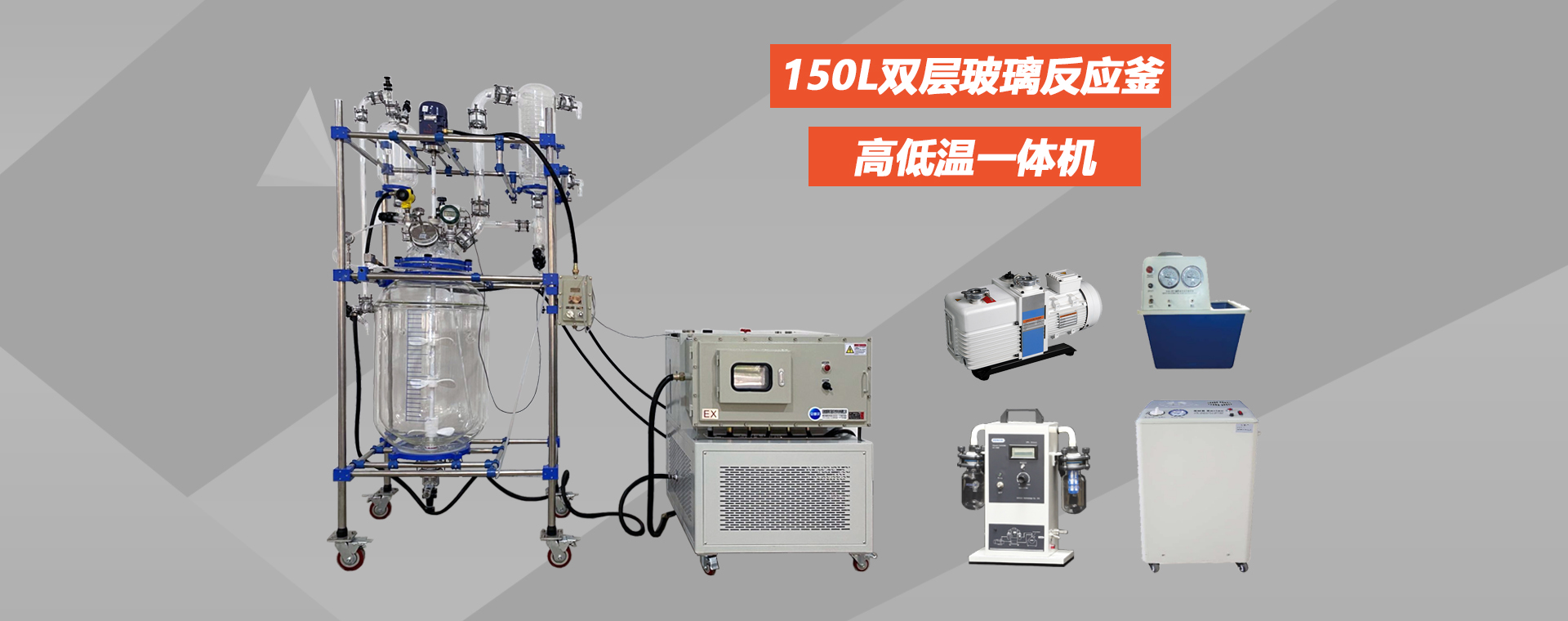
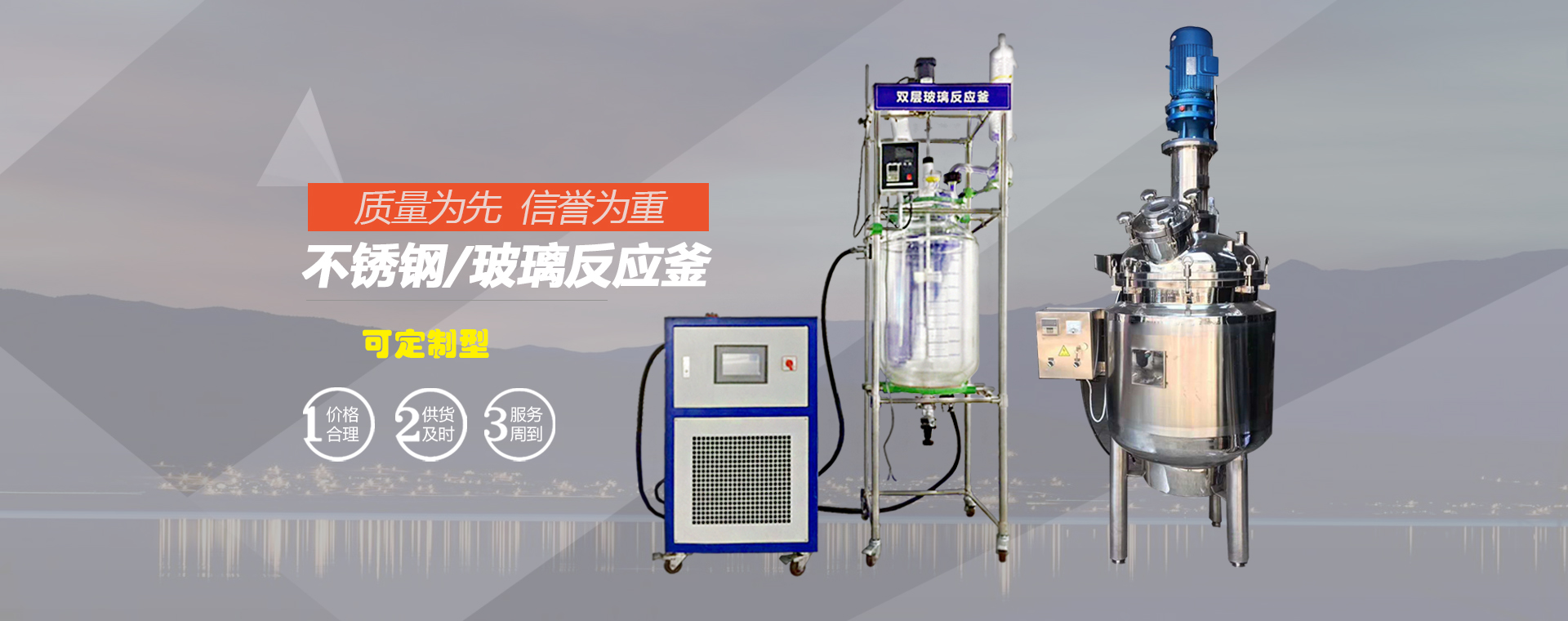

Double-layer glass reactors equipped with temperature control systems are also known as tank reactors, trough reactors, or kettle reactors. They are used to achieve liquid-phase single-phase reaction processes and multi-phase reactions such as liquid-liquid, liquid-gas, liquid-solid, and gas-liquid-solid. The operation allows for easy control of temperature and concentration, resulting in uniform product quality. In chemical production, they are suitable for both batch and continuous processes; they can be operated individually or in series. However, they have the drawback of requiring a larger volume when applied in processes with high conversion rates. Typically, tank reactors are widely used under milder operating conditions, such as at atmospheric pressure, with lower temperatures below the boiling point of the material.
The double-layer glass reactor with a fixed bed reactor equipped with a temperature control system refers to a device where fluid reacts through a bed of stationary solid material. Fixed bed reactors for gas-solid reactions are common. The bed of a fixed bed reactor is thin, with low flow rates, and the axial flow of fluid within the bed can be considered ideal plug flow, thus leading to a faster reaction rate. Consequently, the amount of catalyst and the volume of the reactor required to complete the same production task are smaller. The fluid residence time in the reactor's temperature control system can be strictly controlled, and the temperature distribution can be appropriately adjusted, which is beneficial for improving the conversion rate and selectivity of the chemical reaction. Catalysts in the fixed bed are less prone to wear and can operate under high temperature and high pressure conditions.
Double-layer glass reactors, equipped with temperature control systems, have fine solid particles carried by the flowing fluid, which exhibit the property of free flow like a fluid, a phenomenon known as fluidization of solids. Combining the reactor with the solid catalyst particles in a fluidized state, a fluidized bed reactor is formed. Fluidized bed reactors are commonly used in gas-solid reaction processes.
The tubular reactor, equipped with a double-glazed reaction kettle and a temperature control system, is primarily used for gas-phase, liquid-phase, and gas-liquid phase continuous reaction processes. It consists of a single tube (either straight or coiled) or multiple parallel tubes. Typically, it features a jacket or shell-type heat exchanger. The tubular reactor boasts a large heat exchange area, making it suitable for reactions with significant heat effects. It features fast reaction and flow rates, resulting in high production efficiency. The structure is simple and compact, with high strength, excellent corrosion and impact resistance, long service life, and ease of maintenance.
