
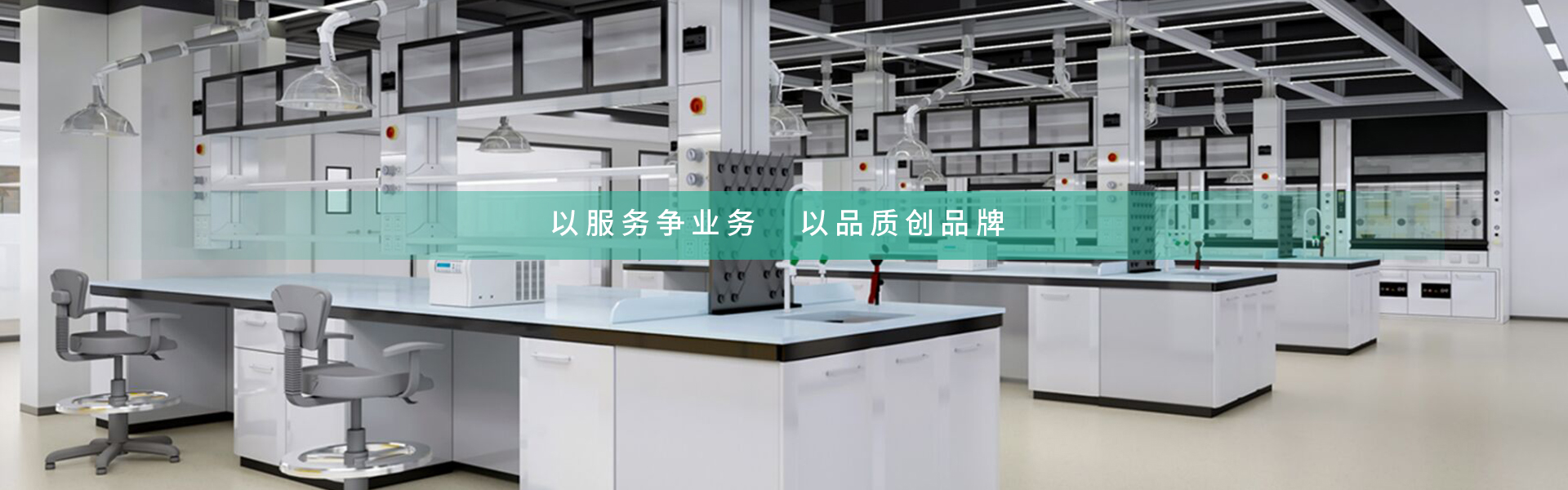


The design and planning of laboratories, including fume hoods, lab benches, ventilation systems, and their配套设施, involve new construction, expansion, or renovation. It's not just about purchasing appropriate equipment; it's also about considering the overall planning, rational layout, flat design, as well as infrastructure such as power supply, water supply, air distribution, ventilation, air purification, safety measures, and environmental protection. Today, we'll delve into the seven core aspects that must be considered in laboratory design, offering you effective help in understanding laboratory design!
Lab Size and Equipment Arrangement:
Prior to constructing the lab, the placement of equipment should be determined based on the lab's workflow, and the locations for power outlets and water supply/drainage connections should be planned. The required area for each zone should be determined according to the number and placement of the equipment, effectively dividing the lab to maximize space utilization. When positioning the equipment for convenience, ground load-bearing issues should also be considered. Equipment manufacturers should provide weight data for the instruments and consult with the structural engineer of the construction party. The equipment procurement bidding for this room was completed before the lab's design and construction. Each piece of equipment's positioning design is precise and accurate, with power cables, network cables, and water supply/drainage pipes exposed on the ground for a very short distance, ensuring both safety, aesthetics, and space-saving.
2. Laboratory Power Supply Design:
It is recommended to equip the lab with a high-power uninterruptible power supply (UPS) to protect all lab equipment. Individual power protection for each device is not easy to maintain and wastes space. The power and current parameters of the UPS should be determined based on the lab equipment's specifications. Attention should be given to the selection of the UPS, ensuring ample room for the lab's future development. The recommended load power should be twice the total power of the existing instruments. Electrical outlets can be designed to be mounted on walls or on the ground. Ground outlets should have some waterproofing capabilities, and the outlets should be positioned close to the equipment they supply to minimize ground wiring and keep the lab cleaner. Due to the noise from continuous power supply, a separate power room has been set up at the back of the lab, and a dedicated air conditioner has been installed indoors.
3. Lab Drainage and Water Supply Design
In order to determine the appropriate water treatment equipment based on the required volume and purity of pure water for full operation of all devices, sufficient space for the selected equipment's water treatment capacity should be allocated. In the design of this room, the noisy air pumps (providing gas pressure for the automated assembly line) and pure water treatment instruments are housed in a separate water treatment room located behind the central laboratory. The anti-leakage piping of the pure water instruments is directly connected to the laboratory's drainage system, and a water aspirator is set up within the machine room.
Pumps are conveniently located for handling certain levels of leakage. Additionally, two underground grooves are set along the axis of the laboratory instruments, with all supply and drainage pipes laid underground.
4. Laboratory Temperature and Humidity Requirements:
In accordance with the instructions, we have compiled the temperature and humidity requirements for each piece of equipment in the statistical automation laboratory. If there is no specialized equipment, the temperature requirement for the inspection department's instruments is generally 18-30°C, with humidity ranging from 20%-80%. The air conditioning system in the clean laboratory is more than sufficient to meet these requirements, allowing the temperature in the automation laboratory to be controlled around 24°C and the humidity between 30%-45%.
5. Laboratory Lighting and Noise Control Design
In accordance with the "Technical Code for Construction of Biosecurity Laboratory," the illumination in a BSL-2 laboratory must be no less than 300 lux, and the noise level must not exceed 68 dB (6). Prior to the interior decoration, the contractor was informed of the laboratory's illumination requirements. After construction, the laboratory's illumination was approximately 285-319 lux, with the core work area's illumination around 375-384 lux, which generally meets the construction standards for BSL-2 laboratories. After implementing measures such as independent water and electricity supply, the laboratory's environmental noise significantly decreased, particularly in the relatively independent core work area, where the measured decibel levels were consistent with those of general examination rooms.
6. Communication Interface Issue:
Ensure sufficient phone jacks, LAN ports, and Internet connections are reserved in the lab. The network connections for the automated production line are complex. Before installation, discuss with the manufacturer's engineers to accurately determine the locations of the network interfaces. After installation, organize and tidy up the network cables to maintain a clean and aesthetically pleasing lab environment.
7. Laboratory Preparation Progress:
The establishment of an automated laboratory is a comprehensive project. In addition to hardware construction, pre-installation preparations such as the application and improvement of LIS, integration with the information system, standardized barcode printing and粘贴, bidirectional instrument transmission, and training for relevant personnel must be completed.
