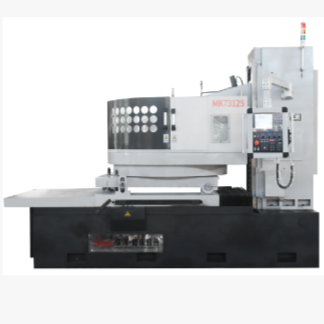
Bed-Type Planer Milling Machines, Vertical-Axis Planer Mi...

The cutting parameters of the milling machine mainly include the following aspects:
Cutting Speed (Vc)
Definition: The main cutting speed of the cutting edge relative to the workpiece, typically expressed in meters per minute (m/min).
Impact: Cutting speed directly affects cutting heat, cutting force, and surface roughness. Excessive cutting speed can lead to increased cutting heat, workpiece deformation, and decreased surface quality; conversely, insufficient cutting speed may reduce processing efficiency.
Feed Rate (F)
Definition: The feed rate of a cutting tool relative to the workpiece over a unit of time, typically expressed in millimeters per minute (mm/min) or millimeters per revolution (mm/r).
The impact: Feed rate determines the thickness of the cutting layer and the size of the cutting force. Excessive feed rate may lead to increased cutting force and decreased surface quality of the workpiece; conversely, a slower feed rate may prolong the processing time.
Cutting Depth (ap)
Definition: The size of the cutting layer perpendicular to the cutting edge, usually expressed in millimeters (mm).
Impact: The cutting depth determines the contact area between the cutting edge and the workpiece, as well as the magnitude of the cutting force. Excessive cutting depth may result in increased surface roughness of the workpiece or even cracking; conversely, insufficient cutting depth could reduce processing efficiency.
Every-tooth Feed Rate (AF or FZ)
Definition: The relative displacement between the workpiece and the milling cutter per tooth rotation, typically expressed in millimeters per tooth (mm/z).
The influence: The feed per tooth directly affects the cutting force and heat. An excessive feed per tooth can lead to a dramatic increase in cutting force, exacerbating tool wear; conversely, a too small feed per tooth may reduce processing efficiency.
Spindle Speed (n)
Definition: The rotational speed of the milling spindle, typically expressed in revolutions per minute (r/min).
The spindle speed is closely related to the cutting speed, affecting cutting heat, cutting force, and surface roughness. Both excessively high or low spindle speeds can adversely impact the quality of the finished product.
Tool Diameter (dd)
Definition: The diameter size of a milling cutter, usually expressed in millimeters (mm).
The diameter of the cutting tool affects the contact area between the cutting edge and the workpiece, as well as the magnitude of the cutting force. Choosing the appropriate tool diameter helps improve processing efficiency and surface quality.
Select according to material characteristicsDifferent materials exhibit varying properties such as hardness, toughness, and thermal conductivity, necessitating the selection of appropriate cutting parameters to ensure processing quality and efficiency.
Select Machining Centers Based on PerformanceMachine tool power, rigidity, and precision performance limit the range of cutting parameter selection. When choosing cutting parameters, ensure that the machine tool can withstand the load of the selected parameters.
Select based on processing requirementsDifferent requirements for processing accuracy, surface roughness, and processing efficiency necessitate selecting appropriate cutting parameters to meet processing needs.
In summary, the cutting parameters of the milling machine include cutting speed, feed rate, cutting depth, feed per tooth, spindle speed, and tool diameter, among others. When selecting these parameters, a comprehensive consideration is required, taking into account factors such as material characteristics, machine performance, and processing requirements.
b2b.china9.net © Zhongshang 114 Hebei Network Technology Co., Ltd.Address: Room 6009, Oriental New World Center, No.118 East Zhongshan Road, Qiaoxi District, Shijiazhuang City, Hebei ProvincePlatform Service Hotline: 4006299930