Bed-Type Planer Milling Machines, Vertical-Axis Planer Mi...

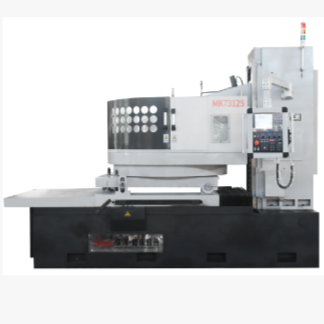
The structure of the卧轴圆台平面磨床 is complex and precise, with its various parts working together to achieve high-precision planar grinding of workpieces. The main structural components include the following aspects:
Bed Frame
The bed is the fundamental component of a grinding machine, typically made from high-quality materials like cast iron, providing ample rigidity and stability for supporting and mounting other parts. The design and manufacturing quality of the bed directly impact the overall performance and processing accuracy of the grinding machine.
2. Workstation
The workbench is a platform for placing and securing workpieces to be machined, typically shaped as circular or rectangular. The workbench can be moved in the front-to-back, left-to-right, and up-down directions to accommodate workpieces of various sizes and shapes. Additionally, the workbench features a workpiece holding device to secure the workpieces, ensuring stability and precision during the machining process.
3. Headstock
The head section includes the abrasive wheel spindle and the driving motor. The abrasive wheel is mounted on the spindle and rotates at high speed through the motor's power. The abrasive wheel comes in various shapes and grit sizes, allowing for selection and replacement based on processing requirements. The design of the head must ensure that the abrasive wheel maintains a stable rotational speed and grinding force during rotation, to achieve efficient and high-precision grinding of the workpiece.
4. Pillar
Columns are critical structures that support and install the grinding head components, requiring a design that ensures the precision and stability of the grinding head's movement in the vertical direction. Columns are typically connected to the bed to form a stable support system.
5. Feeding Mechanism
The feed mechanism includes both horizontal and vertical feed mechanisms. The horizontal feed mechanism is responsible for moving the worktable in the horizontal direction to control the feed rate of the grinding process. The vertical feed mechanism is used to adjust the position of the grinding head in the vertical direction to accommodate the grinding needs of different thickness workpieces. The design of the feed mechanism must ensure accurate control of the feed rate and a smooth processing process.
Hydraulic Systems
The hydraulic system provides power and control for the movement of the worktable, feed of the grinding head, and clamping devices, etc. Hydraulic transmission allows for precise control and adjustment of the various movements of the grinding machine.
Cooling System
During the grinding process, a significant amount of heat is generated. The cooling system cools the grinding wheel and workpiece by injecting coolant, thereby reducing the grinding temperature and preventing overheating, deformation, and burn damage. The cooling system typically includes components such as a cooling water tank, pump, nozzle, and coolant piping.
8. Electrical Control System
Electrical control systems are a vital component of grinding machines, responsible for controlling their various movements and operations. They consist of main controllers, servo drives, encoders, and operator interfaces, among other parts. Through the electrical control system, functions such as motor start-up, shutdown, speed adjustment, and control of various travel and interlock protection can be achieved.
In summary, the structure of the horizontal boring and facing grinder includes several components such as the bed, worktable, grinding head, column, feeding mechanism, hydraulic system, cooling system, and electrical control system. These parts work together to achieve high-precision plane grinding of workpieces.
b2b.china9.net © Zhongshang 114 Hebei Network Technology Co., Ltd.Address: Room 6009, Oriental New World Center, No.118 East Zhongshan Road, Qiaoxi District, Shijiazhuang City, Hebei ProvincePlatform Service Hotline: 4006299930