
Product Details

Main Products: Laboratory wastewater treatment equipment, integrated sewage t...

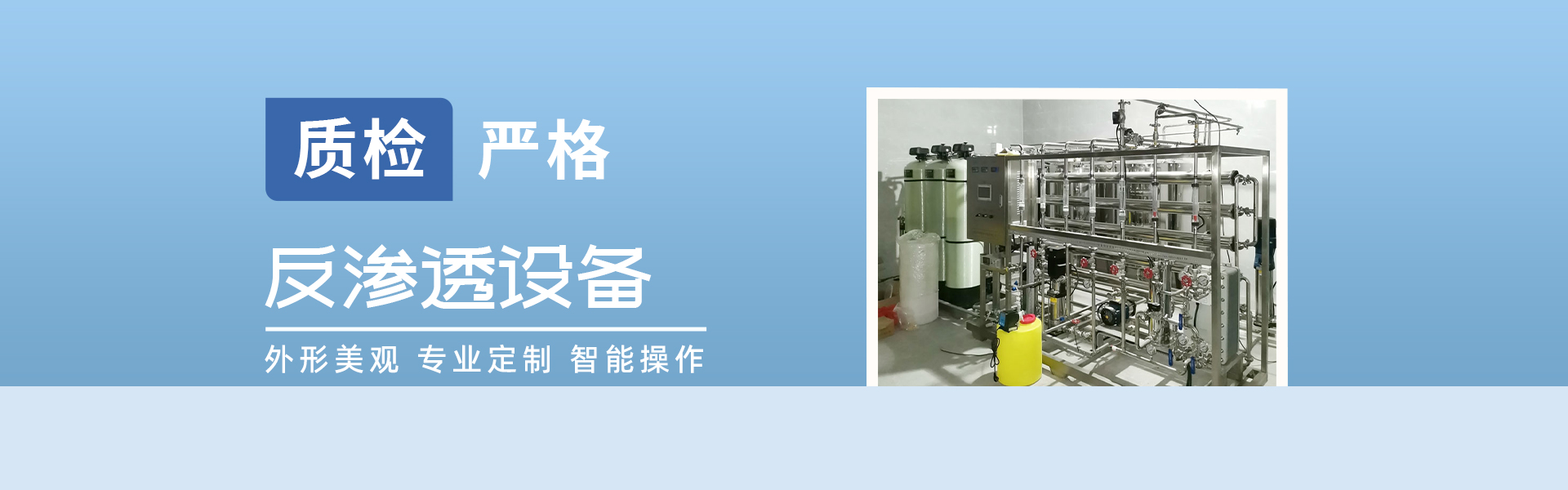
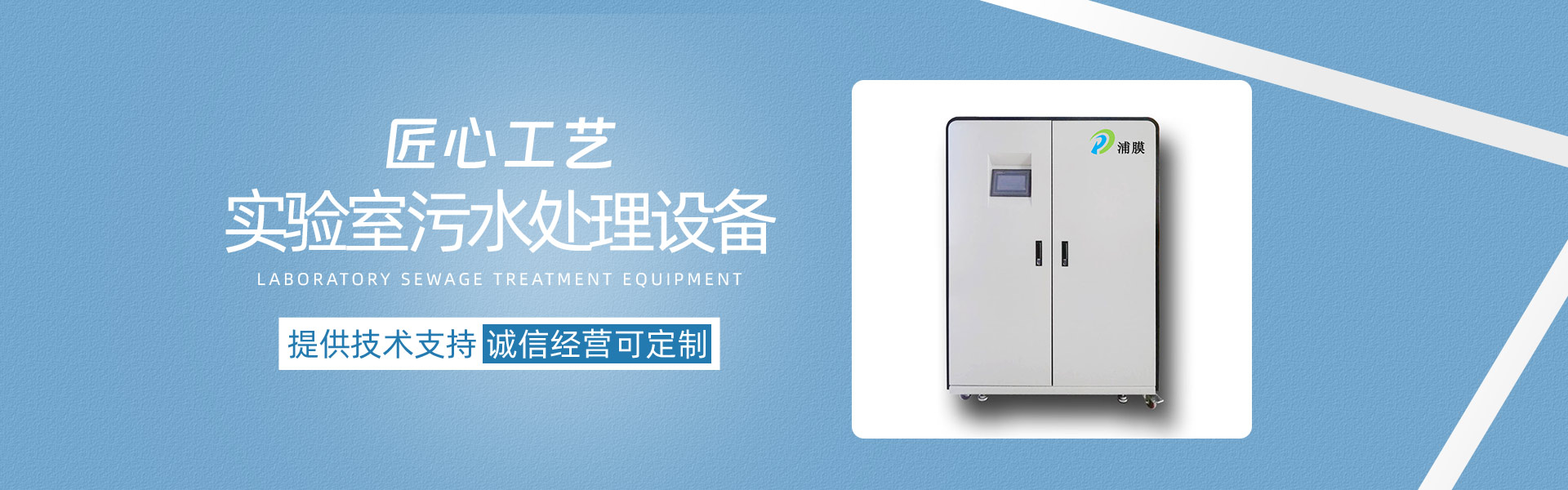
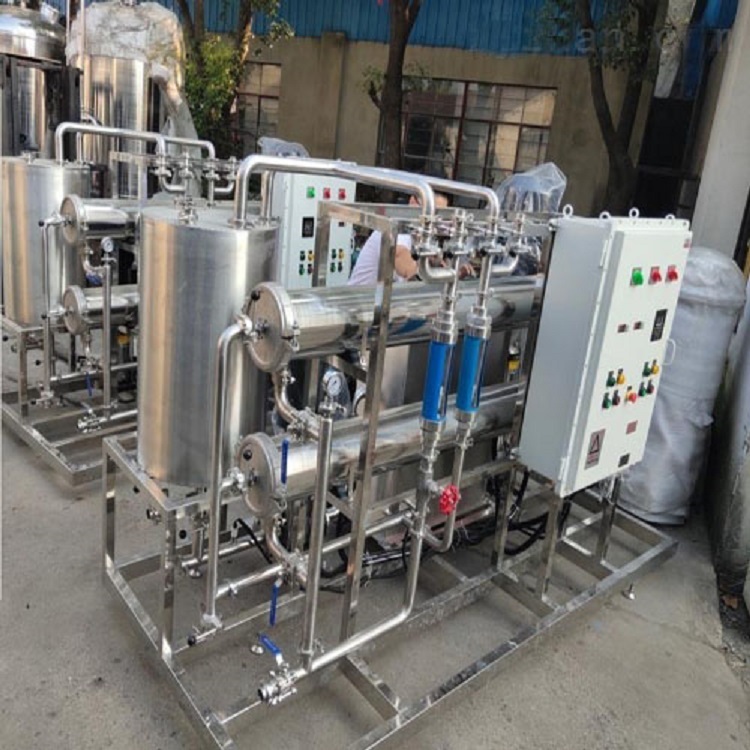
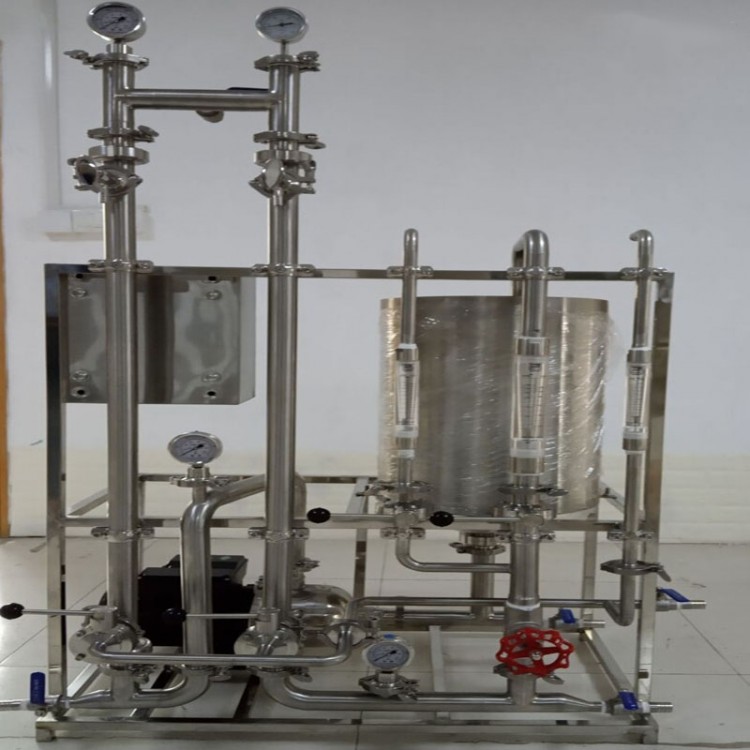
产品Price 38000.00/Set
最小起订Quantity:1 Set 供货总Quantity: 1000 Set


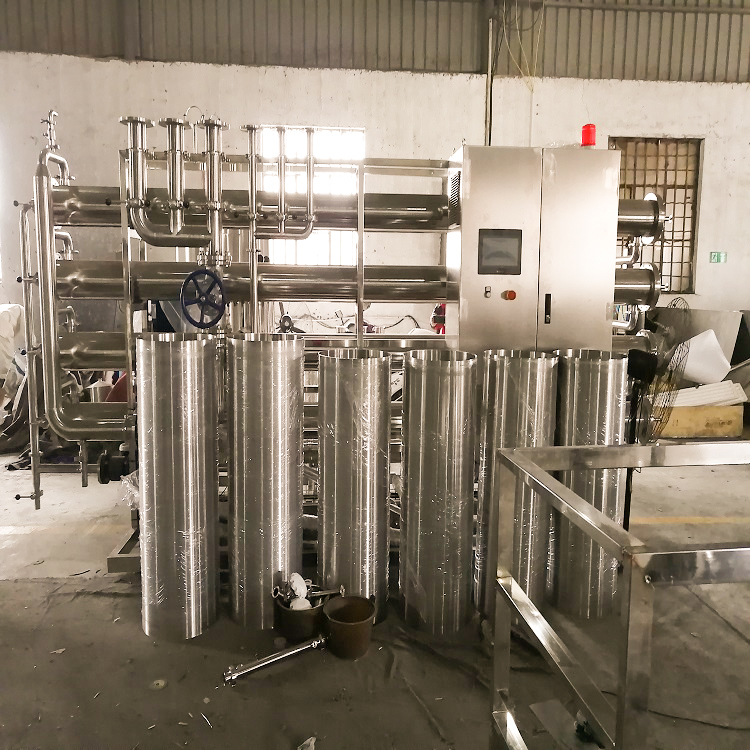
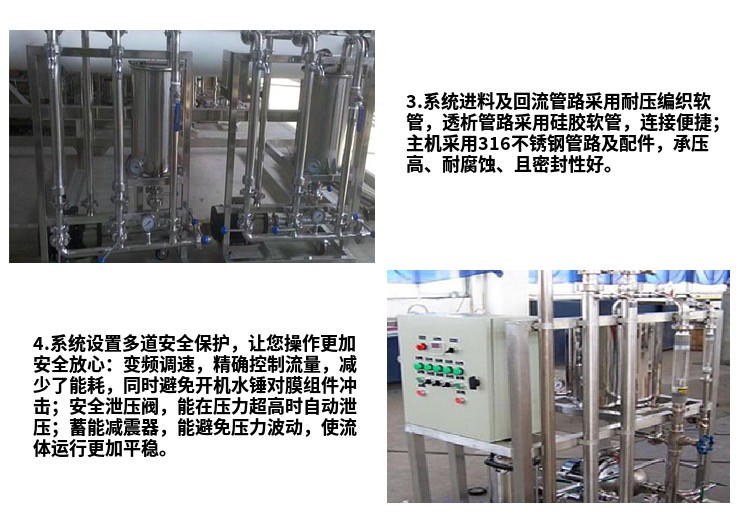
Nanofiltration is a relatively new, molecular-level separation technology that falls between traditional ultrafiltration and reverse osmosis (nicely filling the gap between them), with the nanofiltration membrane having a greater retention rate during the osmosis process.95% of the smallest molecules are approximately 1nm (the average pore size of asymmetric microporous membranes is 2nm), hence the term "nanofiltration." Compared to other membrane separation processes, one advantage of nanofiltration is its ability to retain small molecular weight organic substances that pass through ultrafiltration membranes, while also dialyzing inorganic salts retained by reverse osmosis membranes—effectively allowing simultaneous concentration and desalination. Additionally, under the same external pressure, the flux of nanofiltration is much higher than that of reverse osmosis; and when the flux is constant, the pressure required for nanofiltration is significantly lower than that for reverse osmosis. Therefore, replacing reverse osmosis with nanofiltration allows for a more efficient and rapid concentration process, achieving a higher concentration factor. One,Basic Performance of Reverse Osmosis Membrane: 1. The nanofiltration (NF) membrane lies between the reverse osmosis (RO) membrane and ultrafiltration (UF) membrane. While RO membranes have high desalination rates for almost all solutes, NF membranes are effective for specific solutes only, allowing 20% to 80% of monovalent ions to pass through and removing 90% to 99% of divalent and multivalent ions. NF is an effective alternative to RO for partial desalination. 2. The NF (Nanofiltration) membrane primarily removes solutes with a diameter of about 1mm, retaining molecules with a molecular weight of 200 or higher, with an exclusion rate of 90% to 99%. In the drinking water industry, it is mainly used for removing odors, pesticides, color, synthetic chemicals, soluble organic matter, Ca, Mg, and other hardness components, as well as evaporative residues. A significant feature of the NF membrane is that the membrane itself carries different charges, which is a major reason for its high desalination performance at low pressure and its ability to retain molecules with a molecular weight of hundreds. Two,Characteristics of Reverse Osmosis Membrane: During the separation process, it can retain organic matter in water, achieving the separation of high molecular weight and low molecular weight (200~1000MW) organic matter, while simultaneously dialyzing salts, thereby integrating concentration and dialysis into one. 2. Applied to single salt in water, it does not require high desalination rate and can achieve the separation of ions in different valence states. 3. Inorganic salts can be dialyzed through nanofiltration membranes, resulting in a significantly lower reverse osmosis pressure during the nanofiltration process compared to the reverse osmosis process, enabling low-pressure operation and saving energy. III. Characteristics of Reverse Osmosis Equipment: The process is simple and practical, with an aesthetically pleasing appearance; installation and operation are straightforward, and maintenance is easy; the equipment is user-friendly with stable performance; made of stainless steel, it is corrosion-resistant and has a long service life. The structural design is compact, with a small equipment footprint; the circulation volume is minimal, requiring less material and achieving excellent separation results. Reverse osmosis membrane separation technology offers unique advantages in the treatment of chemical wastewater and the recovery of valuable substances from recycled wastewater. 1. The reverse osmosis membrane component has a certain degree of rejection rate for inorganic salts, as its surface separation layer is composed of polyelectrolytes, which have electrostatic interactions with ions. 2. Ultra-low pressure with high flux, meaning it can still operate at ultra-low pressure (0.1 Mpa) and has a high flux capacity.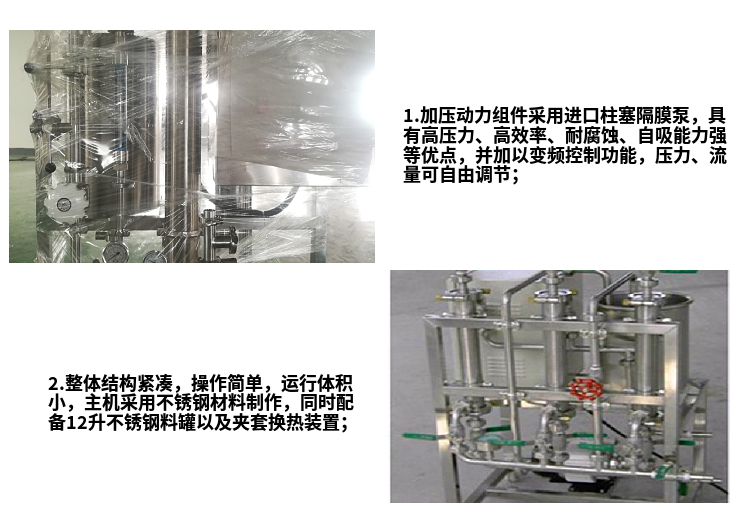

Phone Consultation