
Product Details

Main Products: Laboratory wastewater treatment equipment, integrated sewage t...


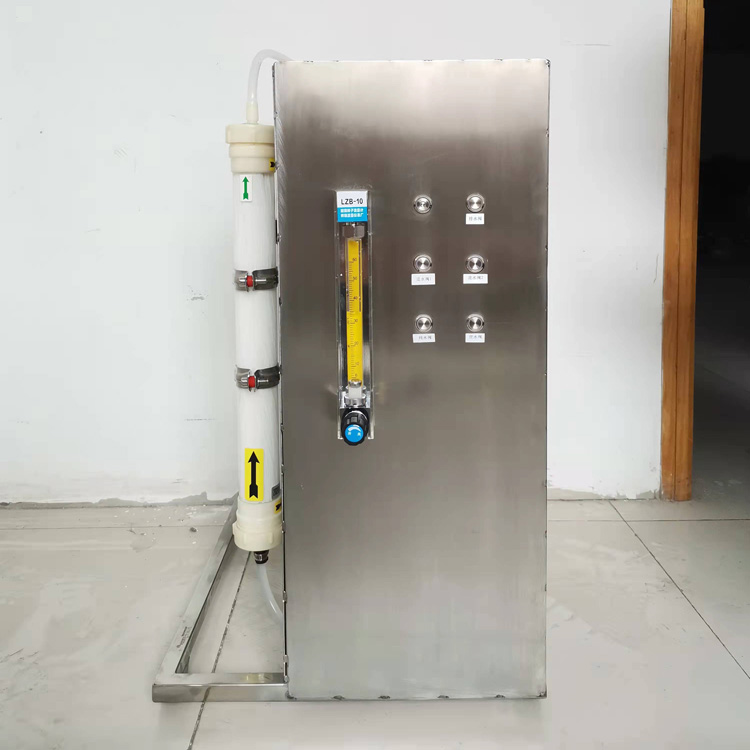
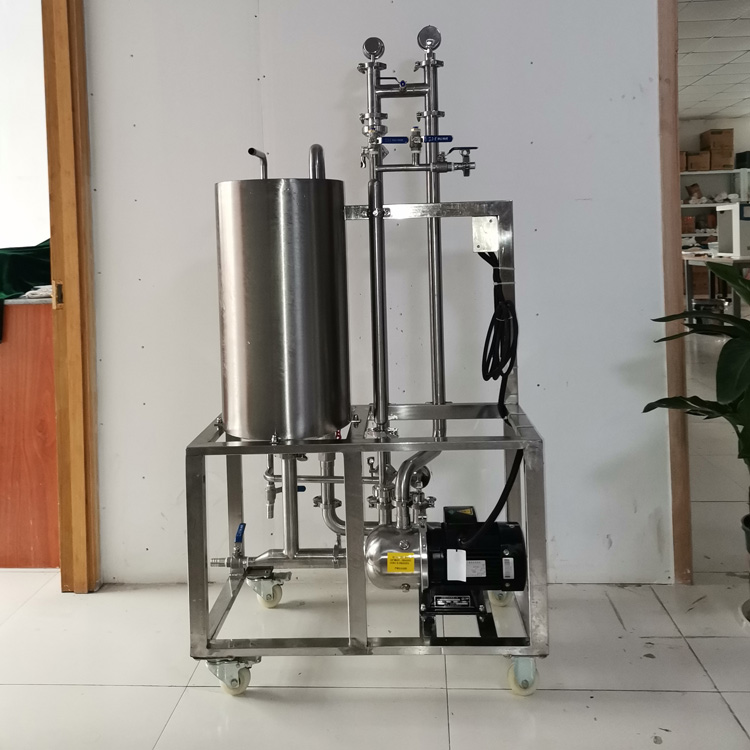
产品Price 38000.00/Set
最小起订Quantity:1 Set 供货总Quantity: 1000 Set


Ceramic membranes are porous asymmetric membranes produced by high-temperature sintering of materials such as alumina and zirconia through special processes. Ultrafiltration is a type of filtration"Crossflow filtration" solid-liquid separation process. Under pressure, the feed liquid flows within the membrane tubes, with small molecules permeating through the membrane and large molecules and solid matter being retained in the membrane to form a concentrated solution, achieving the purpose of separation, concentration, and purification of fluids. The ceramic membrane's filtration accuracy covers microfiltration and ultrafiltration, with the microfiltration pore size ranging from 50nm to 1.4μm, and the ultrafiltration membrane's precision ranging from 8KDa to 50KDa. Different pore sizes of membranes can be selected as needed to achieve clarification and separation. Ceramic membranes are characterized by high heat resistance, chemical corrosion resistance, high mechanical strength, resistance to microorganisms, high flux, good cleaning recovery, and long lifespan. They are currently used in fermentation broth clarification, oil-containing wastewater treatment, landfill leachate MBR, oil field water injection, juice, fruit wine, vinegar, and more. Ceramic Membrane Equipment Working Principle: Ceramic membrane equipment consists of membrane components made from ceramic materials, which, due to their microporous structure and chemical stability, enable efficient separation and purification. By applying pressure to the solution, ceramic membrane equipment separates substances based on molecular size or other characteristics, thereby purifying and concentrating liquids or gases. The varying pore sizes and shapes of ceramic materials can cater to different application scenarios, such as ultrafiltration, microfiltration, and nanofiltration. Ceramic membrane equipment features: 1. Employing crossflow filtration, with a higher membrane face velocity (3-5 m/s), it reduces the accumulation of pollutants on the membrane surface, thereby increasing the membrane flux. 2. Utilizing imported centrifugal pumps, featuring low noise, high lift, stable pressure, and reliable performance. 3. Excellent chemical stability, acid and alkali resistance, and resistance to organic solvents. 3. Overall, it boasts an elegant and spacious design, excellent stability, simple operation, and a compact footprint. 4. High separation efficiency, simple separation process, minimal auxiliary equipment, low energy consumption, and easy operation. 5. Strong antimicrobial resistance; does not interact with microorganisms.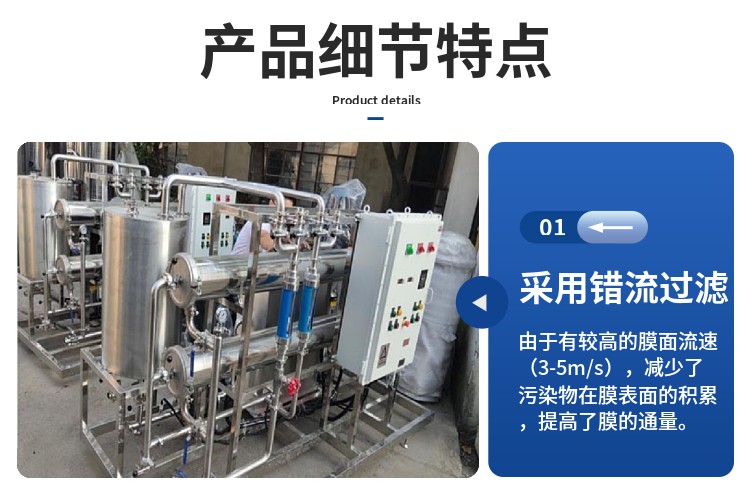

Phone Consultation