
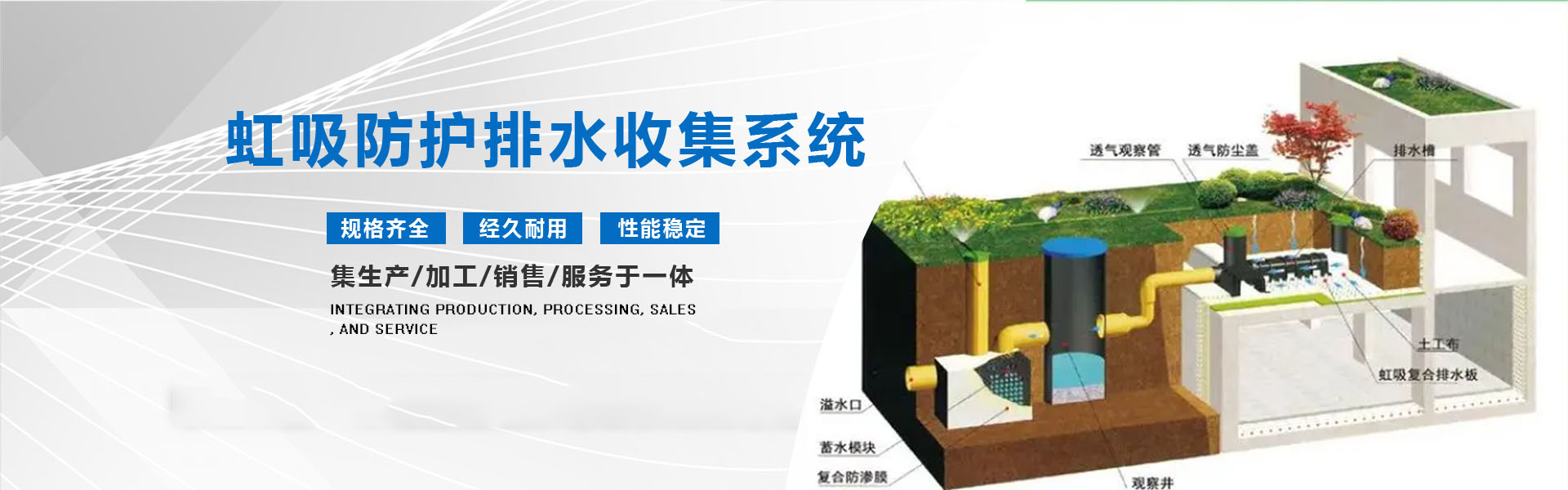
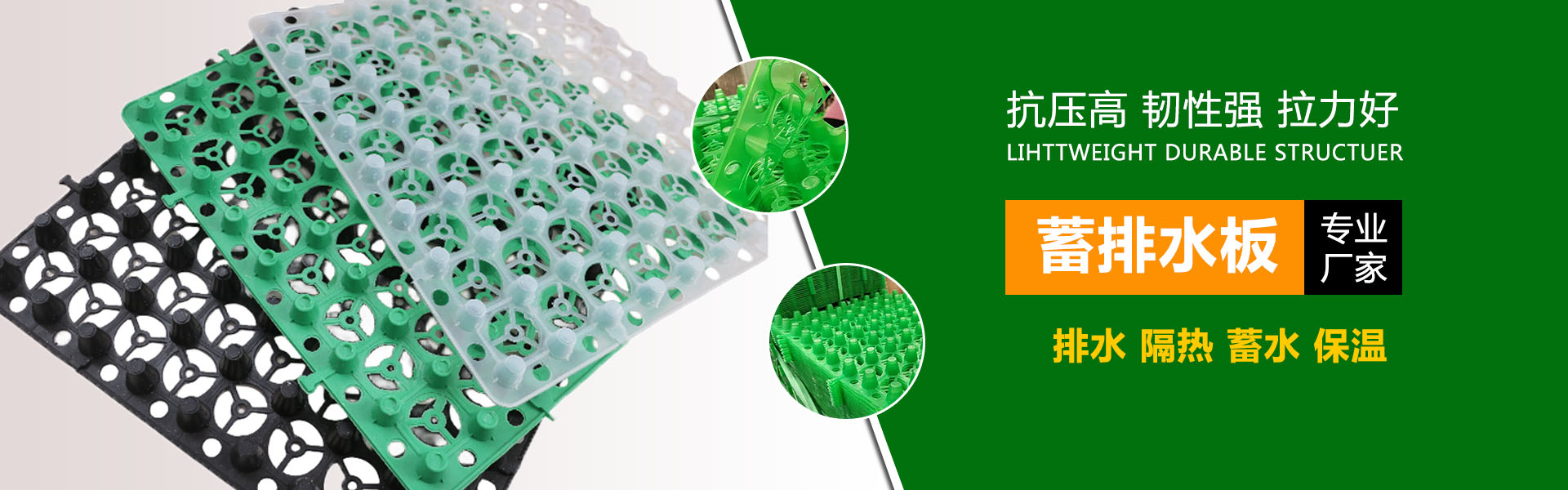


The components of the siphon drainage system should include: siphon drainage panels and siphon drainage channels, where the siphon drainage panels, also known as high polymer protective drainage sheets or covered drainage panels, can be directly drained into the underground stormwater network if rainwater recovery is not required, thereby improving the situation of muddy water mixing in traditional methods. If rainwater secondary recovery is needed, a water collection module (collection cage) must be added. The siphon drainage panels are composed of drainage panels and polypropylene fabric through thermal melting or adhesive bonding, so there is no need to lay a plastic mesh (plastic support mesh) between the drainage panels and the filter geotextile, saving costs and making construction easier and faster!
The siphon drainage system is particularly suitable for areas with large roof areas, difficult or non-existent slopes, and heavy rainfall. It is used for basement roof drainage to reduce or eliminate the direct pressure of accumulated rainwater on the waterproof joints. The drainage system plays a crucial role. It can address the challenge of finding slopes in large garages with extensive roof areas, or even make such slopes unnecessary. It solves the issues of difficult slope finding and poor rainwater drainage.
The garage siphon drainage system divides the large roof area of the garage into sections, converting the roof drainage into smaller areas, which is more conducive to organizing drainage and allows for easy expulsion of standing water, preventing waterlogging and rainwater accumulation. Key materials of the siphon drainage system include high molecular weight protective drainage and water storage sheets, produced using pure new materials. The raw material, HDPE, is an non-degradable material with a lifespan that can match the lifespan of the building.
