




Product Introduction / INTRODUCE
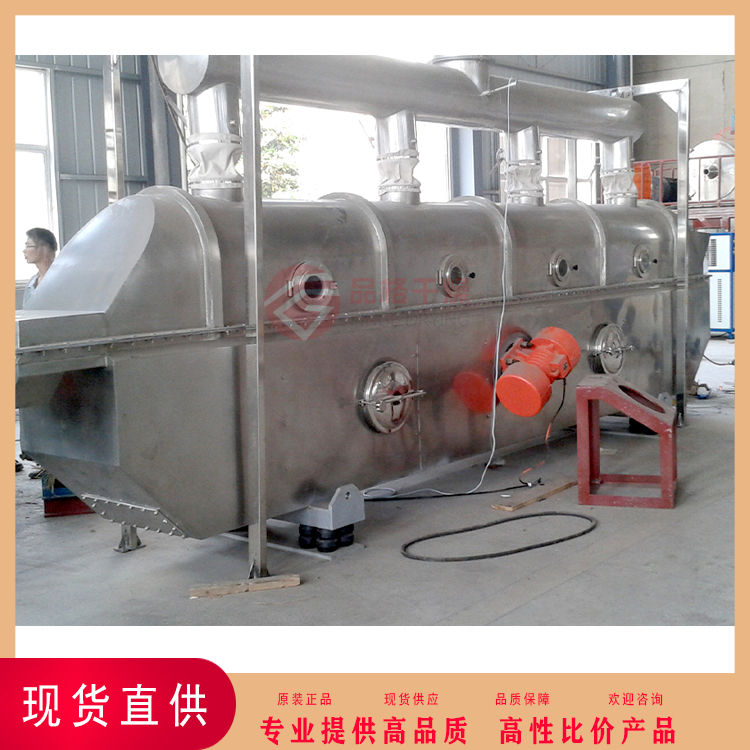
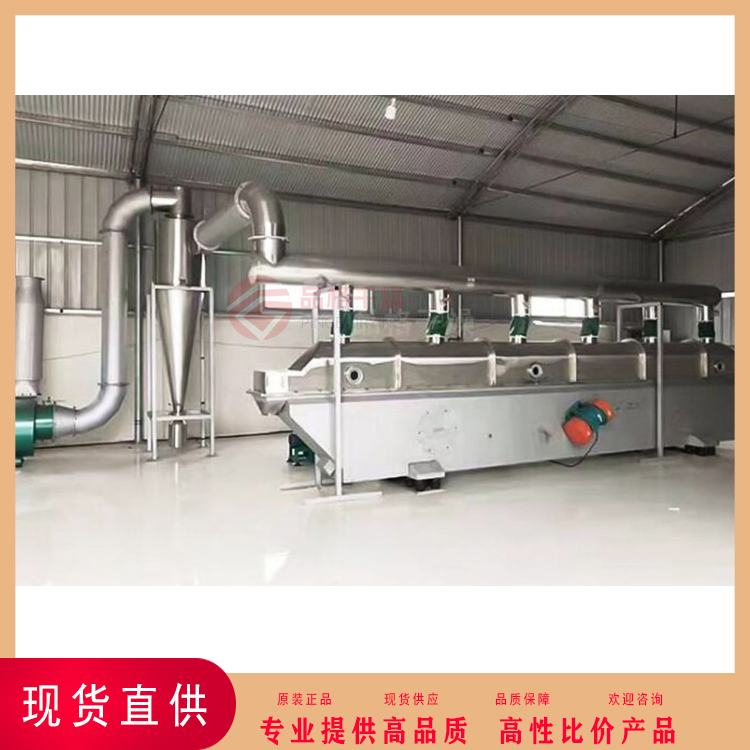
The fluidized bed dryer operates by feeding materials into the machine through the inlet, where they are tossed forward along the horizontal bed under the action of vibration. As hot air passes through the fluidized bed, it exchanges heat with the wet material, then the moist air is cleaned by a cyclone separator and exhausted at a ratio of 1:3. The dried material is discharged through the outlet. It is suitable for drying and cooling operations of powdered and granular materials in industries such as chemicals, food, dehydrated vegetables, grains, and minerals.
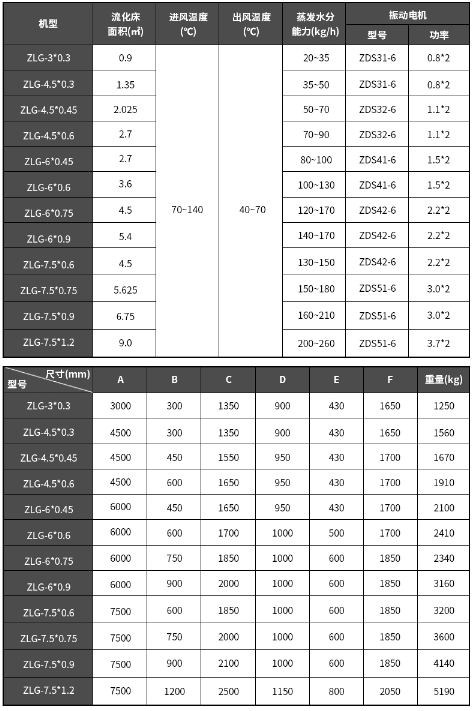
Product Specifications / Parameter
PRINCIPLE OF OPERATION
Material is introduced into the machine through the feed port, where it is thrown forward in a fluidized bed along the horizontal plane under the action of vibration. The hot air passes upward through the fluidized bed, exchanging heat with the wet material, and the wet air is then cleaned by a cyclone separator before being exhausted at a ratio of 1:3. The dried material is discharged through the discharge port.
Product Features/ CHARACTERISTICS
The vibration source is driven by a vibration motor, operating smoothly, easy to maintain, low noise, and long lifespan.
Flow even, without dead spaces and blow-through phenomena, achieving uniform drying and cooling of products.
● Excellent adjustability, wide applicability, and the thickness of the material layer, the speed of movement within the machine, and the full amplitude change can all be achieved with infinite adjustment.
● Minimizes surface damage to materials, suitable for drying fragile materials; also effective when the material particles are irregular.
● Full-enclosed structure reduces cross-contamination between materials and air, ensuring a clean working environment.
High mechanical and thermal efficiency, excellent energy-saving effect, can save energy by 30%-60% compared to general drying equipment.
Product Application/ Use
Suitable for drying and cooling operations of powdered and granular materials in industries such as chemicals, food, dehydrated vegetables, grains, minerals, etc. Examples include citric acid, monosodium glutamate, borax, ammonium sulfate, compound fertilizer, radish shreds, soybean meal, lees, seeds, slag, and sugar.
