
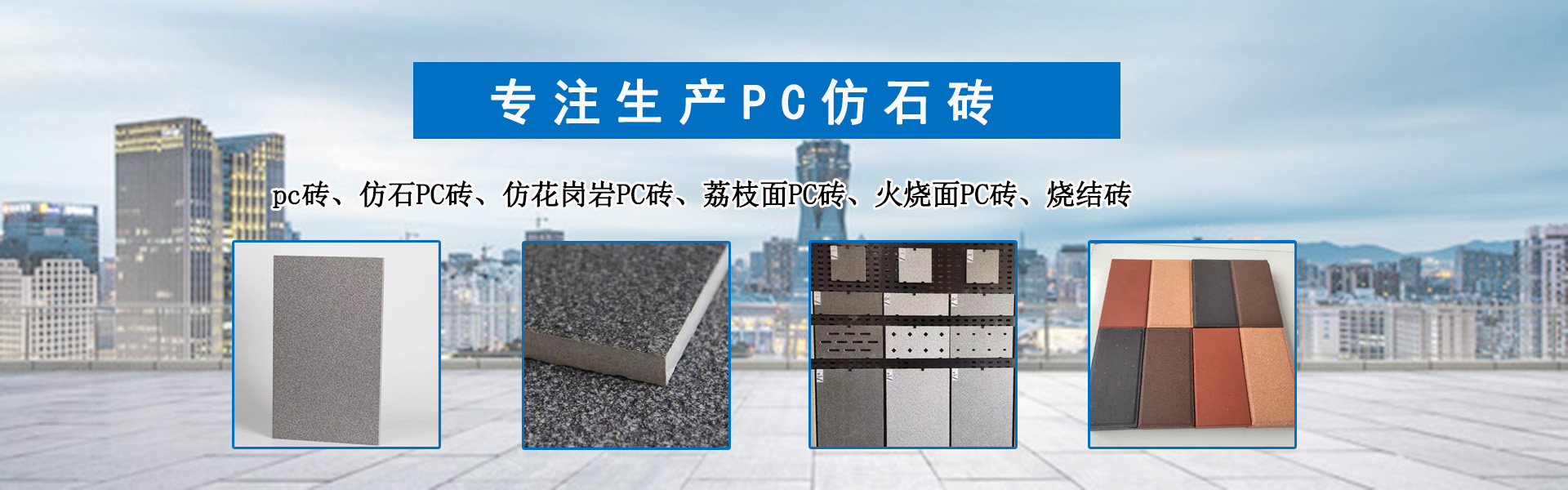


PC bricks, originally a shorthand for "Precast Concrete Structures," have evolved with the growth of cities. As standard PC bricks can no longer meet the current demands for urban aesthetics and performance, ceramic PC bricks have emerged.
Ceramic PC tiles are a general term for a type of outdoor paving tile. As their surface mimics the look of natural stone, like regular PC tiles, they are named and distinguished from standard concrete PC tiles based on their material composition. Thus, the term "ceramic PC tiles" was coined.
Several reasons contribute to the popularity of ceramic PC tiles among the general public:
I. Environmental Sanitation
Ceramic PC tiles are manufactured using ceramic materials and other eco-friendly components through high-temperature and high-pressure processes. They are highly environmentally friendly and hygienic, boasting excellent strength in the tiles themselves, meeting practical applications. It's a win-win situation. This new type of eco-friendly stone-look paving tiles is both anti-slip and suitable for long-term use in various settings.
Two: Aesthetically Pleasing
Due to market demand, the majority of ceramic PC tiles have achieved highly realistic effects on their simulated stone surfaces, laying them on roads is almost indistinguishable from natural stone, with a simulation effect exceeding 90%. They are currently a preferable choice for replacing stone.
High Value for Money
Ceramic PC tiles offer high cost-performance, priced at only 1/3 to 1/4 of the same thickness and quality as natural stone. They boast a rich color palette, free of color variations and杂质, perfectly replicating the natural stone's original color and resisting fading. Their watercolor effects are even more striking. Compared to similar granite, stone-effect PC tiles are sturdy, durable, easy to maintain, and simple to install, with a strength reaching C50 or higher (capable of supporting vehicles). They also maintain an enhanced color effect after being walked on and rubbed, making maintenance even more convenient.
