


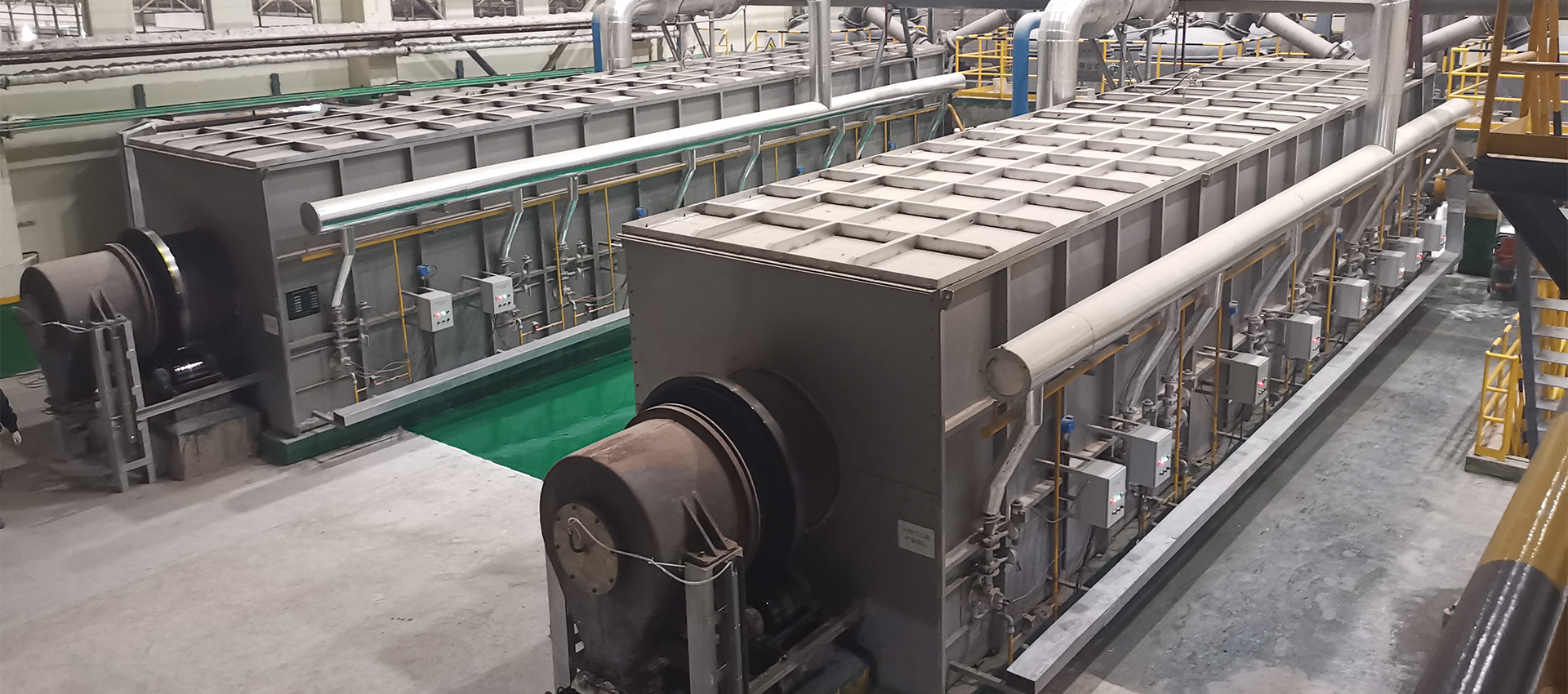
As the technology in the forging industry continues to evolve, many components undergo heat treatment during production to enhance their performance. Typically, vacuum carburizing furnaces are used. With the increasing demand for various components in the market, many metallurgical industries now...
Continuously improving the quality of various accessories, we can meet the needs of diverse users. Next, let's briefly introduce the working principle of the vacuum carburizing furnace.
The process involves loading workpieces into a vacuum furnace, evacuating the air and heating it to purify the chamber. Once reaching the carbon diffusion temperature, a hydrocarbon gas is introduced for carbonizing. After a specified period, the carbonizing agent is disconnected, and the vacuum is reapplied for diffusion. This method achieves high-temperature carbonizing while reducing the carbonizing time. No internal oxidation appears in the carbonized layer, and there's no issue of carbon content being lower on the surface of the carbonizing layer than in the underlying layer. Pulse vacuum carbonizing can be employed to ensure uniform carbonization in blind and small holes. It is crucial to maintain the stability of the equipment during routine use of the vacuum carbonizing furnace. In the event of any anomalies, the machine must be immediately shut down for inspection to prevent severe safety hazards and to avoid significant damage to the furnace.
The carburizing process features include: applied to low-carbon workpieces, where they come into contact with high-carbon gases, liquids, or solids, resulting in a hard surface with the workpiece retaining toughness and ductility within. The surface hardness can extend up to 0.25 inches (6.4 mm). Occasionally, the carburizing process can correct decarburization issues that were not desired during previous machining.
