

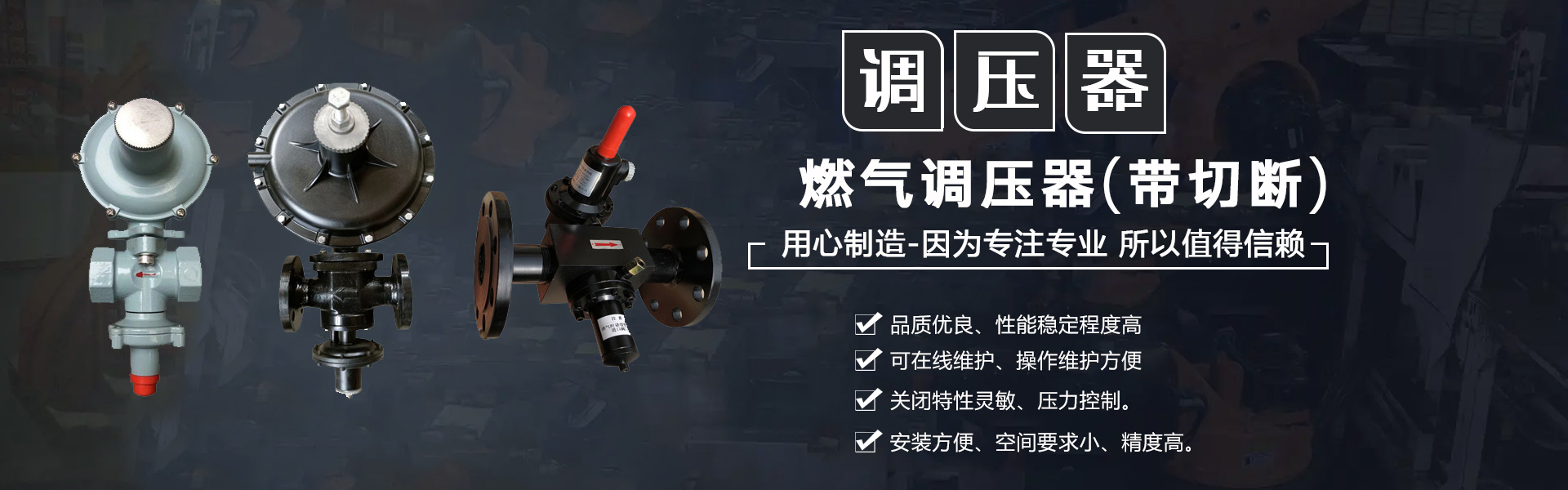


Regulators, also known as pressure reducers, are a crucial component for the safe combustion of liquefied petroleum gas, connecting the gas cylinder to the stove. These regulators not only convert the high-pressure gas inside the cylinder into low-pressure gas (reducing from around 980 kPa to about 100 kPa), but also maintain a stable pressure range suitable for safe combustion in the stove. This ensures that the gas pressure at the stove's burn holes is consistently about 2940 Pa higher than the atmospheric pressure, making the regulator essentially an automatic pressure-stabilizing device. People commonly refer to it as a reducer or pressure-reducing valve, focusing solely on its pressure-reducing function while overlooking its pressure-stabilizing capabilities. The regulator's intricate and clever design is particularly evident in its pressure-stabilizing ability, which this article aims to thoroughly explain.
The gas regulator is primarily composed of a handwheel, inlet pipe, top valve cover, bottom valve cover, rubber diaphragm, inlet nozzle, valve seat, a small lever, and a circular rubber diaphragm in the center of the regulator, which divides it into two gas chambers, upper and lower. The upper gas chamber contains a spring connected to the adjusting screw cap at the top and the rubber diaphragm at the bottom. On the edge of the top valve cover, there is a small hole with a diameter of 0.8 mm, allowing the upper gas chamber to communicate with the outside, which is humorously called the "breathing hole." The lower gas chamber has a lever made of fine brass, approximately 5 cm in total length, with a highly sensitive turning performance. The right end of the lever is connected to the center of the rubber diaphragm, while the left end is glued to the valve seat, tightly fitted onto the inlet nozzle, providing damping to the high-pressure gas emitted. The distance from the fulcrum to the left and right ends of the lever is unequal, making it an uneven lever. Its characteristic is that even a slight change in the force applied to the right end of the lever will cause a significant change in the force at the left end. In principle, it achieves force amplification; in effect, it increases the damping effect on the high-pressure gas.
News Center Co., Ltd.
