
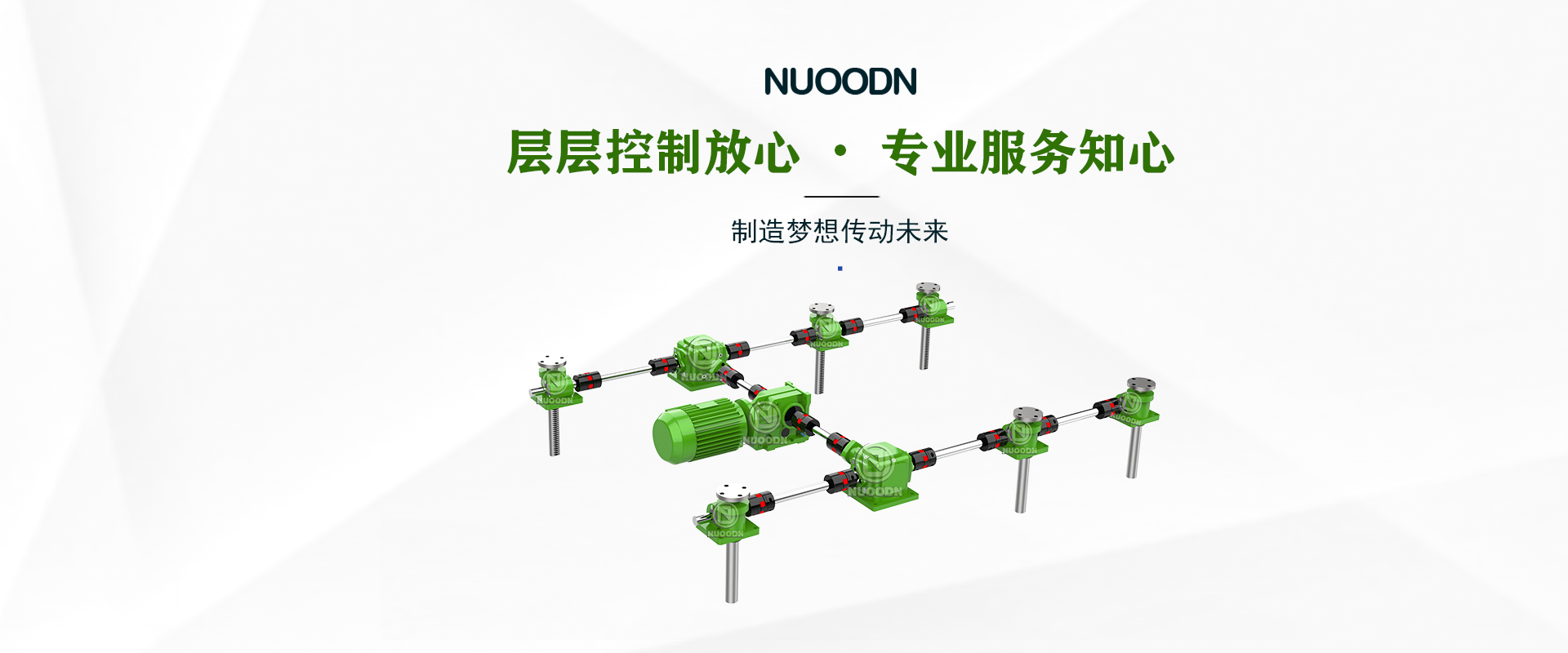
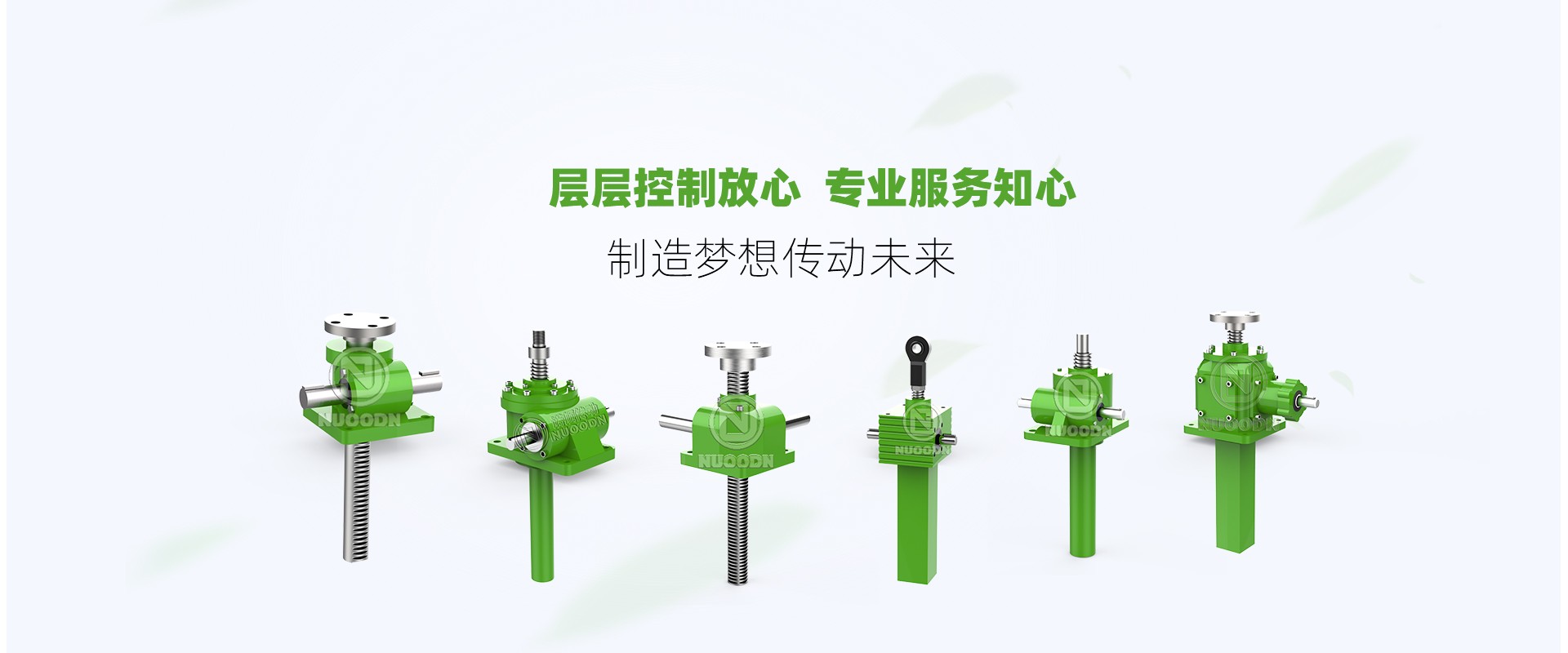
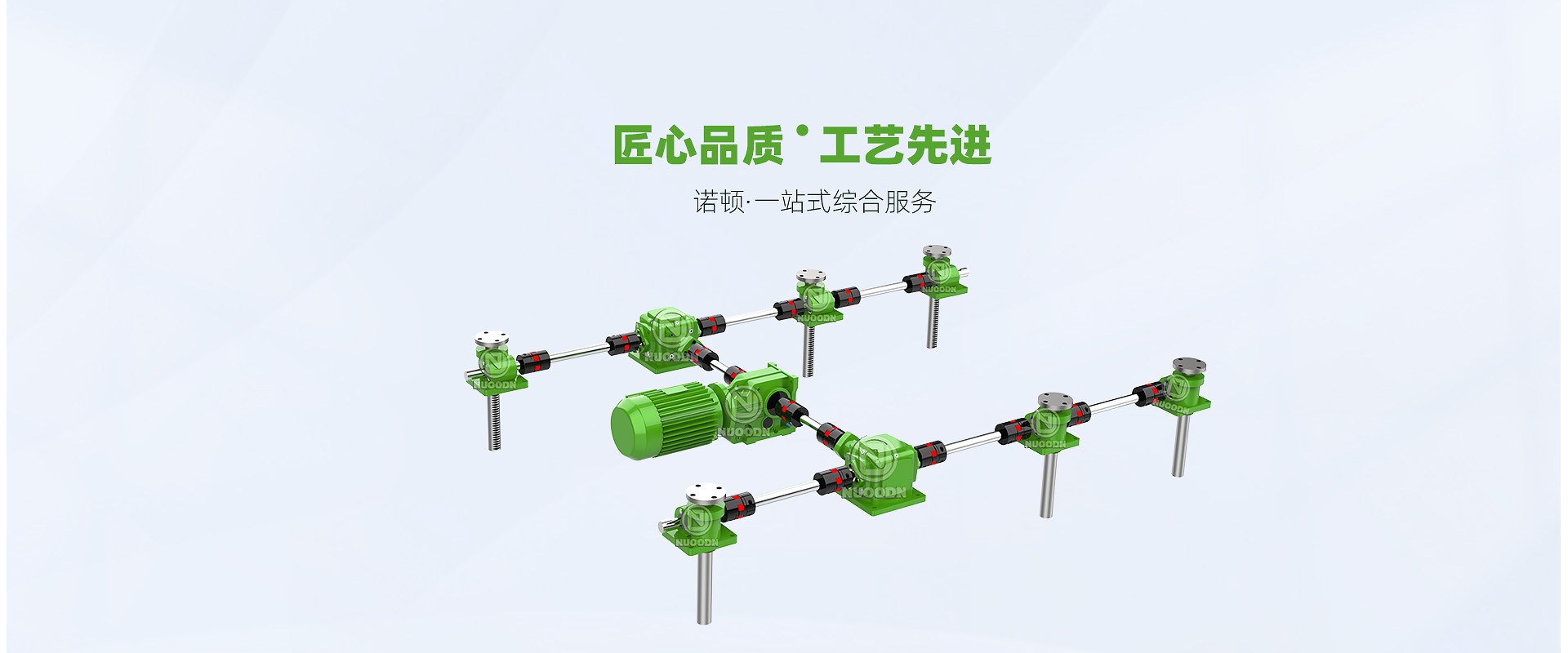

As China's machinery industry continues to thrive, the development of screw jack with bevel gears has surged like bamboo shoots after rain. This transmission device is smaller in size, quieter, more efficient, and offers higher precision, gradually replacing traditional transmission products.
screw jack classifications can be further divided into cone gear screw jacks and worm gear screw jacks based on their internal structural forms. These two types of jacks can meet different transmission requirements, so there is usually no conflict in selection. The common worm gear screw jack is directly or indirectly driven by the drive source to rotate the worm shaft, which in turn drives the worm to reduce the speed and rotate the worm gear. For screw jack movements, the worm gear's center hole is machined into a trapezoidal internal thread, forming a spiral pair with the screw, allowing the screw to complete lifting and lowering movements. For nut-driven jacks, the worm gear's inner hole with keyways is matched with the screw's smooth shaft section, connected by keys. The screw rotates at the same speed as the worm gear, and the external trapezoidal nut, in combination with the screw's external thread, performs lifting and lowering movements as the screw rotates. The transmission component of the cone gear screw jack consists of a pair of intermeshed cone gears with a speed ratio of 1-3, where the driving wheel rotates the driven wheel, which is then connected to the sleeve by keys. Regarding the screw movement, the sleeve's inner hole is machined with a trapezoidal internal thread or connected to a ball screw nut by screws, allowing the trapezoidal or ball screw to perform lifting and lowering movements. For nut movement, the screw's smooth shaft section is keyed to the sleeve's keyed inner hole, rotating with the sleeve. The external trapezoidal or ball screw nut, in conjunction with the screw's external thread, allows for lifting and lowering movements as the screw rotates.
