

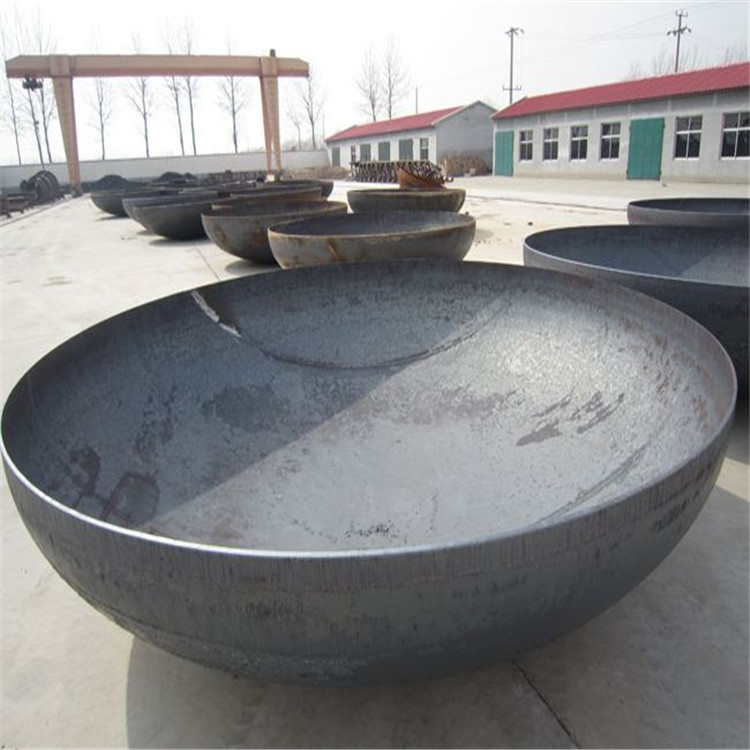
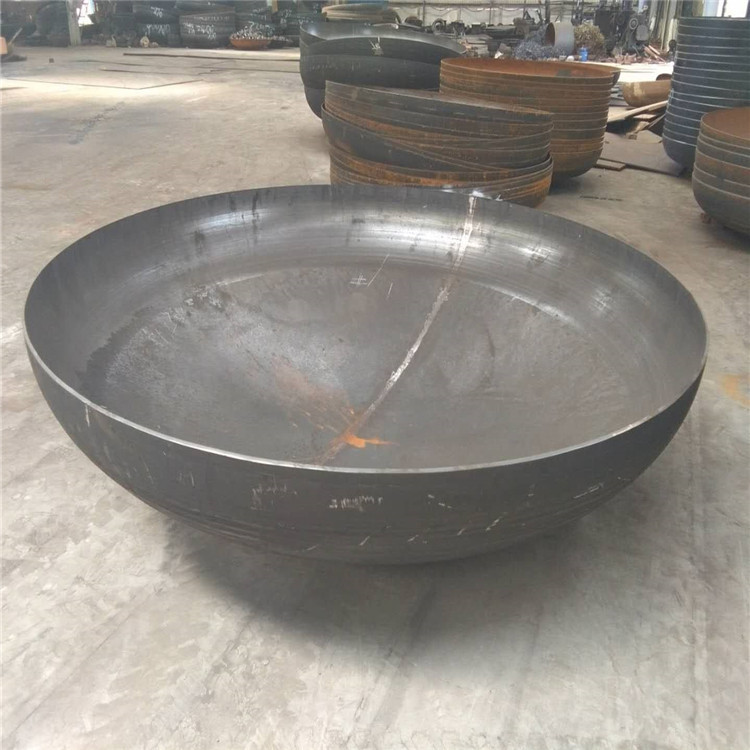
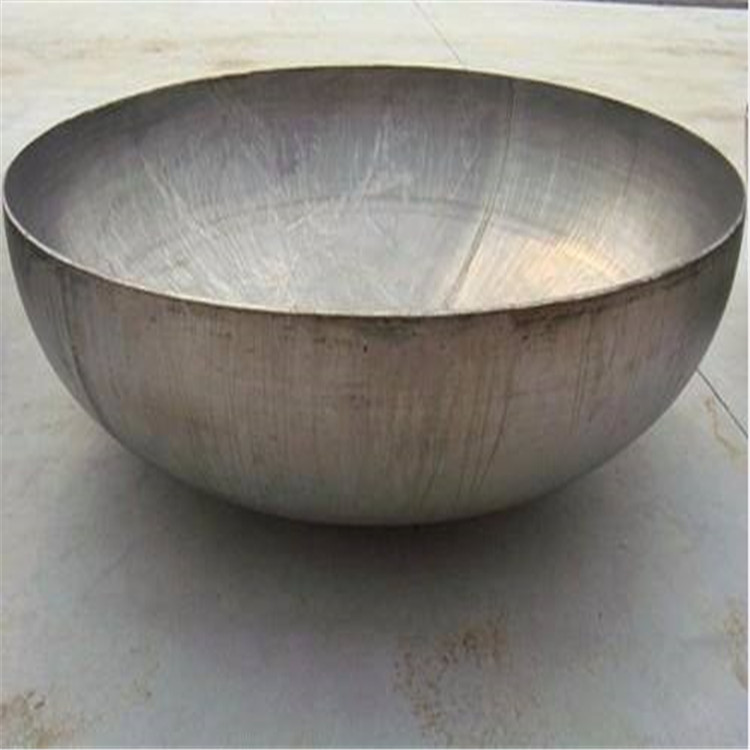
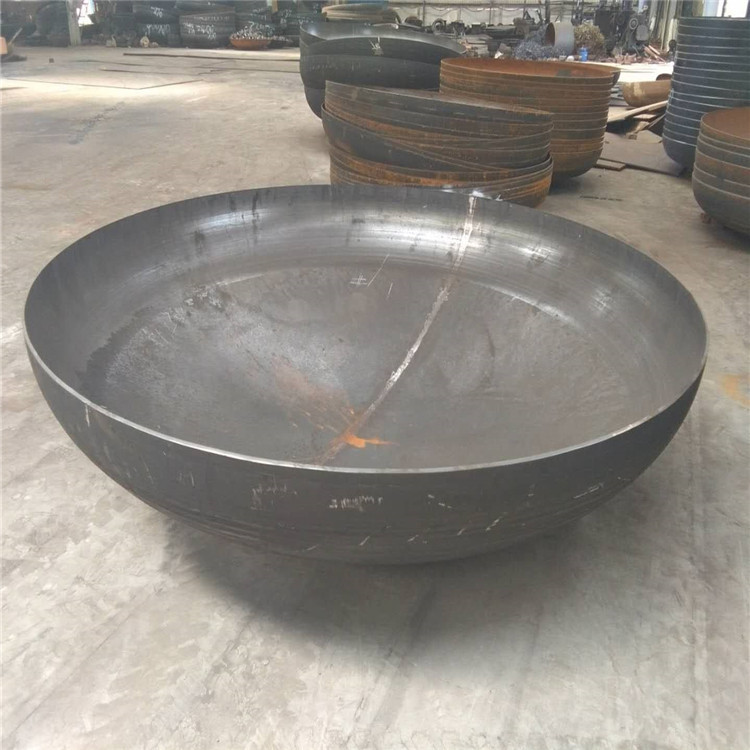
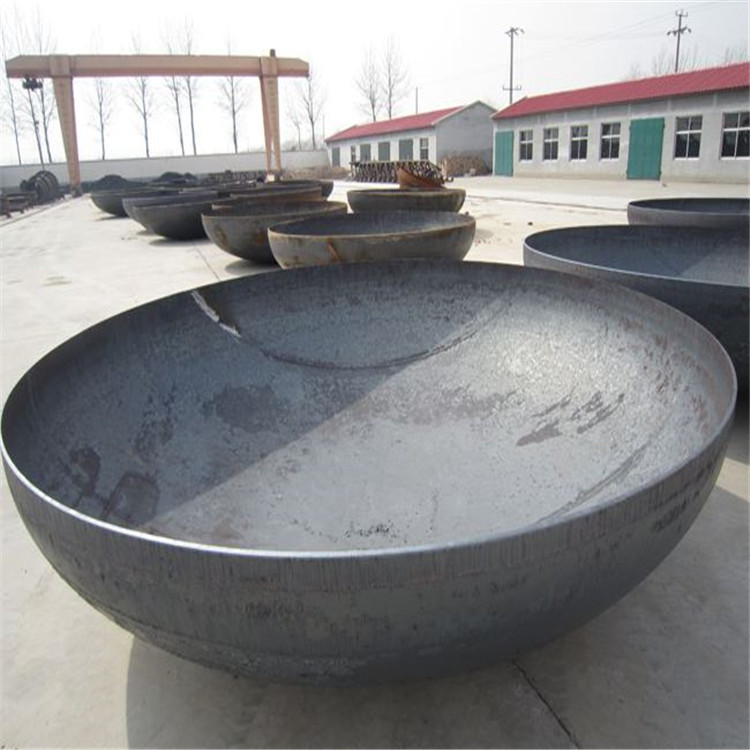
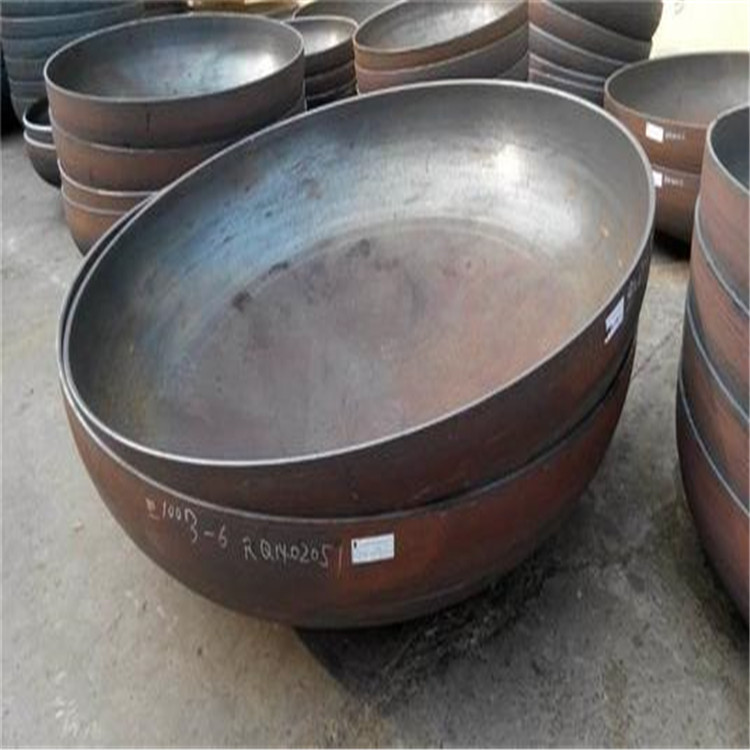
Ellipse Head Application Range: Ellipse heads are widely used in industries such as petrochemical, electronics, chemical, light industry, food, machinery, construction, electric power, aerospace, and more. Ellipse Head National Standard: 1. The ellipse head petals (including integral supply with petals), spherical head petals, and bevel transition petals (including integral supply with petals and conical sections) are inspected using full-size stereoscopic templates. The transition zone corner radius must not be less than the specified value in the drawings, and the shape deviation large gap ≤3mm.
The transition section's radius must not be less than the radius shown in the pattern. 2. When the chord length of the elliptical or spherical end is ≥2000mm, the chord length of the flat template must be ≥2000mm; when the chord length is <2000mm, the chord length of the flat template must be ≥ the chord length of the segment. 3. The entire elliptical end, segmented elliptical end, and transition section must comply with the JB/T4746-2002 standard. The spun end must also comply with the JB/T4746-2002 standard. The spherical end must comply with the GB12337-1998 "Steel spherical storage tanks" standard. Additionally, it should adhere to the relevant provisions of GB150-1998 "Steel pressure vessels" and HG20584-1998 "Technical requirements for the manufacture of steel chemical equipment."
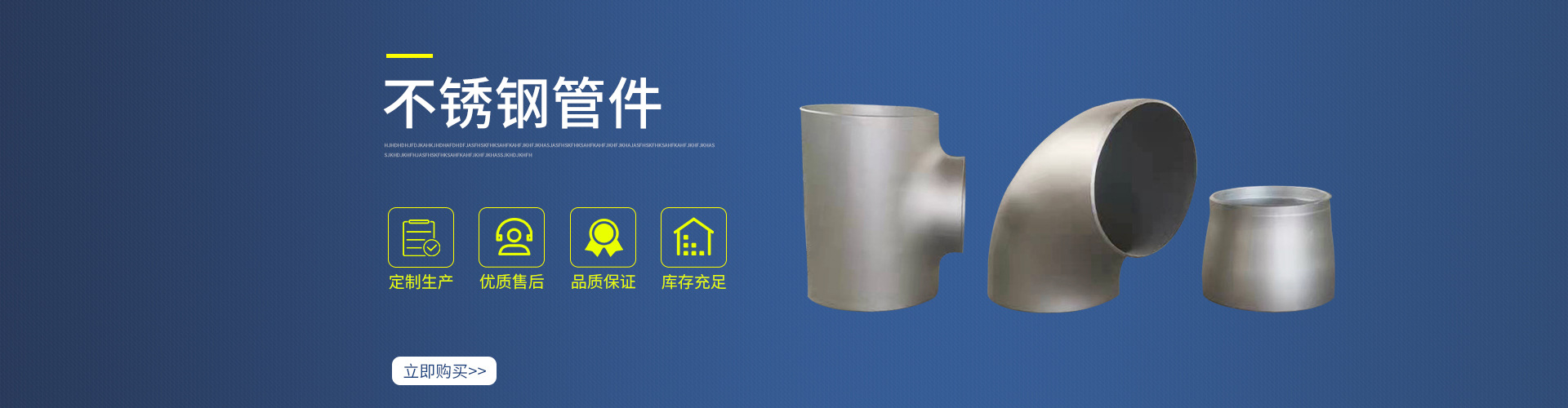
Carbon steel end caps (pipe caps), also known as blind caps, cover caps, pipe covers, solid ends, are used to seal pipe lines, serving the same function as pipe plugs but can be directly threaded onto pipes without requiring additional pipe fittings. End caps include designs such as dome caps, cone shells, reducers, flat caps, and tapered ends.
Carbon Steel Cap Pressure Range: 5s-120s Size Range: 15-900mm
Wall thickness: 1-100mm. Carbon steel flanged heads are mainly made of materials such as Q235, 20#, A3, 16Mn, Q345B, and 45# steel.
Standards include GB/T25198-2010 (Standard for Pressure Vessel Ends) and pipeline standards GB/T12459-2005, GB/T13401-2005, etc. Head parameters: Design standards include National Standard, German Standard, Japanese Standard, American Standard (ASME DIN JIS BS GB/T JB SH HG). Pressure range: 5s-120s; Size range: 15-900mm; Nominal diameter: 1-10 (mm) (Bore size: DN15-DN1200); Wall thickness: 1-100 (mm) (SCH5-SCH160); Materials include stainless steel 304, 304L, 316, 316L, 310, 317, 321, etc.
Purpose: Water, beverages, beer, food, petrochemicals, electrical, machinery, medical equipment, fertilizers, shipbuilding, waterproofing treatment, pipelines, etc.
Packaging: Wooden boxes, cardboard boxes
Service: Technical consultation and installation guidance for碟形管帽's r-locus to avoid splicing, which can lead to thinning and high stress. For special splicing, the weld direction is required to be only radial and hoop. This requirement may be abolished for large diameter pipe caps in the future. The splicing distance should be specified, greater than 3δ, and not less than 100mm (the welding heat-affected zone is a high-stress area, and the chemical composition in this area may be burned. Therefore, it is necessary to avoid the high-stress area, which is related to the thickness. According to practical experience, the stress decay length should be greater than 3δ and not less than 100mm). However, it is difficult for refrigeration equipment to meet this requirement due to its特殊性.
The purpose of the head: The head is an indispensable and important component in pressure vessel equipment across various industries, including petrochemical, nuclear energy, and food processing.
