



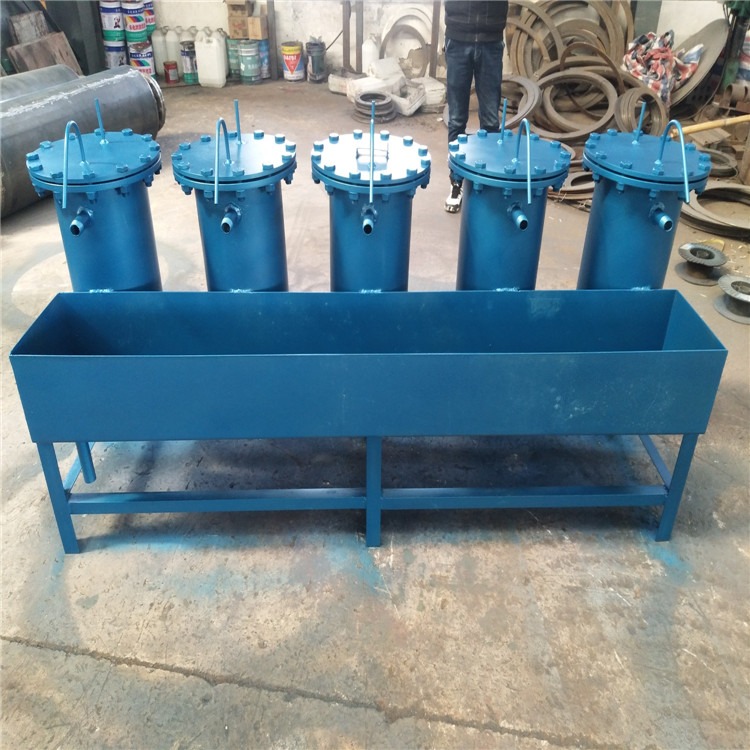
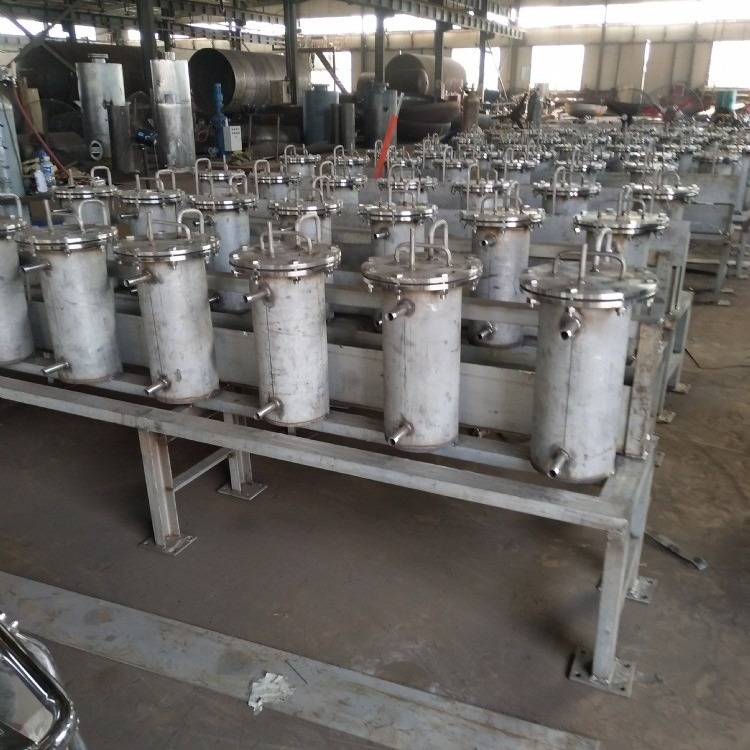
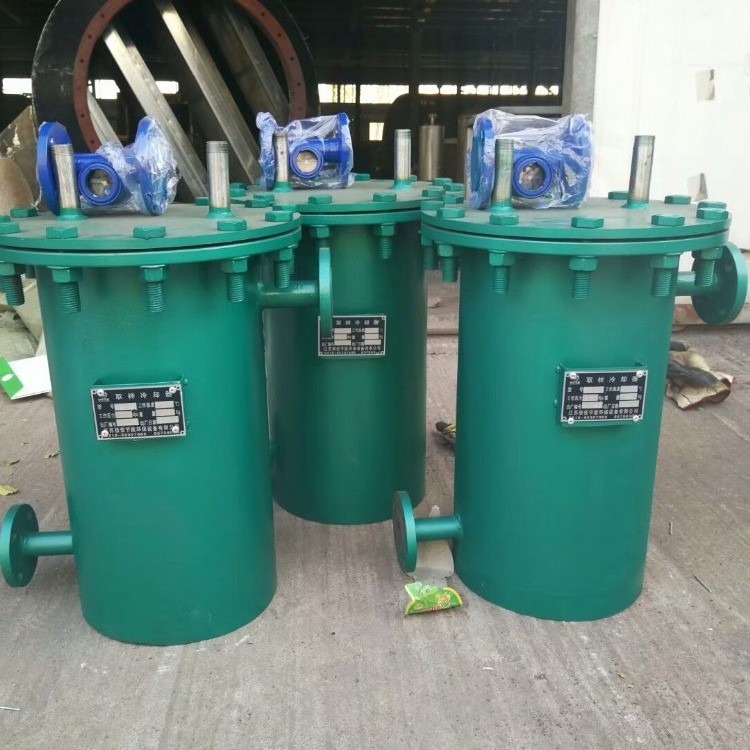
Carbonated beverage sampling cooler is suitable for sampling high-temperature liquids and gases. The sampling cooler features a spiral tube surface cooling structure, commonly known as a serpentine coil. The sampling tubes are all made of durable, corrosion-resistant stainless steel, which prevents contamination of the collected sample by metallic corrosion from the tubes. This product boasts compact structure, high heat transfer efficiency, easy cleaning, and long service life.
Carbonated water sampler is mainly used in boiler and thermal systems of power plants for boiler water sampling cooling, feed water sampling cooling, steam sampling cooling, deoxygenated water sampling cooling, condensate water sampling cooling, and bleed water sampling cooling, etc. Depending on the distribution and concentration of sampling points, Dongye Power Equipment offers both single-function sampling coolers and multi-functional sampling coolers (also known as: combined sampling coolers). The multi-functional sampling cooler can simultaneously sample steam, boiler water, feed water, and deoxygenated effluent.
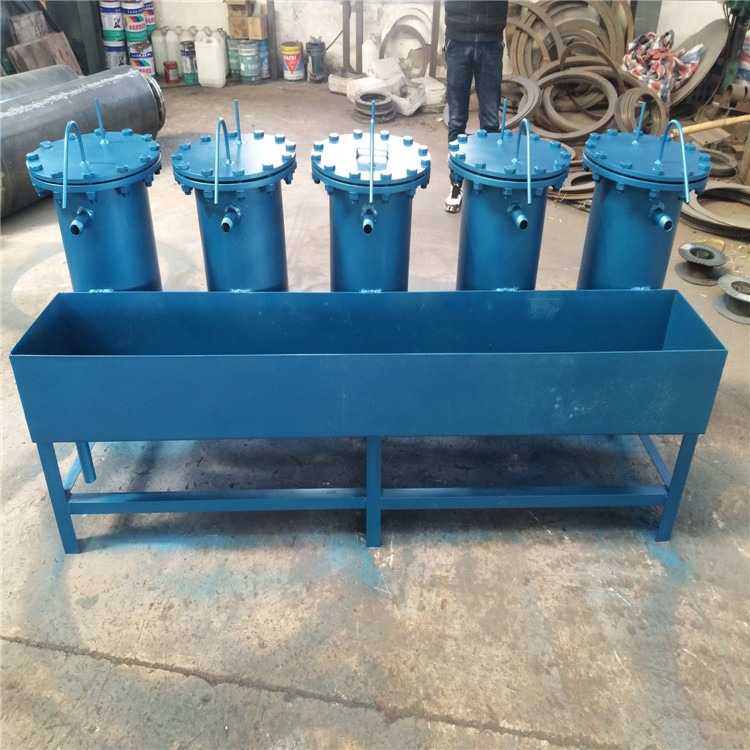
The sampling cooler's tubes are all made of stainless steel tube 1Cr18Ni9Ti to prevent the sample from being contaminated by metal corrosion products within the tubes during the sampling process.
Our factory's sampling cooler is suitable for sampling high-temperature liquids and gases, featuring compact structure, high heat transfer efficiency, easy cleaning, and long service life.
2. Our factory's sampling cooler is suitable for sampling high-temperature liquids and gases. All cooling tubes undergo a 10Mpa water pressure test for 5 minutes prior to shipment, ensuring reliable performance.
3. Features include compact structure, high thermal efficiency, easy cleaning, and long service life.
4. The cooler helical tube can be composed of a series of continuous coils forming the required cooling surface area, or it can be made up of two helical tubes arranged internally and externally.
Sample coolers are used for cooling water samples in boiler rooms or power plants. The water in boilers and thermal systems is usually at a high temperature, which is not conducive to sampling or measurement. Therefore, cooling should be applied during sampling. The samples from the sampling point should be introduced into the sample cooler for cooling. Generally, when the flow rate is between 500-700 mL/min, the samples should be cooled to below 30-40 degrees Celsius, meeting the standards of the People's Republic of China's power industry, DL/T 457-91.
Sample tubes are all made of stainless steel, not carbon steel or brass, to prevent contamination of the sample by metal corrosion products within the tubes during the sampling process.
The sampling cooler is suitable for extracting samples from liquids and gases at high temperatures, featuring a compact structure, high heat transfer efficiency, easy cleaning, and a long service life.
Sampling Cooler Specifications and Models
QYL-133/0.3 QYL-159/0.35 QYL-219/0.45 0.38 QYL-273/0.55

Sampling Cooler Order Instructions
Sampler tube is made of stainless steel, housing is carbon steel.
2: Sampling cooling tubes are typically selected in diameters of 10, 12, 14, 16, and 18mm (user-defined options available). Interface options include welding and flange, with the cooling water connection being DN25, external thread.
3: Common selections often include: QYL-159/0.32, QYL-219/0.40, and QYL-273/0.54.
4: Do you require a combination set (i.e., do you need brackets, sinks, valves, etc.)?
Coolant Sampling Types
1. Boiler Water Sampling
Typically, boiler water samples are collected from the continuous blowdown pipe of the steam drum and then directed to the cooler. The sampling point should be as close as possible to the outlet of the steam drum from the blowdown pipe, and as close as possible to the first blowdown valve after the steam drum.
2. Water Supply Sampling
The sampling point for water supply is typically located on the high-pressure water supply pipe, after the water pump and before the economizer. A small tube should be connected to the vertical section of the water supply pipe, with the water sample drawn from this tube to the sampling cooler. The sampling tube for water supply should be positioned where the water is adequately mixed after dosing with chemicals.
3. Condensate Sampling
The sampling point for condensate is typically located on the condensate pipeline at the outlet of the condensate pump, not at the inlet, as the pressure at the pump inlet is lower than atmospheric pressure.
4. Hydrophobic Sampling
Hydrophobic samples are typically collected from the hydrophobic tank. The sampling point is usually positioned about 300mm from the bottom of the hydrophobic tank.
5 Pass the steam sample through the sampling cooler to condense it into water. The steam flow rate in the steam sampler is generally 20-30 kg/h. The requirements for the sampling conduit and cooler of the sample are the same as those for water sampling.
Sample coolers are used for steam power plants and heating equipment water and steam testing, for cooling samples during the process of detecting water and steam quality. The water and steam in boilers and thermal systems are usually at high temperatures, making sampling and testing difficult. Therefore, cooling should be applied during sampling. The samples at the sampling point should be introduced into the sample cooler for cooling. Generally, when the flow rate is between 500-700 mL/min, the samples can be cooled to below 30-40 degrees, meeting the standards of the People's Republic of China's power industry, DL/T 457-91. The sampling conduit should be made of stainless steel pipe and not carbon steel pipe or brass pipe to prevent the sampling medium from being corroded and contaminated by metallic substances in the conduit during the sampling process.
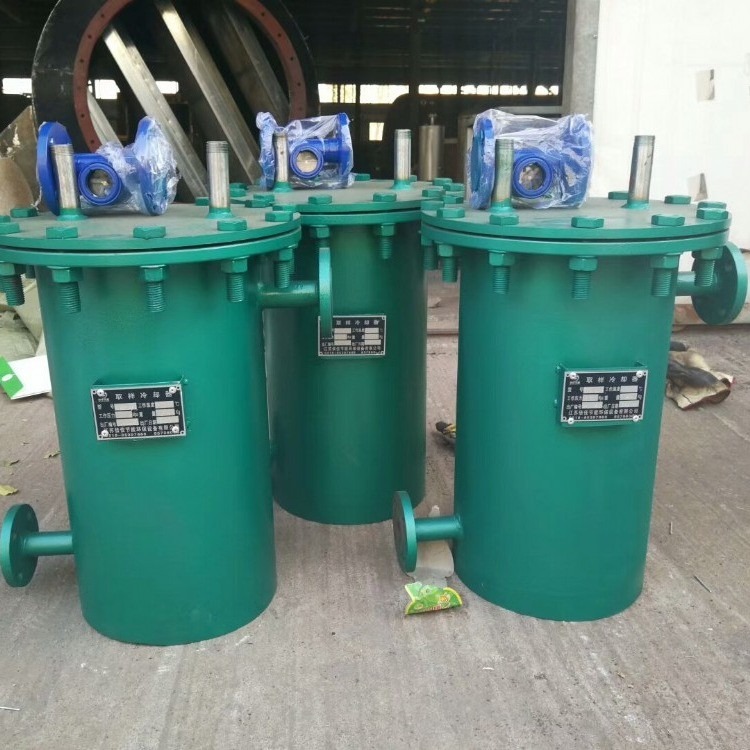
Measurement of the cooling area of the sampling cooler:
If the flow rate of the sample, the temperature of the cooling water, and the initial conditions of the sample are known, the required cooling area for the sample cooler can be determined using Equation (A1).
A= f ?1.0029/3600Δtm?U (A1)
Equation: A -- Required cooling area, m²
Sample Flow Rate, L/h
Δtm -- Average temperature difference, °C
U--Overall heat exchange coefficient (U=200 for both double helical tubes and immersed liquid coolers).
For samples with superheated steam, an additional 12.6% should be added to the cooling area calculated by formula (A1) for every 100℃ of superheat.
2: The average temperature difference can be calculated using Equation (A2):
Δtm= [( t1-T2)-(t2-T1)]/[L( t1-T2)/(t2-T1)] (A2)
Δtm -- average temperature difference, °C
t1--Cooler import sample temperature, °C;
t2--Cooler import sample temperature, ℃
T1--Coolant Inlet Temperature of Chiller, °C
T2 -- Exported cooler cooling water temperature, °C.
3: The cooler spiral tube can be made from a set of required
