


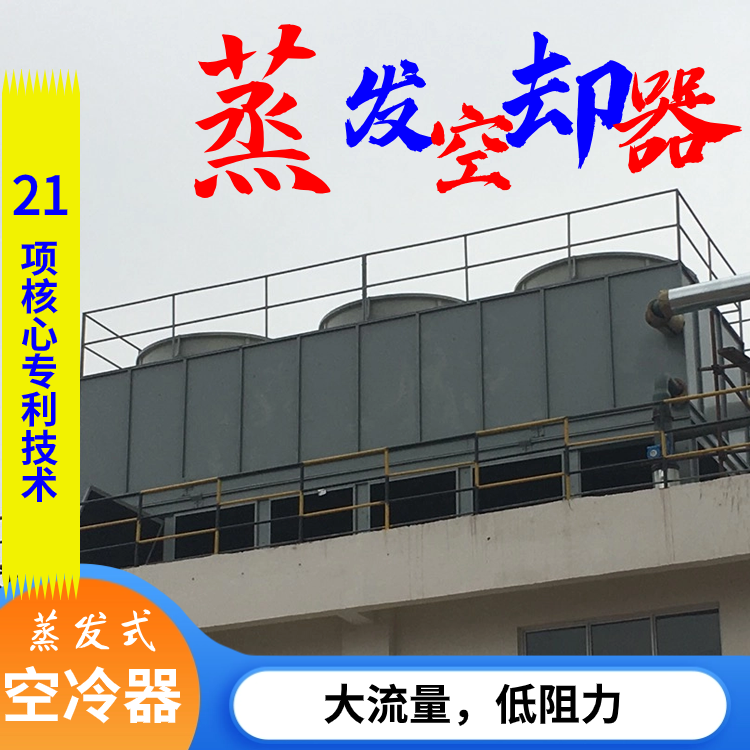

Evaporative Air Cooler
I. Overview
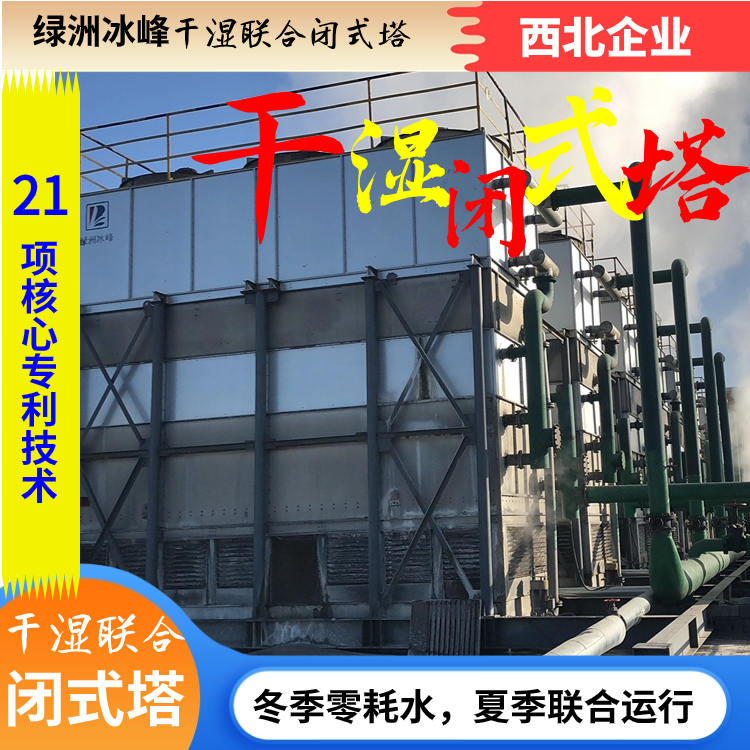
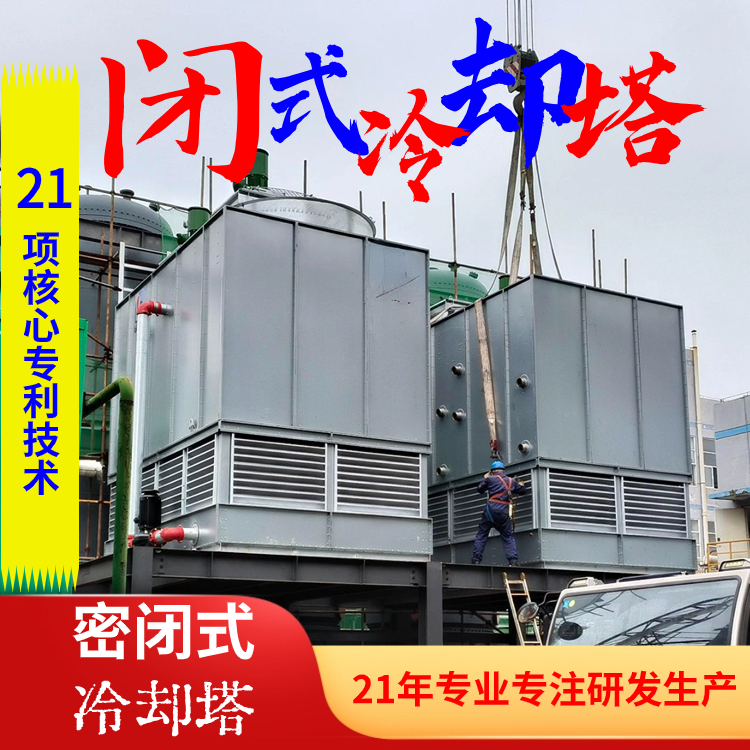
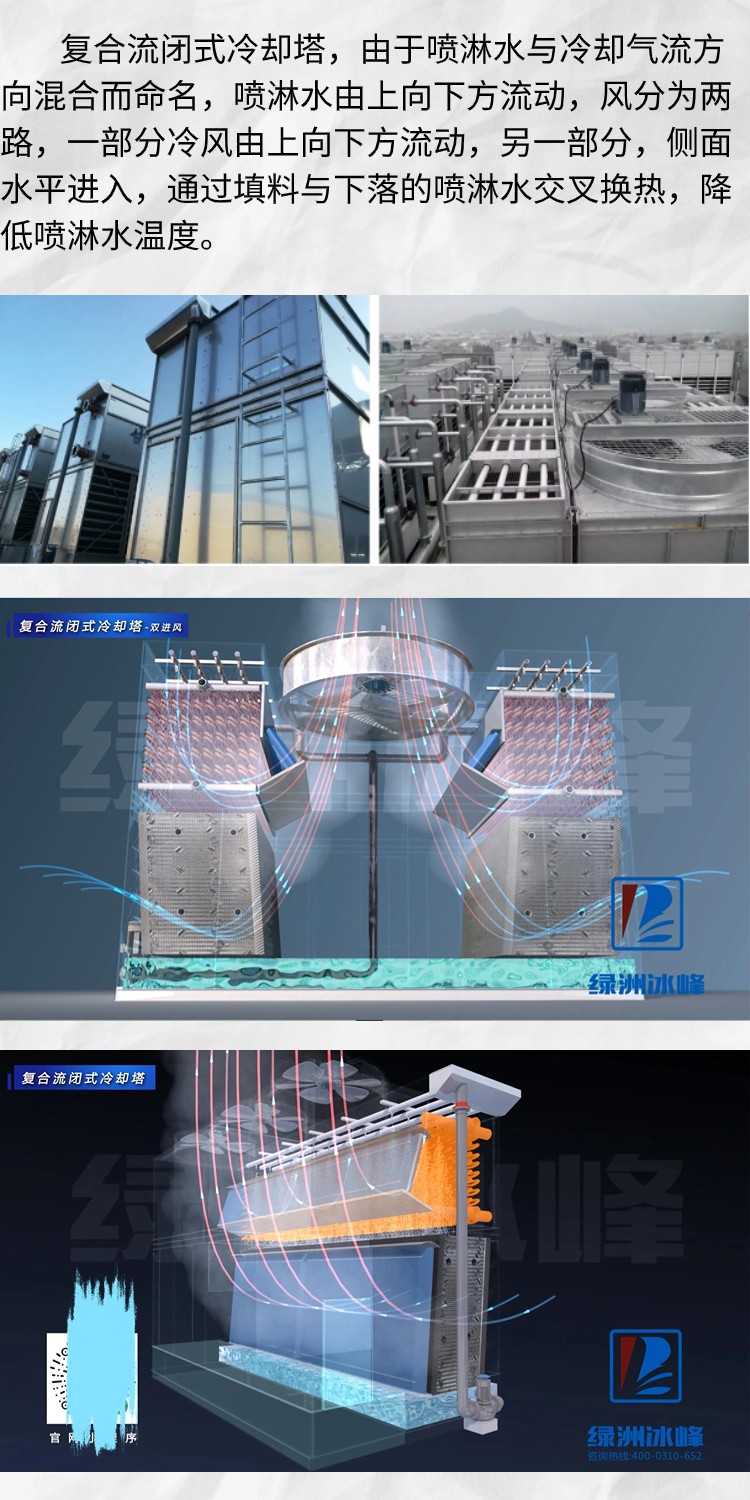
Evaporative air cooler, utilizing the evaporation of spray water, the air carries it out of the tower for cooling and heat exchange of the circulating medium inside the tubes, with the circulating medium completely isolated from the outside.
Due to the vaporization of the spray water, a large amount of steam mixes with the air, increasing humidity, which requires a strong exhaust fan, i.e., a blower, to expel the saturated, high-humidity, high-enthalpy air outside the tower. On the surface, it's the cooling of the air, along with the evaporation of the spray water, commonly referred to as an evaporative air cooler, sometimes also called an evaporative cooler.
Section II: Working Principle
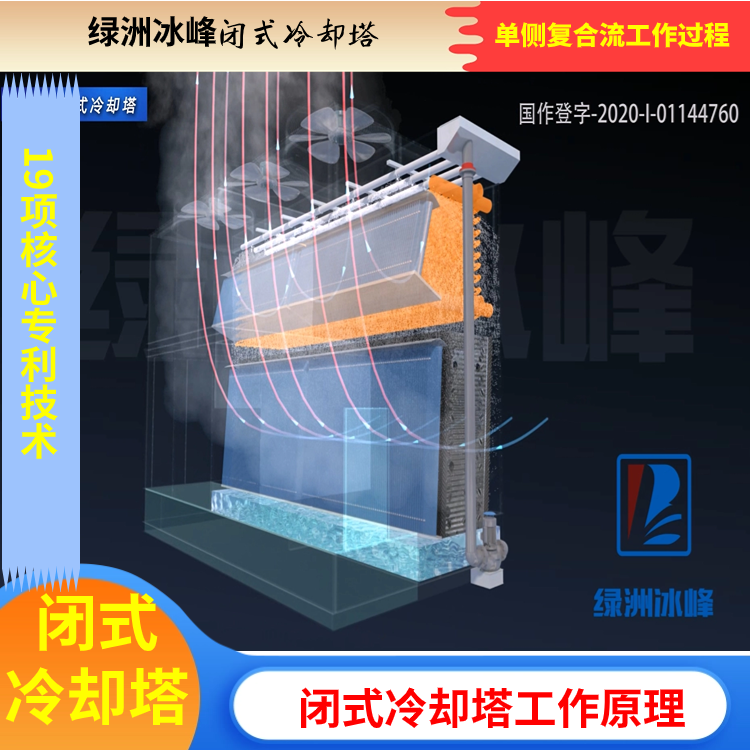
1. Latent Heat of Vaporization: Similar to closed cooling towers, it relies on the spray water outside the heat exchange tubes to evaporate, absorbing latent heat of vaporization and carrying away the heat energy of the industrial circulating water medium inside the enclosed heat exchange tubes.
2. Interfacial Heat Exchange: Sprayed water and air are completely isolated from the circulating medium, with no contact at all, only heat exchange, no contact.
Section 3: Main Advantages
1. No Evaporation: Only temperature reduction, no evaporation or consumption; the circulating medium is completely isolated from the external air, with no contact at all. There is no medium evaporation, consumption, or impurity entry, ensuring the stability of the internal medium composition.
2. Non-scaling: Due to no evaporation, the concentration of scaling ions such as calcium, magnesium, and sulfate in the medium remains unchanged, hence scaling does not occur.
3. Easy Maintenance: All coils are fully visible, making maintenance convenient and repairs straightforward.
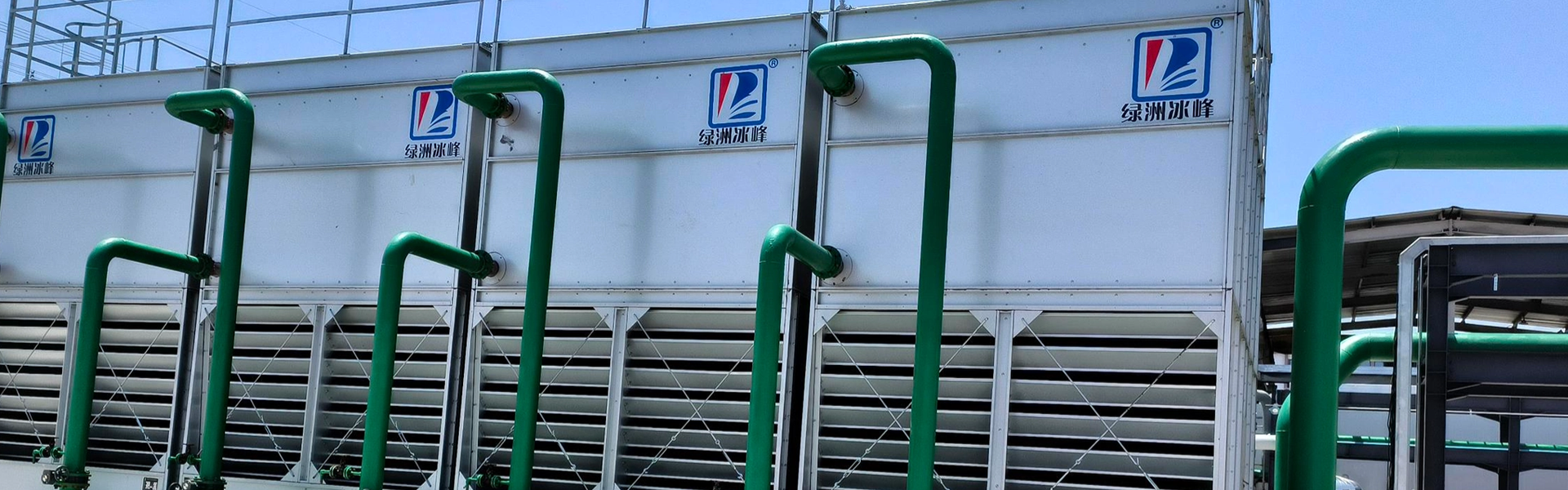
4. The equipment features four-sided air intake with low air resistance, reducing the fan power.
IV. Application Scenarios
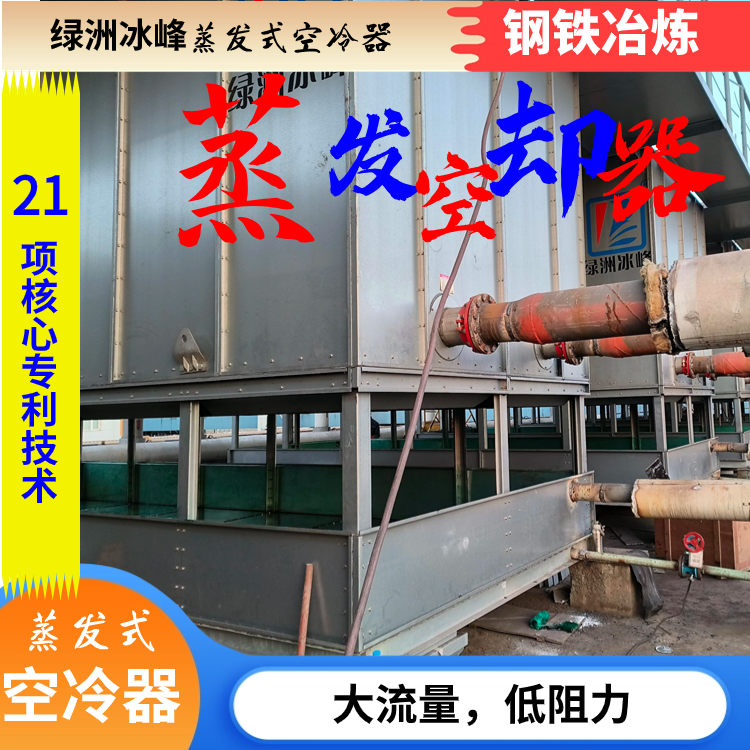
Commonly used in heavy industries such as steel metallurgy, casting smelting, petrochemicals, chemical light industry, machinery and electricity, it is resistant to scaling, reduces evaporation, and is often used for cooling desalinated water and pure water. It cools within sealed heat exchanger tubes, completely isolated from the external atmosphere.
1. Iron and Steel Metallurgy: Blast furnaces, continuous casting and rolling, crystallizers, air compressors, etc.
2. Large-scale Casting: Melting furnaces, inverters, quenching fluids, etc.
3. Petroleum Refining: Reactors, smelting furnaces, heat exchangers, etc.
4. Chemical & Textile: Reactors, etc.
5. Air Conditioning Refrigeration: Compressors, etc.

V. Brand Advantages
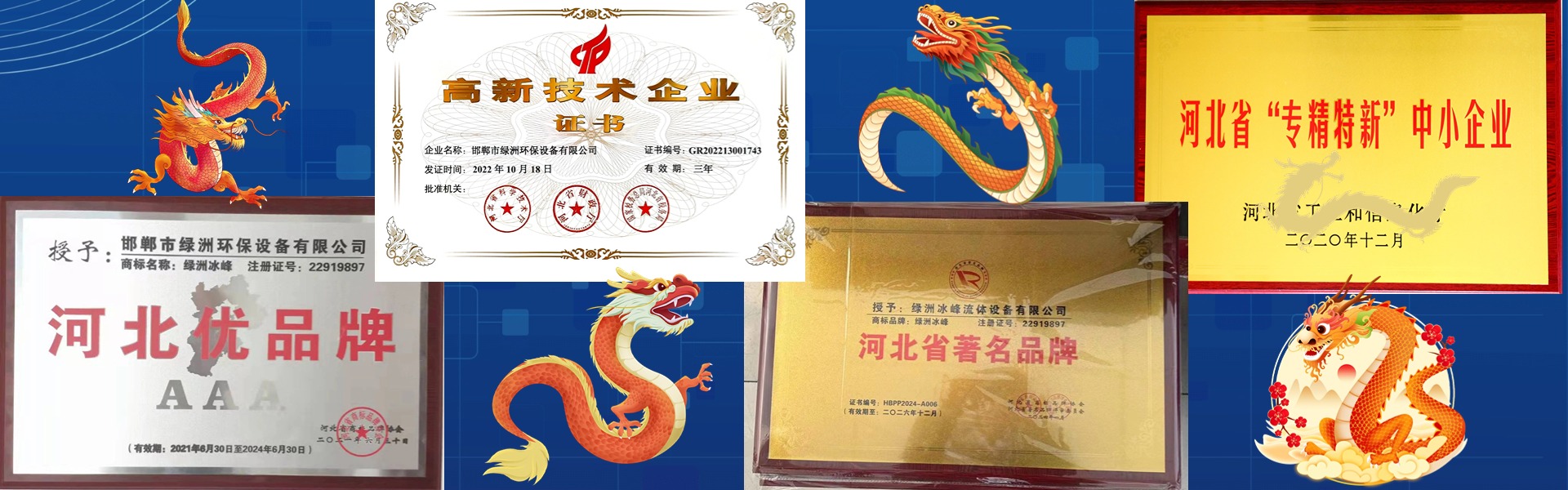
Focused for 21 years, our expertise is unmatched due to our unwavering focus, extensive experience, and superior quality.
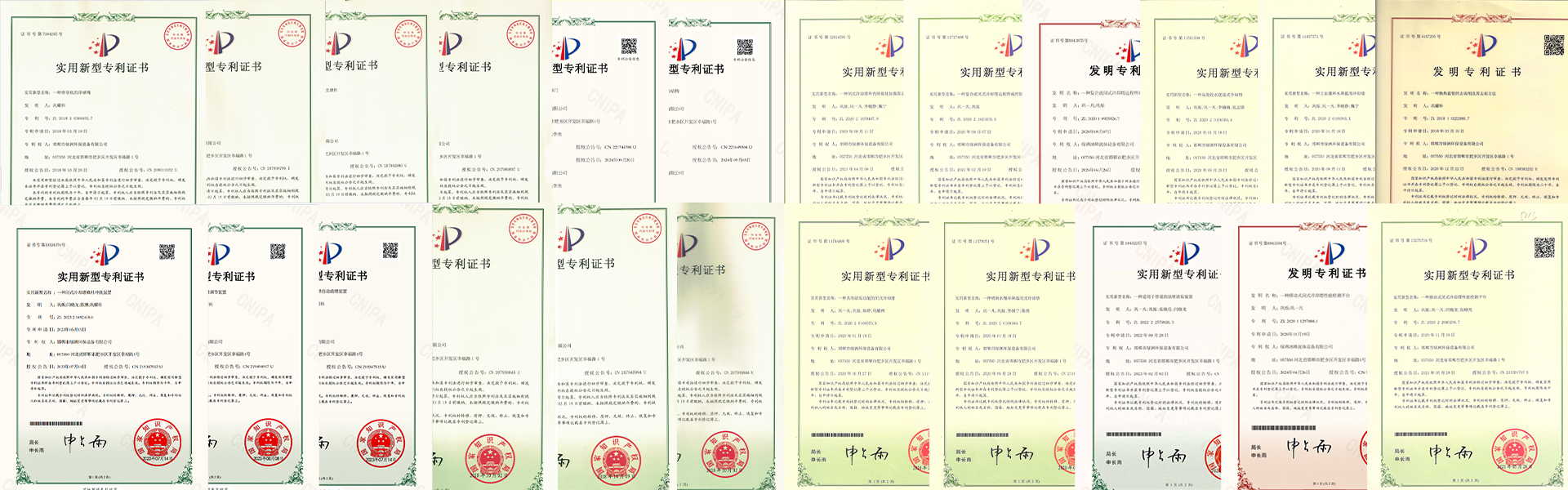
21 patents, backed by patents, reliable technology, excellent performance, stable operation
40 acres of land, robust strength, solid backing, long-term partnership.

Case 6:
Due to its use in steel metallurgy, chemical, light industry, textile, oil refining, etc., it typically requires a flow rate of over 500 m3/h. The dimensions are generally large, and all are custom-made, designed according to transportation conditions, usage site, and production process parameters, with no standard specifications.