






详情描述
Pre-construction preparation
Prior to laying the composite geomembrane, it is essential to complete the inspection of the previous process and prepare the composite geomembrane accordingly.
(1) To lay a protective layer, a 10cm sand cushion or stabilized layer can be used at the bottom to prevent damage to the composite geomembrane. Based on the actual situation, my project employs a 10cm stabilized layer, which must meet the required strength and be level on the surface. The composite geomembrane can only be laid after passing the supervisor's inspection and approval.
(2) Prior to the installation of composite geomembrane, it must be tested to ensure its extensibility meets engineering requirements. Proper storage and transportation measures must be taken to prevent damage due to excessive sun exposure and during transit.
(3) Determine the laying, jointing, and inspection acceptance methods for smooth construction.
2. Composite Geomembrane Installation
(1) Composite geomembrane installation
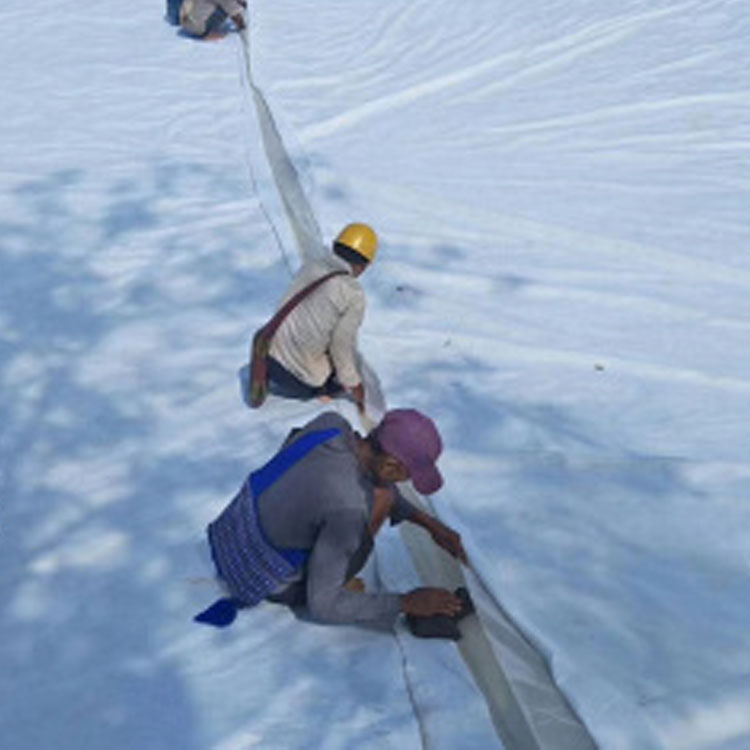
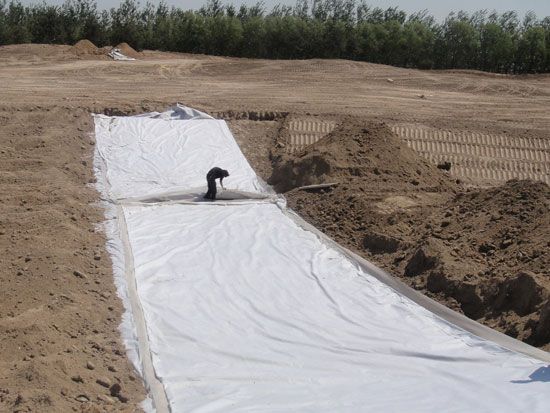
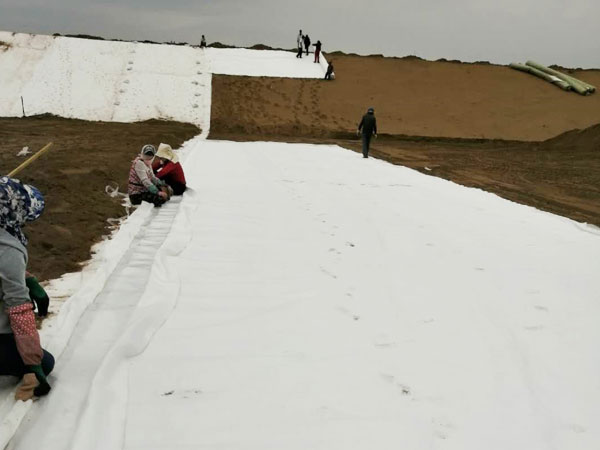
To facilitate construction and ensure the quality of assembly, it is generally preferable to use wider widths to minimize on-site assembly. Due to the gradient at the bottom of the Nierke first-level hydropower station channel and irregular shapes in some areas, based on the actual project, our project uses a slope dimension of 6*15 meters and a channel bottom dimension of 4*13 meters. The materials are cut on a dedicated site and transported to the work area using appropriate equipment, followed by manual laying. During the laying process, the materials are slowly rolled from the top of the slope to the bottom, with a requirement for a slow rolling speed, a flat surface, and adequate allowance for deformation; movement of equipment and personnel on the geotextile is prohibited during the laying process.
(2) Composite geomembrane joint
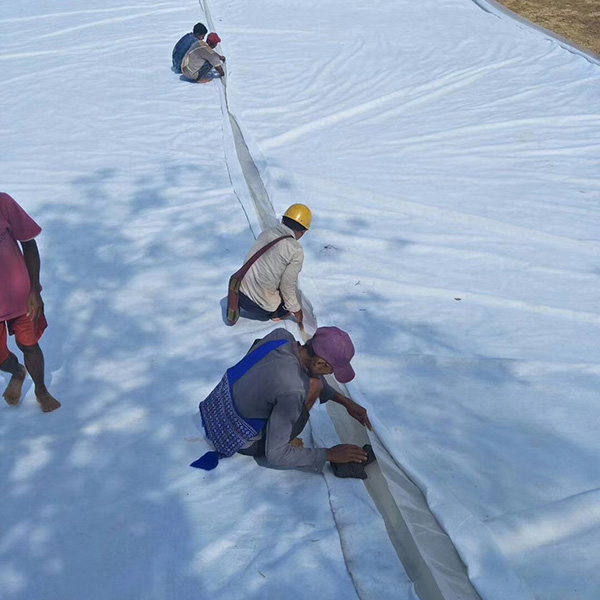
Composite geomembrane joints can be made by overlap, welding, sewing, or adhesive bonding. Depending on the technical requirements, I adopt a combination of welding and adhesive bonding for my construction. Generally, welding is used; however, when encountering curved gradient sections or irregular shapes, geomembrane KS-specific solid adhesive bonding is employed. When joining, pay attention to the following points:
A. Must use professional equipment and skilled operators.
B. Prior to welding or bonding, wipe the joint area with clean cheesecloth or cotton cloth to ensure it is free of water, dust, and dirt. The geomembranes are aligned parallelly, with overlaps of not less than 10 cm.
(3) Composite Geomembrane Acceptance
After the composite geotextile membrane is joined, our quality inspection team conducts an initial self-inspection, correcting any non-compliant issues. Following this, the supervisor inspects the work, and only upon passing the inspection can the next construction process begin. Inspection methods include the vacuum method and the inflation method. The inflation method is mainly introduced here: the equipment includes an air pump, gas needle, and vacuum gauge; the焊接 seams have two, with a gap of about 10mm between them. Seal both ends of the section to be tested, insert the gas needle, inflate to 0.05 to 0.2 Mpa, observe for 30 seconds, and check the vacuum gauge. If the air pressure does not drop, it indicates no leakage, and the seam is合格. Otherwise, repairs should be made promptly. When repairing, the patch should be more than 10cm larger than the leakage area, and the final inspection must be passed.
3. Cautionary Notes
(1) Enhance the protection of composite geomembrane to prevent direct sunlight exposure. If there is a special reason preventing the next process, cover and protect it accordingly.
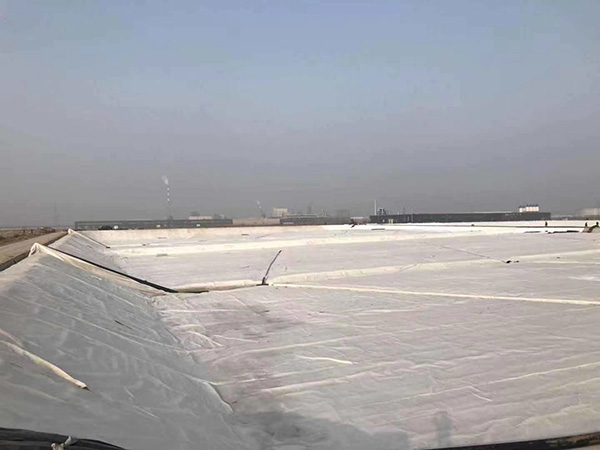
(2) Lay and compact simultaneously to prevent wind from lifting the geotextile membrane, causing tears or wrinkles. Use sandbags for compaction and avoid hard objects like stones to prevent abrasion.
(3) Continuously inspect for any surface defects such as cracks, pits, or holes during the laying process.
(4) When laying composite geomembrane, select favorable weather conditions. It is strictly prohibited to lay during rainy or snowy weather, and protective measures must be taken for the laid material.
Ensure smooth appearance and meet quality requirements.


