


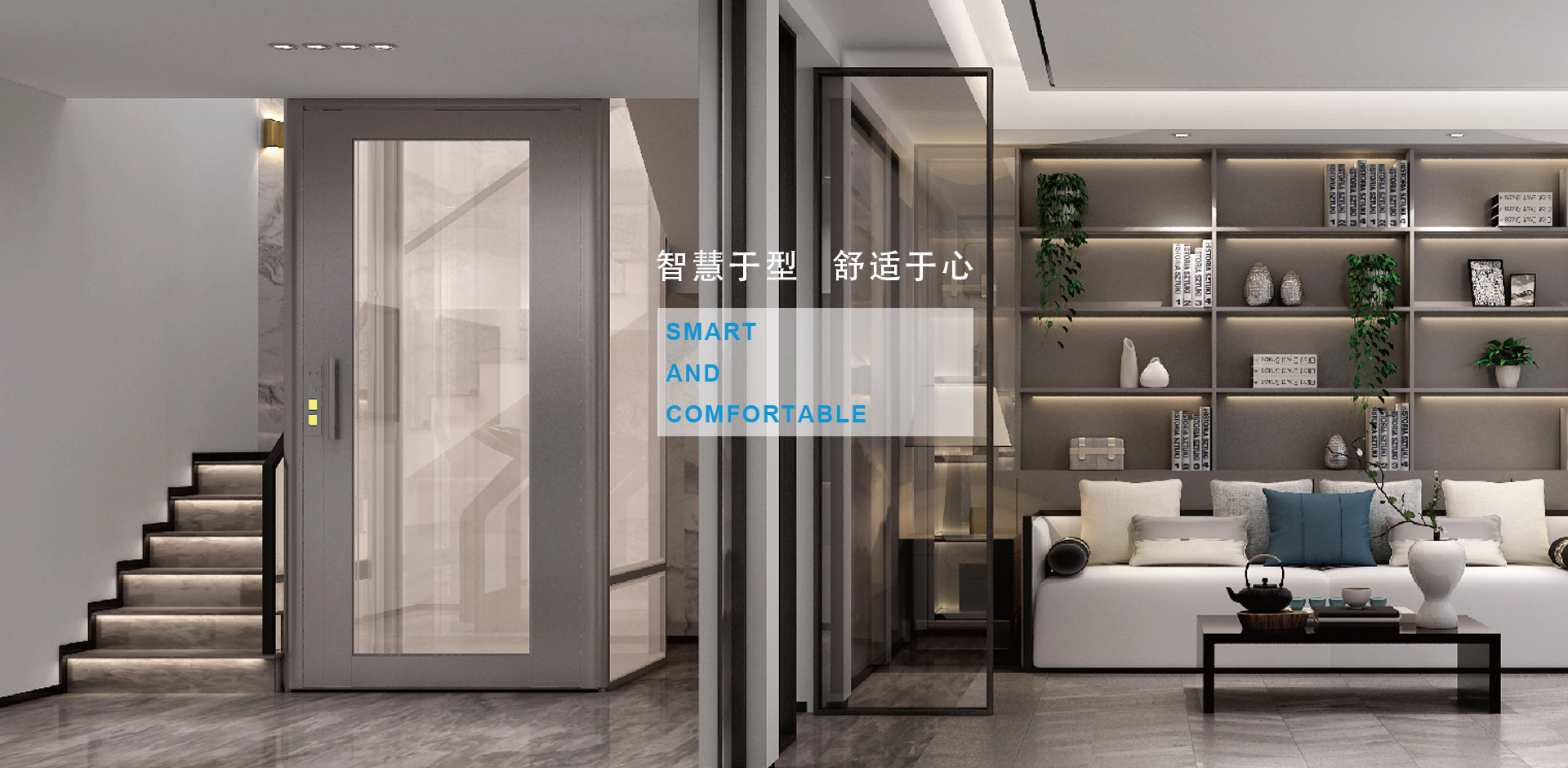




Have you ever seen residential elevators and public elevators? What's the difference between them?
I. Environmental Usage
Residential elevators are designed for private home environments, while public elevators are used in commercial buildings, office towers, high-rise residential complexes, and other public settings.
Capacity-bearing
Due to the limited number of elevator seats domestically, the general cargo capacity is typically under 400KG; public elevators, with high usage, can accommodate a large number of additional passengers, with a weight capacity ranging from 400 to 1600 kilograms.
Three, operational rate
In accordance with national regulations, the operating speed of domestically produced elevators must not exceed 0.4 m/s. The standard speed for domestic elevators is 0.15 m/s, with various speeds ranging from 0.25 m/s to 0.3 m/s. The operating speed range for public elevators is 1.0-4.0 m/s.
Section 4: Types of Ladder Doors for Residential Elevators
In standard residential elevators, there are several types for public environments. Automatic doors typically come in two styles: intermediate and horizontal.
Many villa owners consider installing a small home elevator when renovating their homes. Home elevators differ significantly from standard household appliances, so owners must engage in continuous comparison to select an elevator that meets their home needs. What are the processes involved in choosing a domestically produced small elevator? Here's a summary.
1. Homeowners must determine whether it is necessary to install a small residential elevator in their homes. For instance, if there are elderly or young children in the household, installing a home elevator can offer convenience for the family.
2. After the domestic small elevator installation is confirmed, the owner needs to familiarize themselves with the elevator industry and choose a well-known, legitimate elevator manufacturer for residential elevators. Elevator manufacturers' technicians conduct on-site measurements to further determine the size and installation location of the domestic elevator.
3. Once the elevator model for installation is confirmed, technicians must prepare in advance before the installation. This includes pre-determining the reserved power and telephone lines. If there is no elevator shaft, one must be constructed. During the on-site installation process, adjust the installation plan promptly based on issues encountered in the actual installation environment.
4. During the renovation of a new house, elevators are typically installed in the middle to later stages. Upon arrival at the site, the installation crew should first determine the placement of the elevator components and ensure proper moisture and water prevention measures are in place. After installation, the elevator requires tuning. During this process, the owner can personally test the elevator. If the owner is not satisfied, the installation crew will make adjustments on the spot.
The above is the essential procedure for selecting a home elevator. Once these formalities are completed, the elevator at your home is officially installed.
