
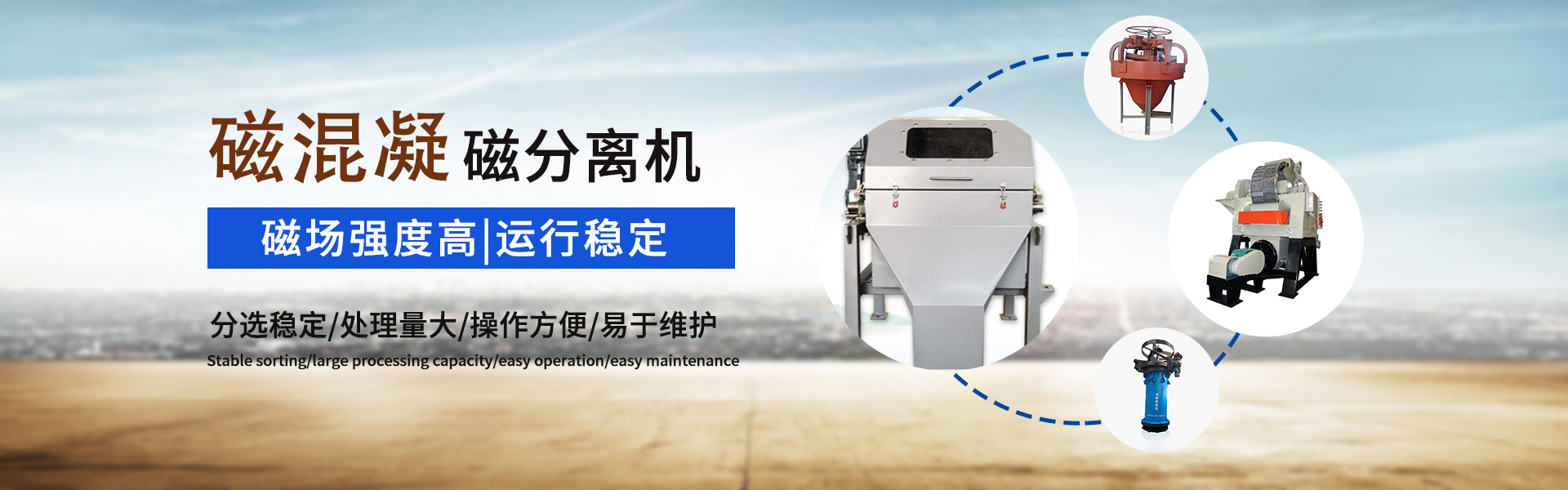
1. Loading concrete magnetic separation technology
The loading of magnetic混凝 separation technology involves adding recyclable magnetic powder during the chemical flocculation process, which enhances the density of the floc, significantly improving the sludge settlement speed and effluent quality while reducing the land area required.
Technical Features: Sedimentation rate of 20m/h to 40m/h, effluent TP < 0.1 mg/L, turbidity < 1 NTU, SS < 5 mg/L, high removal rates for COD and BOD.
2. Process Flow Diagram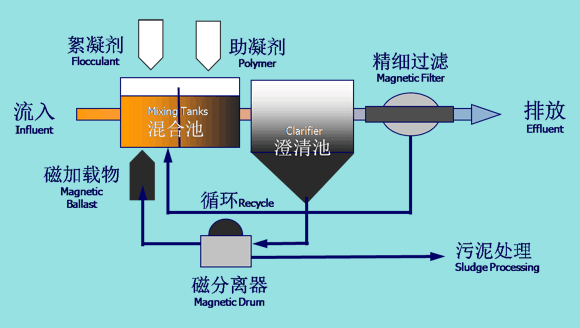 The system adds magnetic loading material and flocculant to the mixed pool for magnetic powder loading of the activated sludge, followed by solid-liquid separation in the clarification pool. The high-concentration activated sludge is then recycled back to the biochemical reaction pool, thereby increasing the sludge concentration in the biochemical system and enhancing the treatment efficiency. The rapid sedimentation of sludge in the clarification pool not only significantly increases the unit treatment capacity but also effectively addresses the issue of filamentous bacteria expansion in the activated sludge.
3. Technical Advantages
(1) Fast settling rate, high surface loading, effectively reducing the occupied area.
(2) Effectively increases sludge concentration to 8-12 mg/L.
(3) Magnetic powder recycling usage, with minimal loss.
(4) Successfully addressed the issue of sludge filamentous bacteria expansion.
(5) Suitable for the upgrading and expansion of existing wastewater treatment plants.
Outflow Effect:
(1)COD<50mg/L
(2)BOD<10mg/L
(3)SS<5mg/L
(4)TP<0.1mg/L
(5) Turbidity < 1 NTU
4. Market Applications
(1) Municipal wastewater treatment upgrading and capacity enhancement application
(2) Mobile units for rural and village wastewater treatment have been developed, facilitating on-site processing to effectively address the scattered nature of rural wastewater and the inadequacy of the sewage管网 infrastructure.
(3) Utilizes water treatment for lakes, rivers, and other surface water bodies to remove algae, significantly reduce total phosphorus levels, effectively control eutrophication, and improve water quality.
(4) Treatment for oil wastewater, papermaking wastewater, chemical wastewater, and high-phosphorus industrial wastewater.
(5) Providing a technical platform for local emergency wastewater treatment systems to address sudden events and natural disasters.
