
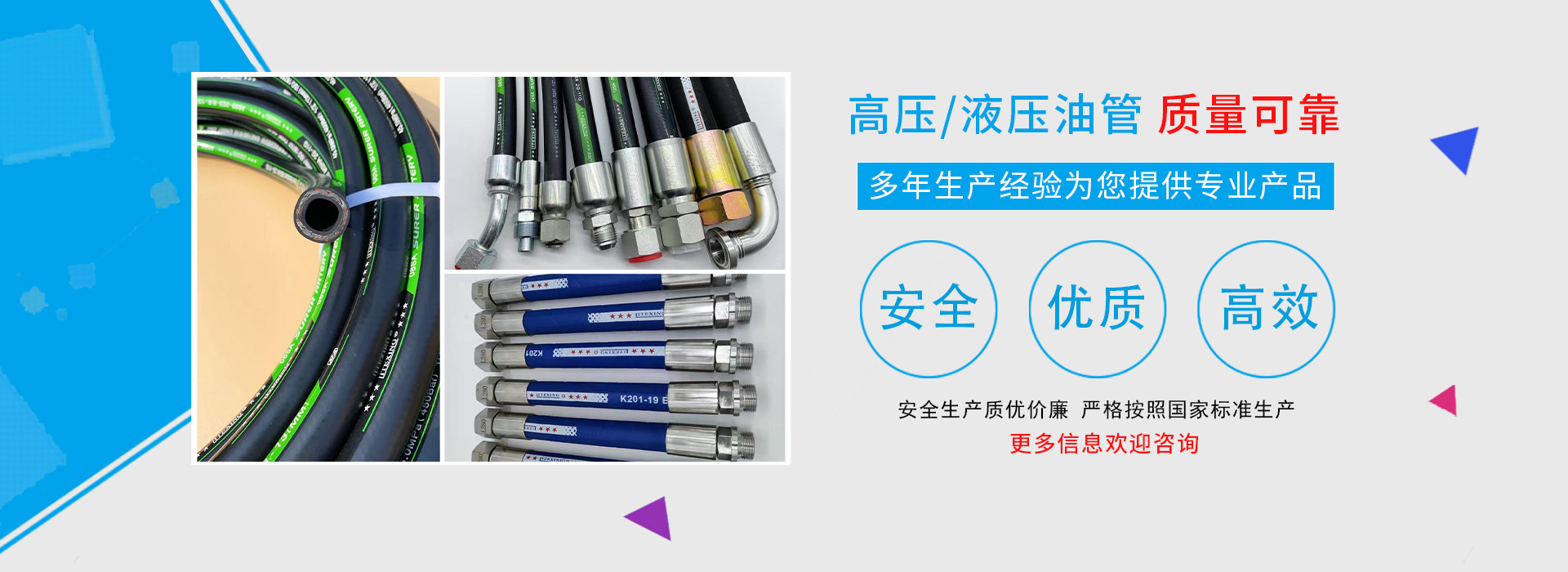

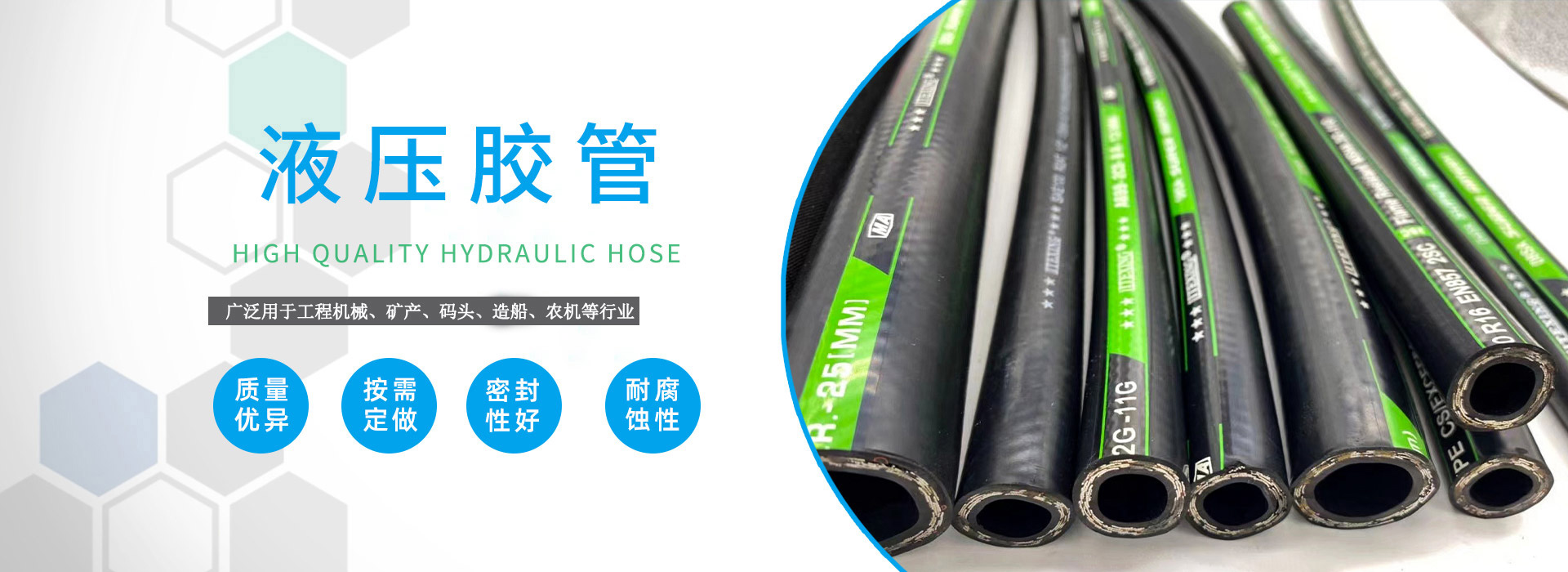

Improper handling during use can significantly reduce the lifespan of high-pressure hoses. Therefore, we must be careful and observant during regular use. Manufacturer staff inform us that issues may arise after some time of use, such as problems with the inner rubber layer of the high-pressure hose. Next, let's discuss the precautions for using high-pressure hoses.
First and foremost, it's crucial to keep away from heat sources, as high-pressure hoses have a very short lifespan when exposed to high temperatures. Therefore, in unavoidable situations, oil hoses can be fitted with protective sleeves or insulating panels to prevent the high-pressure hoses from deforming due to heat.

Ensure that the high-pressure hoses are installed away from other hoses and piping to avoid contact. In areas where the hoses need to cross or where there may be friction with mechanical surfaces, when bending the hoses, avoid sharp bends. The bend radius R should be ≥ (9~10)D, where D is the outer diameter of the hose. Additionally, it is best to minimize bends in the oil lines, as they require significant resources to bend.
If the inner rubber layer of a high-pressure hose is hard and cracked, it may be due to the plasticizer added to the rubber products, making the oil hose flexible and pliable. However, when the high-pressure hose overheats, the plasticizer leaks out. Severe deterioration of the inner rubber layer within the high-pressure hose, with明显的 swelling, indicates that the rubber material inside the oil hose is incompatible with the hydraulic system oil, leading to chemical degradation of the high-pressure hose.
