
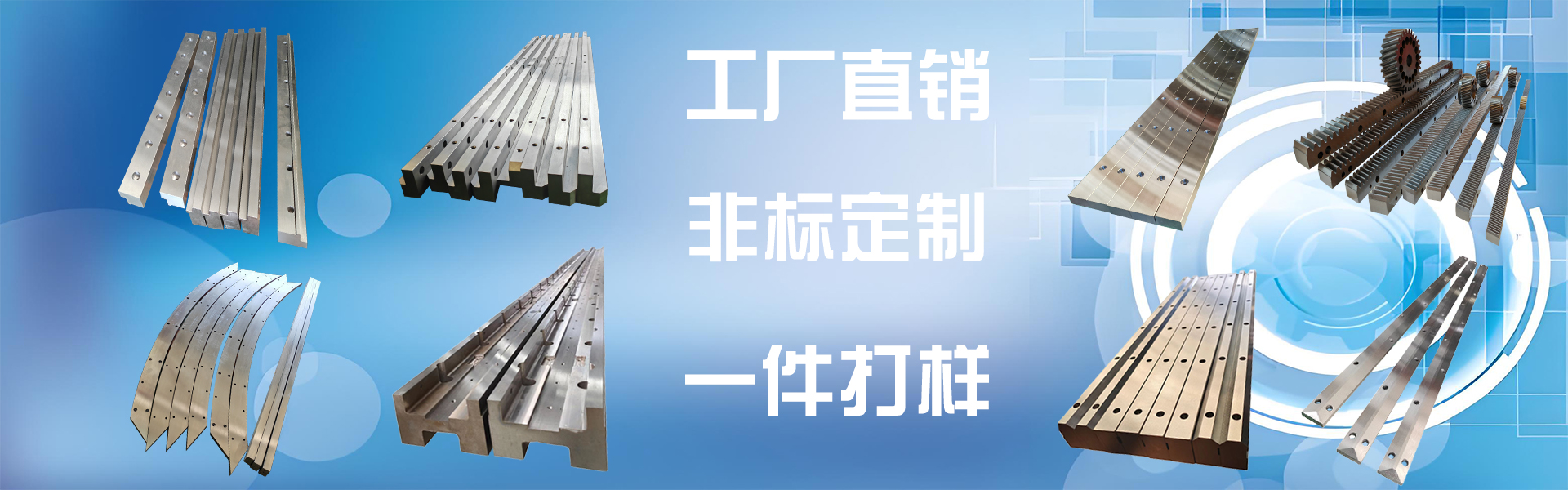

The L-shaped guide rail is a linear guiding component with a cross-section in the shape of an "L" (right-angled), also commonly referred to as an angle guide rail. Its core features include a compact structure, built-in installation datum, and the ability to simultaneously perform guiding and positioning functions. It is widely used in small automation equipment, light industrial machinery, door and window sliding tracks, and other applications.
I. Core Structural Features
Track Body
The cross-section features a 90° right-angle structure, with the two side surfaces serving as a guide face and an installation reference face, respectively. No additional positioning plates are required, simplifying the equipment's structural design.
Material is categorized into two types:
Industrial Scene: Primarily cold rolled steel or quenched steel, with guiding surfaces ground to a finish, hardness reaching HRC55~60, and excellent wear resistance.
Civilian/Light Load Applications: Available in aluminum alloy or stainless steel, lightweight and corrosion-resistant, suitable for food machinery and medical equipment.
Flexible Specifications: Customizable widths and thicknesses based on load requirements, with common widths ranging from 10 to 50mm, and lengths available for custom sizing or splicing.
Complementary sliding/scrolling components
The L-shaped guide rail can be paired with two types of motion subunits, accommodating various precision requirements.
Sliding Fitting: Equipped with L-shaped sliders or seats, the contact surfaces can be lined with wear-resistant plastic strips to reduce friction coefficients. Cost-effective and suitable for low-load, low-speed applications (such as drawer slides, small conveyors).
Roller-Integrated System: Featuring roller or ball slider, the roller/ball makes linear or point contact with the guide rail surface, offering minimal friction resistance and smooth movement, ideal for linear feeding mechanisms in automated equipment.
Section II: Working Principle and Core Advantages
Core Working Principle
The guide's right-angle structure provides bidirectional limitation. As the slider moves in a straight line along the L-shaped guide's guiding surface, the guide's vertical surface prevents lateral displacement of the slider, eliminating the need for additional side positioning devices. Drive force is transmitted to the slider via a motor or cylinder, achieving precise linear reciprocating motion.
Highlight Our Advantages
Installation Convenience: Equipped with a 90° datum plane, simply align with the right-angle edge of the equipment frame during installation, eliminating the need for complex leveling calibration, significantly reducing assembly time.
Compact Structure: Integrated guidance and limit function, occupying less space compared to the combination of rectangular guide rails and lateral baffles, ideal for the design requirements of miniaturized equipment.
Low Cost: Simple processing technology with no need for complex groove designs. The option to choose different materials based on requirements ensures a balance between cost-effectiveness and practicality.
Highly adaptable: Satisfies both civil light-load applications (such as furniture sliders) and meets medium-load industrial automation requirements through hardening treatment and upgraded rolling components.
Maintenance and Care Tips
Lubrication Management
Sliding L-shaped guide rail: Regularly replenish guide rail oil to maintain a complete oil film on the guiding surface, reducing wear; plastic-coated guide rails can extend the lubrication cycle appropriately.
Rolling L-shaped guide rail: Lithium-based lubricant is added to the roller bearing or ball assembly, with a replenishment every 500 operating hours.
Cleaning and Protection
Industrial environments require the addition of dust guards to prevent iron shavings and dust from adhering to the guide surfaces; for stainless steel guides in outdoor or humid conditions, regularly wipe away surface water stains to avoid buildup.
Gap Adjustment
If the sliding guide rail has excessive gaps, tighten the pressure plate by adjusting the screws on the slider to reduce vibration; for the rolling guide rail, fine-tune the eccentric distance of the roller to ensure smooth movement.