
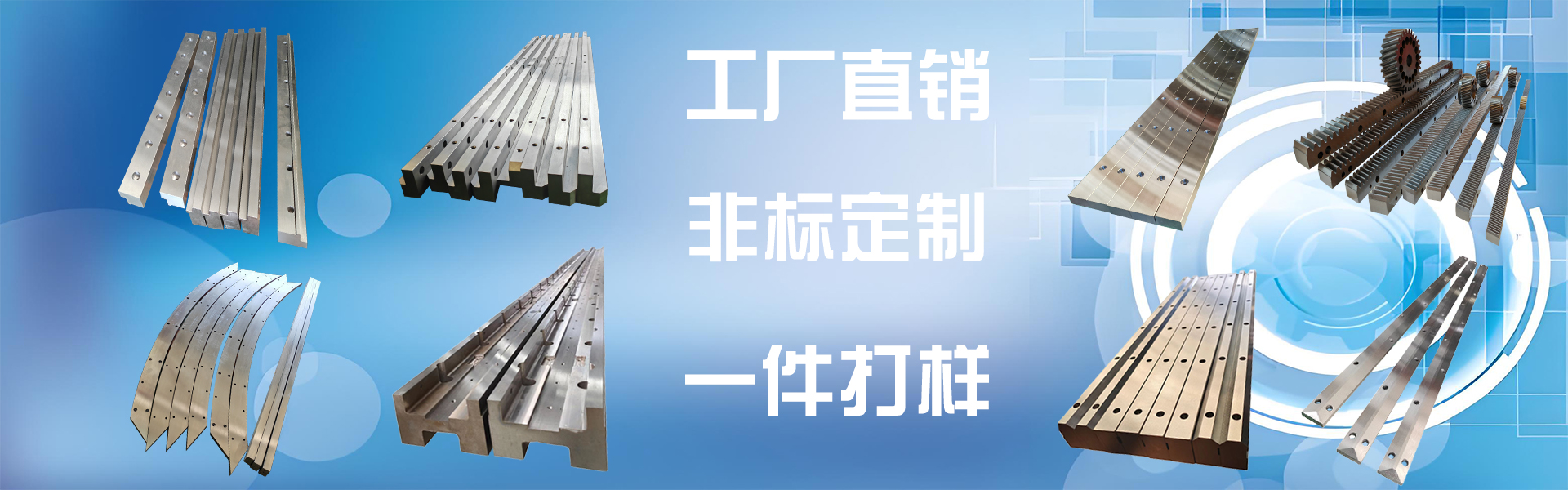

The core principle of roller guide rails is to replace sliding friction with rolling friction between the roller and the guide rail surface, achieving high-precision, low-resistance linear guidance through the rolling movement of line contact. This can be broken down into three key stages:
Core Motion Mechanism: Linear Contact Rolling Friction
The roller guide rail is composed of two main components: the guide rail body and the roller slider. Its core motion logic is:
The working surface of the guide rail body (commonly V-shaped or rectangular) is treated with quenching and precision grinding, offering extremely high hardness and straightness.
The roller on the slider is connected to the slider base via a bearing. As the slider is driven in motion, the roller rotates and rolls along the guide rail's working surface rather than sliding.
The contact form between the roller and guide rail is linear, offering a larger contact area compared to the point contact of ball guides. This allows for more even distribution of loads. Additionally, the rolling friction coefficient is only 0.005~0.01, significantly lower than the sliding guide rail's 0.1~0.3, greatly reducing motion resistance.
2. Gap Compensation and Precision Control: The Function of the Eccentric Adjustment Mechanism
To ensure precision and stability in motion, the roller guide rail achieves flexible adjustment of gaps through eccentric rollers, which is a key design in its working principle.
Some roller axles are designed with an eccentric structure, allowing the rotation of the adjusting screw to alter the position of the roller axle.
When there is a gap between the track and the roller, fine-tuning the eccentric wheel can reduce the gap, ensuring a tight fit between the roller and the track surface, eliminating any wobble during movement.
If the gap is too small, causing excessive operating resistance, reversing the adjustment can increase the gap to ensure smooth movement.
This design also compensates for errors in the installation base surface, reducing the requirement for installation precision.
3. Load-bearing and overturning resistance principles: Multi-roller cooperative force distribution
Heavy-duty roller guide tracks are typically designed with multiple roller combinations to enhance load-bearing capacity and anti-overturning moment.
The roller wheels on the slider are symmetrically distributed (such as a 4-wheel or 6-wheel structure). When subjected to radial loads, axial loads, or overturning moments, multiple wheels are simultaneously subjected to forces, preventing overloading of a single wheel.
The side rollers of the V-shaped roller guide can simultaneously conform to both inclined surfaces of the V-guide, supporting both vertical loads and counteracting lateral forces to prevent the slider from drifting.
The characteristic of line contact allows the guide rail to rapidly distribute pressure over a larger surface area when withstanding impact loads, thereby reducing localized wear.
Additional: Adaptation logic for different working conditions
In challenging environments with excessive dust and oil污, the minute gap between the roller and guide rail prevents debris from adhering easily, and it can even be directly cleaned by a scraper, avoiding any jams.
Polyurethane roller guide tracks reduce motion noise through the elastic deformation of the wheels, while also cushioning impacts, making them suitable for applications requiring silence, such as in the medical and food industries.