
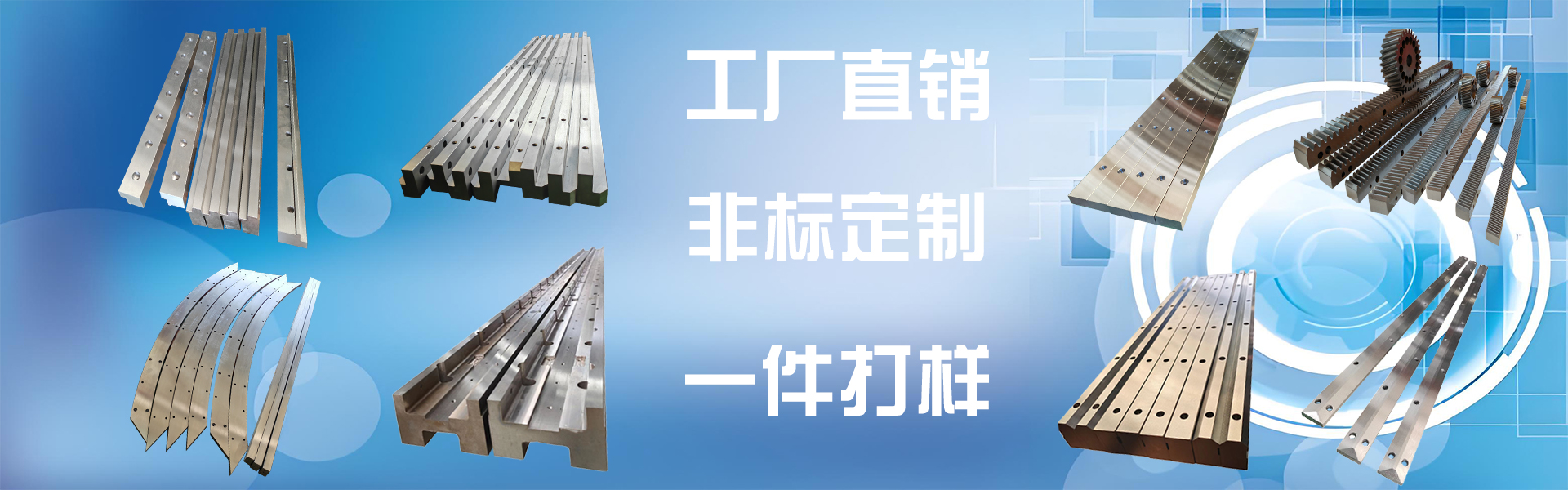

The classification of guideways is diverse, with the core being divided into four main dimensions: friction properties, structural shapes, movement trajectories, and application scenarios. Guideways under different classifications are suited for various equipment conditions. Below is a detailed classification system:
Division by Friction Nature (the most core classification method)
This is the fundamental classification basis for guides, directly determining their motion characteristics, precision, and applicable scenarios.
Sliding Guide Rails
The principle is that the moving parts and the supporting conductive parts are in direct face contact and slide against each other, relying on the lubricating film to reduce friction.
Features: Simple structure, high rigidity, large load-bearing capacity, and low cost; however, high friction coefficient and prone to "creep" at low speeds.
Common Types: Rectangular Sliding Rails, T-slot Sliding Rails, Triangular Sliding Rails, Plastic-Coated Sliding Rails.
Typical Applications: Standard lathes, heavy-duty milling machines, metallurgical equipment, and construction machinery.
Rolling Guide Track
The Principle: Add ball bearings, roller bearings, roller wheels, and other rolling elements between the moving and load-bearing parts to form rolling friction.
Features: Extremely low friction coefficient (about 1/10 to 1/50 of sliding guideways), responsive motion, no crawling at low speeds, and high positioning accuracy.
Common Types: Ball Linear Guides, Roller Linear Guides, Wheel Guides.
Typical Applications: CNC machine tools, industrial robots, automated production lines, precision instruments.
Static Pressure Guide Rails
The Principle: By utilizing an external hydraulic/pneumatic system, a pressure oil film or air film is formed between the guide surfaces, allowing the moving parts to float and operate without contact friction.
Features: Friction coefficient approaches zero, with extremely high precision, wear-free, and good shock resistance; however, requires a hydraulic/gas system, which is costly and has complex maintenance.
Common Types: Liquid Static Pressure Guides, Gas Static Pressure Guides.
Typical Applications: Ultra-precision grinding machines, coordinate boring machines, semiconductor lithography machines, high-precision measuring instruments.
Two, classified by structural shape
Different shapes of guides exhibit distinct differences in load-bearing direction and anti-overturning capacity, as categorized by the cross-sectional shape of the guides.
Rectangular guide rail
The cross-section is rectangular, with parallel plane guiding surfaces, facilitating easy manufacturing and installation. It can withstand both vertical and certain lateral loads, and is available in sliding and rolling configurations.
Application: Machine tool workbenches, automated equipment slides.
Cocktail Dress Track
The cross-section is in the shape of a swallowtail, capable of withstanding vertical loads, lateral forces, and overturning moments. The structure is compact and the gaps are adjusted through the use of strips.
Applications: Machining Tool Holders, Precision Instrument Workbenches, Small Robot Joints.
Triangular guide rail (V-shaped guide rail)
The cross-section is V-shaped, with high guiding accuracy, capable of automatically compensating for wear gaps, and is available in both symmetrical and asymmetrical configurations.
Applications: Precision grinding machines, coordinate measuring machines, and guide bodies for roller guide ways.
Circular Guideway (Cylindrical Guideway)
The section is circular, with a simple structure, capable of linear and rotational movements; however, it has weak torsional resistance.
Applications: Cylinder piston rods, light-duty conveying equipment, medical equipment lifting mechanisms.
Combined Guideway
The guide rail is composed of a combination of two or more cross-sectional shapes, integrating the advantages of different guide rails, such as the "rectangle + dovetail" combination.
Applications: Heavy-duty gantry milling machines, large-scale machining centers.
III. Divided by the trajectory of motion
The motion parts are categorized into two types: linear guides and curved guides, based on their motion paths.
Linear Guide Rails
Guiding motion components in linear reciprocating motion is one of the most commonly used types in the industrial sector.
Applications: CNC machine tools, robotic slides, conveyors, 3D printers.
Curved Guide Rails (Arc Guide Rails)
Guiding motion components to move in circular or curvilinear paths, the tracks are in the shape of arcs, which can be divided into sliding and rolling types.
Applications: Robot joints, rotary tables, automated sorting equipment, circular production lines.
IV. Categorized by Application Scenarios / Fields
Specialized categorization based on equipment types and industry requirements, offering enhanced relevance.
Machine Tool Guideways
Engineered specifically for machine tools, emphasizing rigidity, precision retention, and resistance to cutting impacts. Common types include sliding guides, rolling guides, and hydrostatic guides.
Applications: Lathe, Milling Machine, Grinding Machine, Machining Center.
Robot Guided Track
Adapting to the motion requirements of industrial and collaborative robots, focusing on high precision, high rigidity, and modular design, common types include ball guide rails, roller guide rails, and truss guide rails.
Applications: Robot End Effector, Gantry Robot, Palletizing Robot.
Reinforced Rail
Engineered for heavy-duty equipment, the carrying capacity reaches several tens of tons, and the overturning moment resistance is strong.
Applications: Metallurgical equipment, mining machinery, large hydraulic presses, port crane equipment.
Clean Rail
The surface is smooth with no dust shedding, suitable for dust-free environments. Common types include gas-lubricated guideways and polyurethane roller guideways.
Applications: Semiconductor Manufacturing Equipment, Food Packaging Machinery, Medical Cleanroom Equipment.