
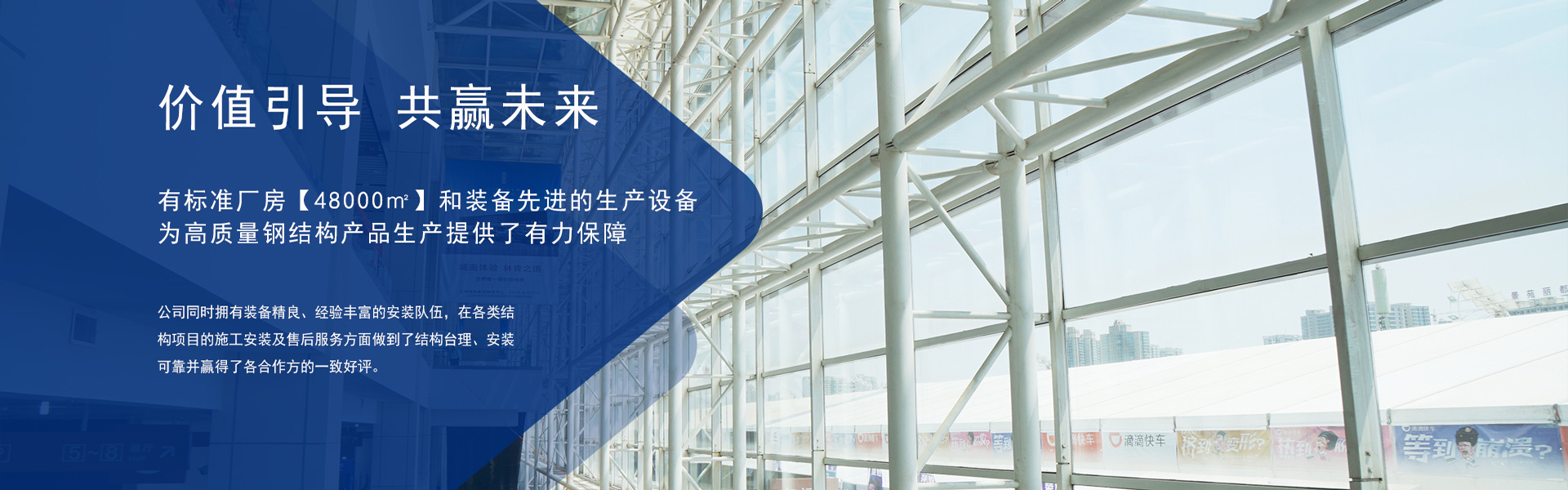



The architectural installations of truss engineering structures are sprouting up like bamboo after rain, serving people with great strength and momentum. This is inseparable from the technicality and superiority of truss engineering. However, caution must be exercised regarding potential fault issues that may arise. Below, let professional truss engineering installers share specific knowledge and doubts with you. We hope everyone can learn more about the techniques and knowledge of truss engineering installation and truss processing.
Technical Performance of Grid Structure Technology
1. Capable of withstanding vertical loads;
2. Features vertical tensile strength, ensuring that the upper and lower structures do not disconnect during vertical earthquakes.
3. Features anti-lateral force performance, ensuring the structure does not detach during horizontal earthquakes.
4. Adaptable to radial and circumferential displacement requirements.
5. Adaptable to corner requirements in any direction.
6. The grid rubber bearing exhibits excellent vibration reduction properties.
7. The bracket transmits force through a spherical surface, eliminating the phenomenon of force necking, resulting in relatively uniform reactive forces on the upper and lower structures.
8. The bracket does not use rubber to bear pressure, eliminating the impact of rubber aging on the bracket, resulting in a longer service life.
The advantages of lightweight, short installation cycles, aesthetics, and ease of maintenance have always been at the core of technical exploration in the steel grid industry. Looking at the current development status, the application advantages are mainly reflected in the following aspects.
1. The variety and specifications of steel used are increasingly diverse, with low-alloy high-strength structural steel and heavy-duty steel becoming a growing trend. Alongside the continuous advancement of steelmaking technologies, cast steel and other plate steels are gradually being utilized. Therefore, exploring scientific welding techniques is essential.
2. Characterized by unique design, rich and complex structure, diverse grid node construction, and an extraordinary variety of welding joint forms, this has consequently led to an increasing difficulty in both the manufacturing of components and the on-site installation welding techniques.
3. The manufacturing of the factory and on-site installation involve numerous factors, with significant differences among various trades in the grid work, which also presents certain challenges for on-site installation.
The building's height is significant, with a large structural span, and the seismic performance design requires high quality in the welding of the main steel structures.
In summary, as the technology of grid installation progresses, grids are advancing at a pace that is deeply integrating into the construction of every city and even rural areas. Grids possess certain technical performance, which is a given. However, manufacturers still believe that common fault issues are often inevitable, necessitating a more scientific approach when selecting grid installation services.
