

Product Overview:
Buoy-tethered submersible mixers, also known as buoy-tethered mixers, are the latest generation of mixing equipment designed for deep circular or square tanks that require gentle and uniform mixing without damaging the floc structure of activated sludge or the bacterial aggregates. Based on the summary of existing domestic and international wastewater mixing equipment, the product structure and performance have been innovated, especially creatively changing the horizontal structure of the propeller mixers to a vertical recirculating structure. This modification significantly enhances the overall structural technical performance, mixing efficiency, service area, and applicability. They offer advantages such as long service life, low noise, easy installation and maintenance, cost-effective investment, and low operating costs.
Operating Principle:
Buoy-tethered submersible mixer with a propeller-type impeller and paddle blades as the main hydraulic components. The submersible motor drives the propeller and paddle blades during operation, creating a certain flow rate and flow field that forms a circular mainstream belt at the bottom and around the pool. Due to the higher flow rate of the mainstream belt, a turbulent region is formed around it, promoting a large-scale vertical circulation in the entire water body. This achieves a uniform and gentle stirring effect, keeping the sludge in the pool in a constant state of movement and suspension, thereby enhancing the treatment efficiency.
Based on different application scenarios, we offer three series of mixers: high, medium, and low.
The medium to high-speed mixing series has relatively higher speeds and a narrower service range, but offers gentler mixing. It is suitable for anaerobic or aerobic treatment in wastewater treatment.
Low-speed push-mixing series features low speed, wide service range, high hydraulic efficiency, and uniform mixing. It is suitable for use in regulating ponds of various sewage treatment projects, as well as for anaerobic or aerobic treatment.
Product Features:
1. Large turbulence area with a wide operational zone, gentle and uniform mixing without damaging the flocculent structure of the activated sludge or the bacterial flocs.
2. The water flow utilizes a vertical large circulation scheme, suitable for deeper circular or square ponds. It thoroughly stirs sludge and the radiation area can reach 100~800 square meters.
The mixer is powered by a submersible motor, which operates submerged in the liquid, ensuring good cooling conditions, a wide range of applicable depths, and no noise or secondary pollution.
4. The main seal of the diving motor consists of two independent mechanical seals, with the friction pair material being corrosion and wear-resistant alloy and silicon carbide. All fasteners are made of stainless steel.
The motor windings are insulated with F-grade insulation, featuring an IP68 protection rating, and are equipped with protective functions such as leakage detection and winding overheating protection, ensuring safer and more reliable product use.
Multiple installation options are available. Floating installation allows for easy relocation of the work position, offering convenience and flexibility; it can be centrally automated or operated individually, making management straightforward.
Scope of Application and Applicable Conditions:
Broadly applicable to the treatment of industrial wastewater from oil, chemical, dyeing, leather-making, papermaking, textile, and other industries, as well as urban domestic sewage.
Medium Temperature: ~0℃-40℃
Medium pH ~ 5-9
Medium density not exceeding 1150 Kg/m³.
Equipment should be free of fiber matter; avoid plastic burlap, metal wire, sticks, and other debris from entering the pool.
Submersible motors must be fully submerged in water for operation and cannot be used in environments prone to flammability, explosiveness, or strong corrosion.
Structure Overview:
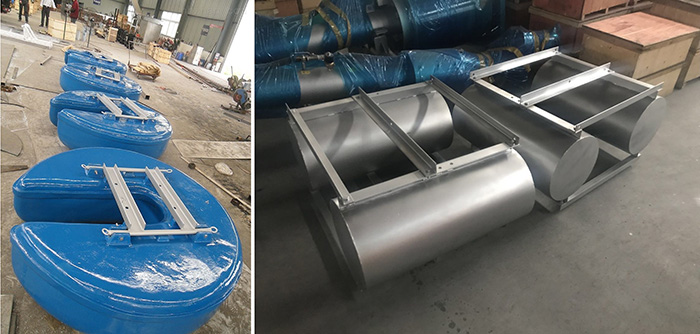
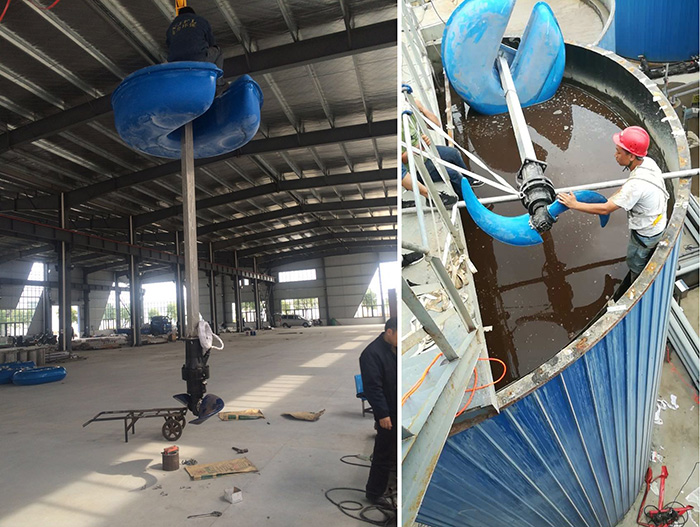
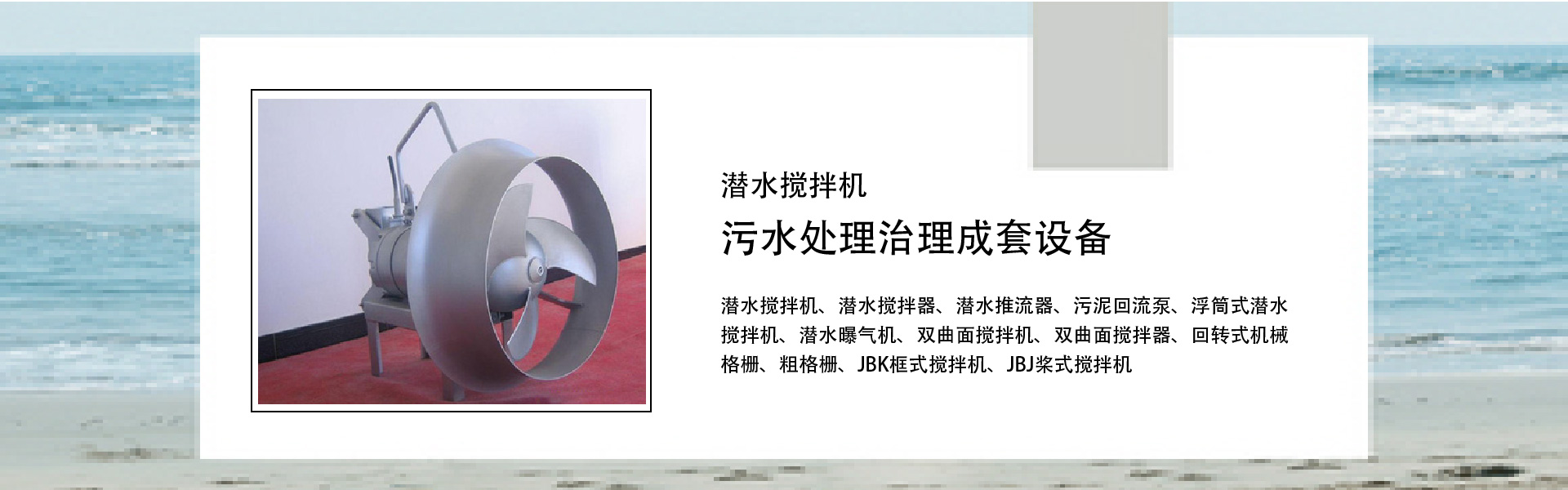
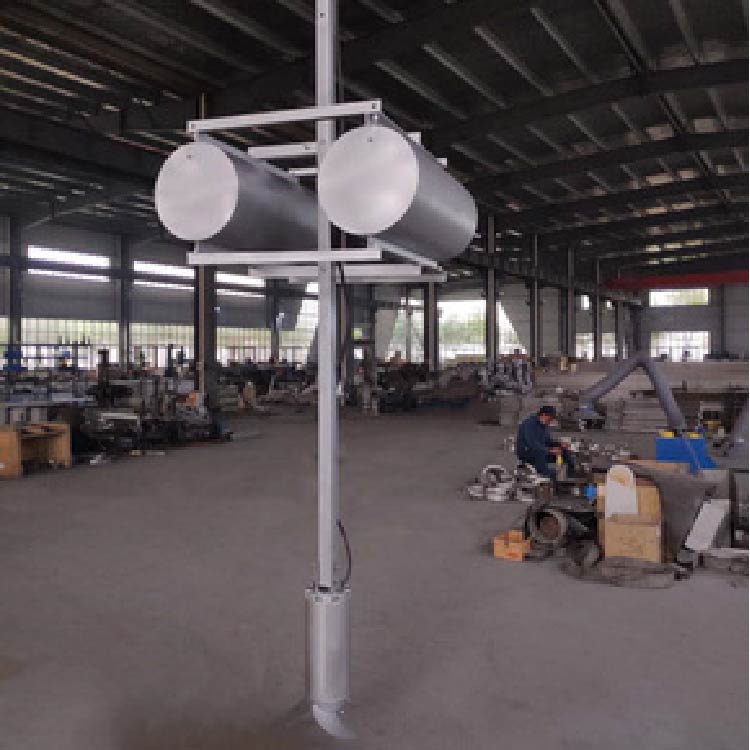
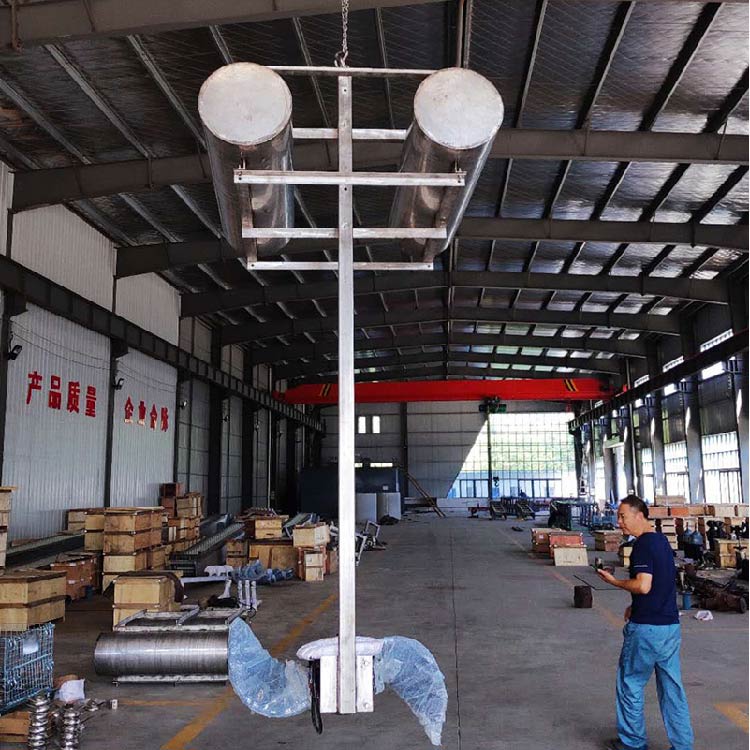
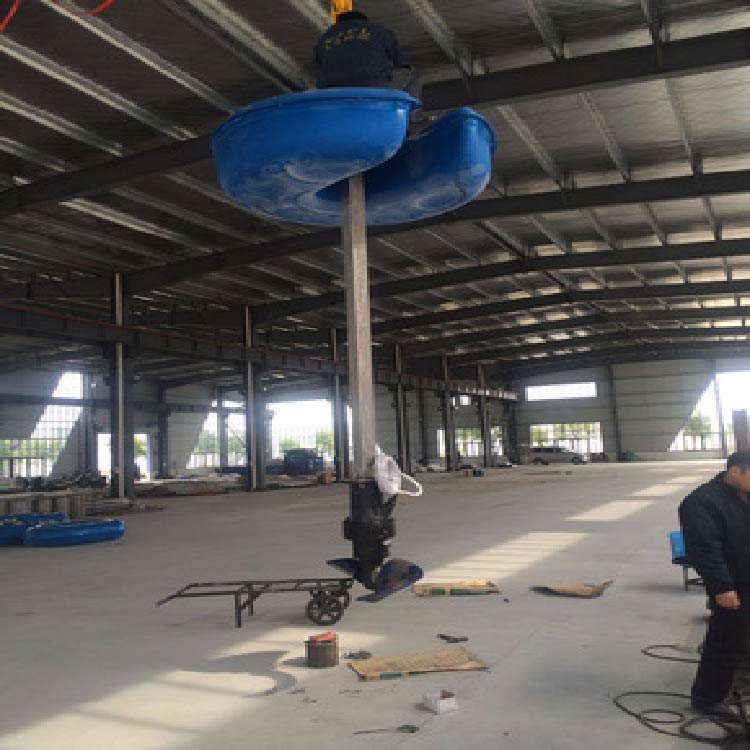
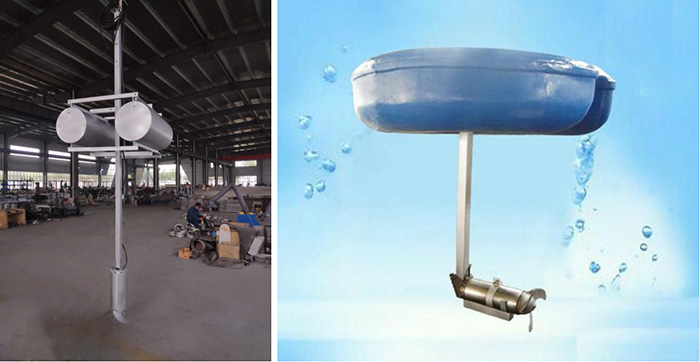
Our self-developed submersible buoyant impeller mixers are compact and space-saving. The medium to high-speed mixers consist of buoys, submersible motors, impellers, steel cables, and guide rods; while the low-speed buoyant impeller mixers are composed of paddle blades, a reducer, submersible motors, steel cables, a main shaft, and buoys.
Installation and Commissioning:
Installation of medium to high-speed mixers
(1) Secure the four buoy tie rings at the middle of each side of the buoy box, then connect one end of the fixed wire rope to the earring on the tie ring using a shackle. Prepare four long and sturdy ropes on-site, each to securely tie the other end of the wire rope.
The cable line for the submersible mixer should be secured to a steel wire rope and extended to the shore for connection to the electrical control cabinet.
Check the motor's rotation direction. Before the first installation and startup of a submersible mixer, or after each re-installation, the rotation direction should be checked. The method of checking is: instantaneously start the submersible mixer and observe that the impeller's rotation direction aligns with the direction indicated on the label. If the rotation direction does not match, simply swap the positions of any two phases in the three-phase wires. If multiple submersible mixers are connected to the same control box or terminal, each mixer must be checked separately.
④. Secure the buoy with hoisting equipment, ensuring balance and avoid directly hanging it on the hoop ears. Gently lift the entire unit with the hoisting device, slowly lower it into the pool, release the hoisting gear, and use a fishing line to pull it gently into the pool's position. Arrange the buoy in a diamond shape with its corners aligned with the pool's edges. Then, slightly tension the steel wire ropes, visually check that the two opposite ropes are in a straight line. The two straight lines formed by the four ropes should intersect perpendicularly and be perpendicular to the buoy's sides. Drill holes along the wire rope direction at the sturdy top of the pool wall, secure the stakes with expansion bolts, adjust the lengths of the four wire ropes, considering the potential water level drop, and leave sufficient slack. Clamp the heads securely and fasten them to the stakes with shackles. Throughout the hoisting process, always protect the cables and never use the cable of a submersible mixer for hoisting or hanging the mixer.
Low-speed mixer installation
When installing the impeller, align it with the hub and mating surface, ensuring the tip of the impeller extends beyond the main hub. The remaining installation steps are consistent with those for medium to high-speed mixers.
Note! The impeller cannot be reversed underwater, otherwise it will cause severe damage to the main engine and blades!