
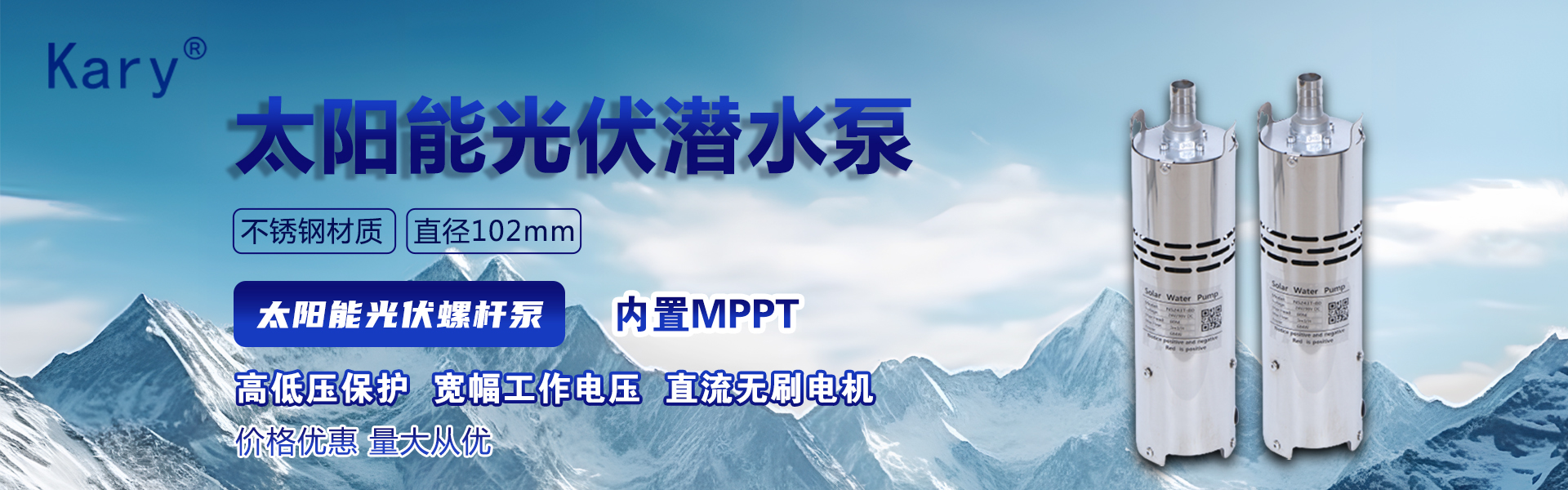

Photovoltaic solar water pumping systems are equipped with submersible pumps, solar panels, and solar water pump inverters, which include inverter, variable frequency, and...MPPTZHigh-power tracking module, a system utilizing solar water supply.
"Photovoltaic Pumping System," also known as "Solar Photovoltaic Water Pumping System" or "Solar Water Pumping System," operates on the fundamental principle of converting sunlight directly into electricity using solar panels, which then powers various electric motors to pump water from deep wells, rivers, lakes, ponds, and other water sources. It features noiseless and fully automatic operation.(Rise with the sun and rest with the setting.)High reliability, good adaptability to water supply and evaporation volume("Great drought, greater dryness")Our solar pump systems offer numerous advantages and are widely used in various applications. Let's introduce you to the composition materials of solar pumps.
Photovoltaic solar water pumping systems are equipped with submersible pumps, solar panels, and solar water pump inverters, which include inverter, variable frequency, andMPPTZHigh-power tracking module, a system utilizing solar-powered water supply.
The system incorporates features such as automatic low-water protection, water level protection, frost protection, intelligent on/off, manual and automatic start-up, and intelligent fault protection. It achieves automatic balance between flow and energy at different lift heights. This system addresses the inefficiency and low energy utilization rate of traditional pumping systems, reducing the power requirement of solar panels under the same pumping capacity, significantly lowering production costs and reducing the entry barrier for customers.
New Solar Photovoltaic Water Supply SystemZDeeply extractable to a great depth200Domy's underground water can easily lift water hundreds of meters up barren mountains during reclamation efforts, effectively addressing water supply issues in multiple fields such as mountain reclamation, ecological environment improvement, crop irrigation, and human and animal drinking water. Compared to traditional water supply methods, it is simpler to implement, requires no substantial costs for setting up power networks or configuring power generation equipment, and is not prone to environmental pollution.
