



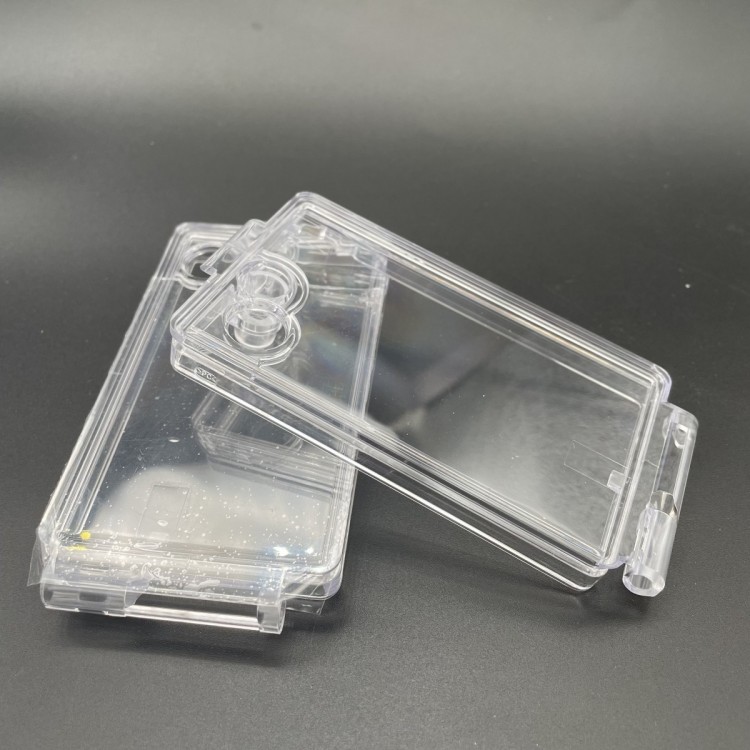

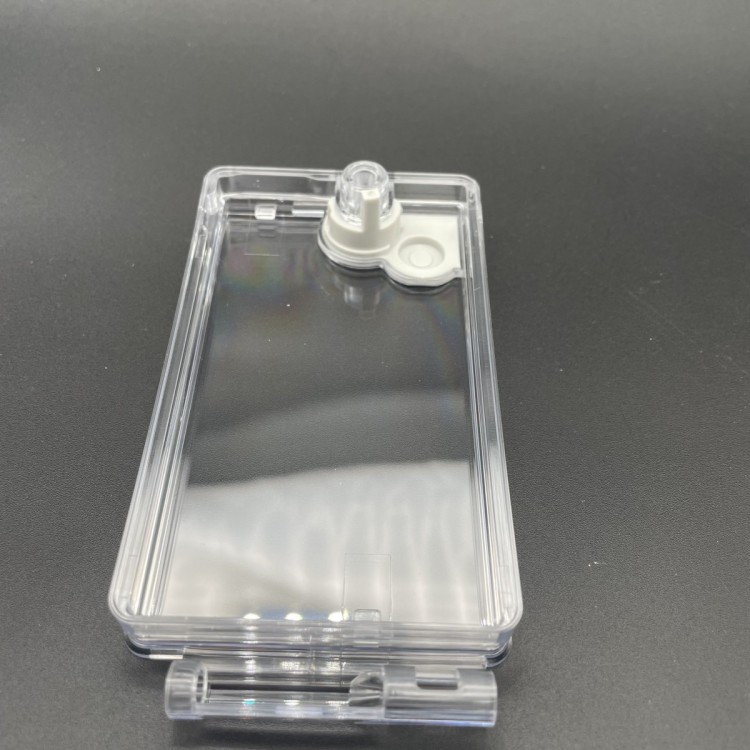
Plastic products made of PMMA material offer high light transmittance, excellent chemical resistance, as well as certain hardness and strength. Therefore, they are widely used in optical products, small containers, and various decorative applications.
Due to the high light transmission rate of the material, it is sensitive to shearing, making it easy to expose and observe certain defects in the product. On the other hand, the material has a high viscosity and poor fluidity when melted, which poses some requirements for the processing equipment.
Thirteen issues should be noted when molding and processing PMMA materials.
1. Equipment Selection: Choose a machine with appropriate injection volume and clamping force based on the product's weight, shape, and cycle. Excessive injection allowance or a long cycle can affect product quality.
2. Screw Selection: Opt for screws with low heat generation and good plasticization. The processing requirements for PMMA materials call for a high surface finish on the screw, with no dead corners or wear where the plastic melt flows. For instance, transparent lenses utilize a structure with barrier function to enhance the plasticization effect. For colored lenses, use dowel pins or dowel pins through the head of the screw to strengthen the mixing effect.
3. Choose Nozzle: Use an open structure with a larger nozzle hole, and keep the length short, not long.
4. Material Drying: When using recirculating hot air drying, due to the PMMA granules' surface being prone to soften and stick together, they may form lumps at the bottom of the hopper, making it difficult to discharge. Note to keep the temperature moderate and ensure sufficient airflow.
5. Material Processing: Avoid prolonged stay within the extruder cylinder. In case of extended downtime, reduce the cylinder temperature to below 170°C to prevent melt degradation.
6. Sprue Material: Strictly control the extraction, crushing, packaging, storage, and mixing processes of sprue material to prevent the admixture of colored materials and dust. The ratio of new to old material is dependent on the product.
7. Mold Cleaning: Regularly clean the scale on the mold cavity surface, and clean when the product's finish is insufficient.
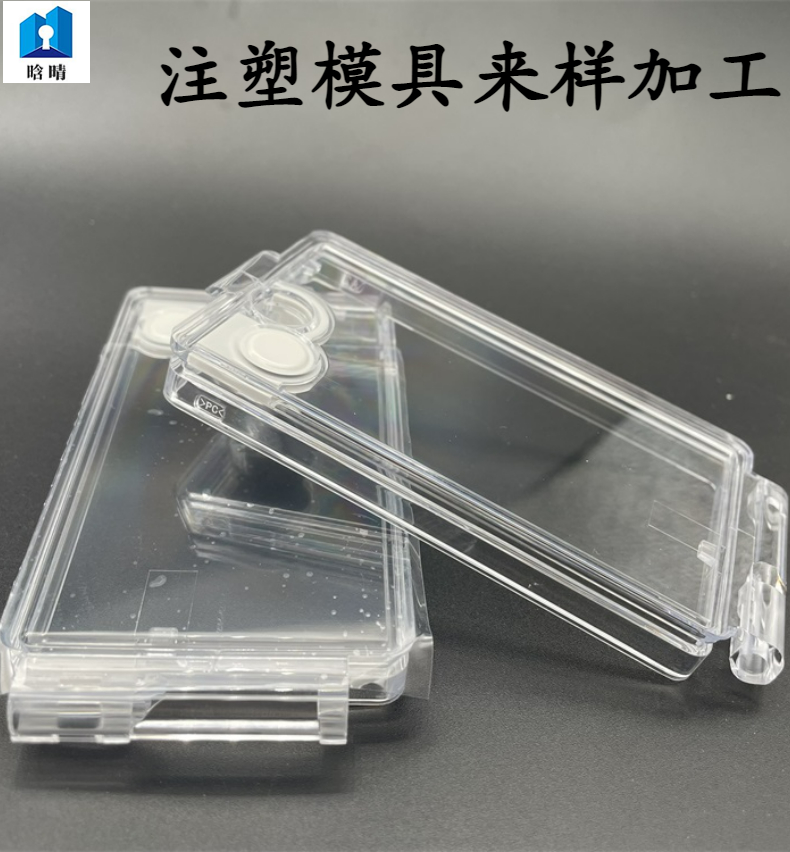
8. Molding Gate and Runner Design: Adheres to the principle of minimal shearing and smooth flow. Utilizes larger runners and gates. Excellent venting performance with properly placed vent holes and slots.
9. Mold Ejection Angle Design: To ensure smooth demolding during the molding process, an ejection angle must be set in the demolding direction during the design phase.
10. Mold ejector pin or push plate design: For decorative products, ejector pins are seldom designed, and most use push plates for demolding. For those who require ejector pins, the design must adhere to the principle of balanced ejection.
11. Multi-cavity mold: The arrangement of cooling water channels should be as balanced as possible; otherwise, it may be difficult to ensure consistency for each product.
12. Machining PMMA plastic products: Generally requires a water temperature controller to stabilize and control the mold temperature during the processing.
13. Transparent PMMA products are prone to defects such as weld lines, turbulence lines, cold slug spots, shrinkage, and bubbles.
7 Applications Analysis of PMMA Material
1. Plastic Eyewear: Glasses include prescription lenses, reading glasses, and sunglasses. Injection molding method for glasses that are molded in one piece with a specific prescription, easy to color, and cost-effective. Generally, PMMA material is used more often, while fibers, transparent nylon, or PC plastic are used for higher requirements.
The CJ150M3 and CJ180M3 machines are commonly used for eyewear processing. Small screws are used for the process, and molds are generally designed in a 1×5 or 1×6 weekly symmetrical arrangement. Reading glasses and corrective lenses have stringent size requirements, necessitating extended holding time to minimize shrinkage and achieve the designed dimensions. Sunglasses lenses, being flat, have less stringent requirements but are usually dyed, and are categorized into one-step and two-step dyeing.
2. Plastic Light Guide Plates: Virtually all LCD displays utilize plastic light guide plates. The materials used for these plates are predominantly PMMA or PC plastics known for their high transparency.
Molding machine specifications range from 50T to 180T. Low to mid-range products use hydraulic-driven mechanical molding machines; mid-range products use straight-press or electro-hydraulic composite molding machines; while high-end products utilize all-electric molding machines or those with injection-compression capabilities.
Light guide plate is a high-precision optical product, requiring the finished product to have complete dot patterns and no shrinkage or deformation. The surface should be free of black and yellow spots, crystalline spots, and impurities, with good overall luster and light transmittance.
Based on the aforementioned quality requirements, the main processing techniques for the light guide plate are as follows:
1) The plastic machine must have sufficient clamping force and high mold parallelism to ensure no burrs on the product and even thickness. 2) The equipment must have stable injection and accurate measurement. 3) The injection volume should not be excessive or too large, as it can easily cause the melt to turn yellow and change color. To prevent yellowing and black/yellow spots in the plastic, a higher finish is required for the plasticizing components. 4) The equipment requires high injection pressure and fast injection speed. Due to the poor flowability of PMMA and PC plastic melts, especially when processing thin-walled light guide plates, greater injection pressure and speed are needed. 5) Because of the high viscosity of the melt, the screw needs to have a larger rotational torque. At the same time, the screw must be structurally designed to have strong torsional resistance. 6) In mold design, it must meet the requirements for smooth filling and easy ejection. The mold processing accuracy must be high, and the venting channels must be well-designed.
3. Plastic Optical Lenses: Including lenses for digital cameras, mobile phones, and other optical lenses excluding eyeglass lenses. PMMA plastic is commonly used as the material.
Generally, injection molding machines ranging from 50T to 120T are used. Optical lens sheets typically have a larger thickness, with a requirement for a full appearance and the key is to control the product's shrinkage. It is also required that the product does not turn yellow, has no crystalline spots, and no yellow-black spots, with good overall luster and transparency. The main process characteristics of optical lens sheets are as follows:

1) The injection molding machine must have sufficient clamping force. The processing of optical lenses does not require the rapid injection speed of an injection molding machine; it only needs the machine to provide a stable slow injection molding speed, capable of delivering sufficient injection pressure and a stable continuous holding pressure. 2) One of its features is the long processing cycle. Therefore, it is usually equipped with a variable pump or uses a full motor. 3) The mold must be set with exhaust channels at depths below 0.03mm to expel air and gas volatilized from the melt in the mold cavity, preventing the appearance of air spots that could affect transparency.
4. Process Decorative Balls: Equipment typically uses 80T or 120T to ensure sufficient injection pressure. The material is PMMA plastic (if the material is GPPS, it is easy to process). Molds are usually designed as 1x1 or 1x2. Both hot runner two-plate molds and large gate two-plate molds can be used. Due to the particularly thick product thickness, it is much more challenging to control product shrinkage, internal bubbles, and surface impurities.
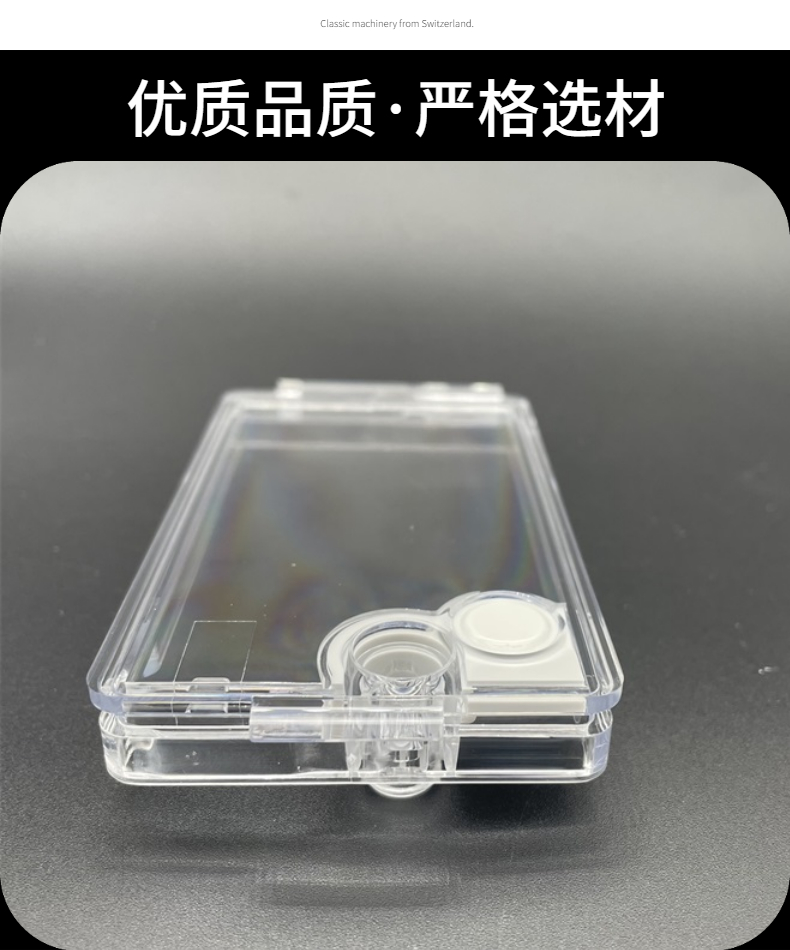
5. Transparent Thick-Walled Boxes (PMMA Material): Depending on the size of the parts, generally choose an injection molding machine from 80T to 150T and opt for small screws. The mold is typically designed as 1x2. Both hot nozzle two-plate molds and fine waterway three-plate molds can be used. The processing methods vary slightly. The product is transparent and thick. Due to its thickness, the processing techniques and methods are similar to those of decorative balls.
6. Standard thick flat parts (PMMA material): For instance, a 250T injection molding machine can be used for the front door of a microwave oven. The molds are typically two-plate eccentric molds or three-plate molds. These parts are mainly due to the requirement of the material being sufficiently dry, with the focus on controlling product deformation.
7. Thick-walled Strip Parts (PMMA): These parts are relatively heavy and typically selected based on the size of the part. The molds are generally designed with large gates on both sides for parts with moderate length; there are also three-plate molds (for parts with longer lengths) that transition from thin gates to large gates. The main issue with these parts is ensuring the material is fully dried, with a focus on controlling deformation.
The products listed above each have their own characteristics, with both similarities and differences. During the processing, it's essential to carefully analyze each influencing factor, identify problem areas, and address them to resolve issues.
