


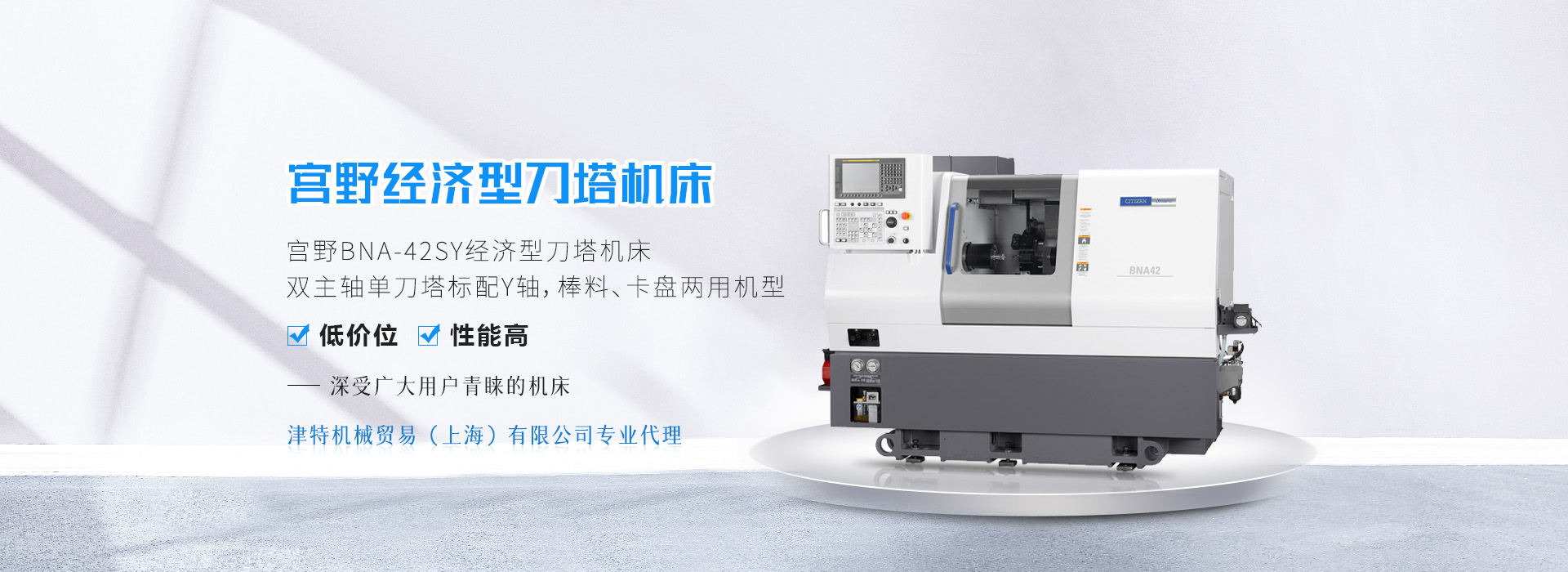

The characteristics of CNC lathes include high processing accuracy, stable product quality, high production efficiency, high degree of automation with low labor intensity, complex control, and high maintenance costs. CNC lathes are generally used for parts that require high precision and large-scale production. The structural design of CNC machine tools adopts necessary measures and features of mechanical and electrical integration. Firstly, it introduces ball screw nut mechanisms, various gap elimination structures, etc., to minimize the error of mechanical transmission. Secondly, it employs software precision compensation technology to further reduce mechanical errors. Thirdly, program-controlled machining is used, reducing the impact of human factors on processing accuracy. These measures not only ensure high processing accuracy but also maintain high quality stability. So, how are CNC machine tools classified?
One: CNC machine tools are categorized by processing technology:
(1) General CNC Machine Tools. Similar to traditional general-purpose machine tools, this category includes CNC lathes, milling machines, boring machines, drill presses, and grinding machines, among others. Each type also features numerous varieties, such as vertical milling machines, horizontal milling machines, tool milling machines, and gate milling machines, for example. The processing possibilities of these machines are comparable to those of general-purpose machines, but the difference lies in their ability to machine complex-shaped parts.
(2) Multi-axis CNC Machining Centers. There are complex-shaped parts that cannot be machined even with a 3-axis CNC machine, such as propellers and aircraft surface components. These require a composite motion of three or more coordinates to produce the desired shape. As a result, multi-axis CNC machining centers have emerged, characterized by a higher number of axes controlled by the CNC unit and a more complex machine structure. The number of coordinate axes usually depends on the process requirements of the parts being machined. Commonly used models are 4, 5, and 6-axis CNC machines.
(3) Numerical Control Machining Centers. These machines are developed based on general CNC machines. They are CNC machines equipped with a tool magazine (capable of holding 10-100 or more tools) and an automatic tool changer, forming a CNC machine with an automatic tool changer (also known as multi-process CNC machines or boring and milling centers, commonly referred to as Machining Centers - MC), which further drives CNC machines towards greater automation and efficiency.
The difference between CNC machining centers and general CNC machines lies in the fact that after one-time clamping, the CNC device can automatically control the machine tool to change tools and continuously complete various processes such as milling (turning), boring, drilling, reaming, and tapping on all workpiece surfaces. These machines are mostly used for boring and milling, primarily for processing box-like components. Compared to general CNC machines, they offer the following advantages:
① Reducing the number of machine tools facilitates management; for multi-process parts, a single machine tool can complete all the processing, thereby reducing the inventory of semi-finished products.
② Due to the single clamping of workpieces, the positioning error caused by multiple installations is reduced, ensuring machining quality through the precision of the machine tool.
③ Process centralization has reduced auxiliary time and improved productivity.
④ Due to the ability to complete multiple processes on a single machine setup, the number of fixtures and jigs has been significantly reduced, further shortening the production preparation time.
Due to the numerous features of CNC machining centers, they are highly favored by users, thus occupying a significant position in the production of CNC machine tools.
Additionally, there is a category of machining centers that have evolved from lathe technology, primarily focusing on shaft-type components for processing. In addition to turning and boring operations, they are capable of drilling, milling, and threading at any location on the end and circumference surfaces. These machining centers also feature a tool magazine, which can accommodate 4-12 tools, and are commonly referred to as turning centers.
