


In recent years, an increasing number of construction projects have chosen buried water tanks as water treatment and storage facilities. This trend is driven by multiple factors, involving considerations of the environment, economy, spatial utilization, and architectural design. This article will analyze from several main perspectives why buried water tanks are gaining popularity in construction projects.
Space-saving
As urbanization accelerates, particularly in major cities, land resources are becoming increasingly scarce. With land usage value at a premium, maximizing every inch of land within limited spaces has become a crucial consideration in architectural design. Subterranean pools, due to their underground nature, can effectively conserve ground space, allowing construction projects to allocate more area for other functional needs, such as green spaces, parking lots, or other facilities. Through this approach, construction projects can achieve greater functionality on limited land.
II. Environmental Impact and Landscape Enhancement
Subsurface ponds seamlessly blend with the surrounding environment, enhancing rather than detracting from the landscape around buildings. Unlike traditional above-ground ponds, they minimize the impact on urban aesthetics and prevent visual pollution caused by large, exposed water surfaces. Moreover, being constructed underground, they reduce water loss due to evaporation, playing a role in climate regulation around the area, particularly in hot climates, effectively reducing water evaporation.
Enhancing Security
An important advantage of buried water tanks is their high level of safety. Traditional outdoor water tanks may pose certain safety hazards, especially for children and animals, as open water bodies can lead to drowning accidents. Buried water tanks, however, mitigate such risks by being constructed underground. Moreover, these tanks are typically equipped with comprehensive protective measures, effectively preventing external environmental pollution and ensuring the cleanliness and safety of the water.
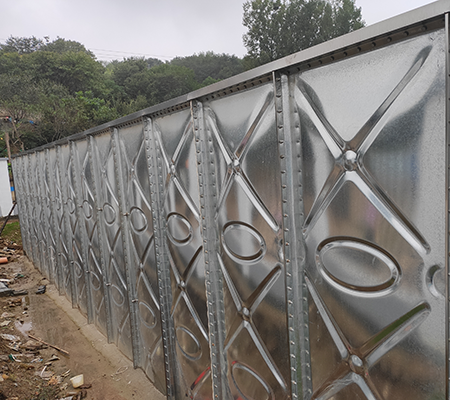
Section 4: Energy Efficiency and Effective Management
As energy-efficient building requirements continue to rise, many construction projects are demanding more effective and eco-friendly building facilities. Subsurface water tanks, due to their underground placement, can take advantage of the relatively stable ground temperature, effectively reducing energy consumption caused by water temperature fluctuations. Particularly in scenarios where constant water temperature is required, they possess a natural energy-saving advantage. The design of underground water tanks can also be integrated with automated management systems for water level and quality monitoring, thereby achieving more efficient water resource management.
Section 5: Compliant with Green Building Concepts
As the concept of green building gains traction, construction projects are increasingly focusing on sustainable development and environmentally friendly designs. The buried water pool is one of the key facilities that align with this philosophy. It not only reduces the occupation of ground resources but also better integrates with the surrounding natural environment, minimizing the damage to the natural ecosystem. Through thoughtful design, the buried water pool can also facilitate rainwater collection and utilization, providing supplementary water sources for the building and further enhancing resource efficiency, in line with the sustainable development goals of green buildings.
Section VI: User-Friendly Maintenance and Usage
Subterranean pool maintenance is more convenient compared to traditional open-air pools. Since the pool is underground, its surface is not directly affected by natural elements such as sunlight and rain, ensuring the pool's structure remains stable and reduces external damage. Additionally, the construction and maintenance of underground pools typically require less manual management and cleaning, allowing for better protection of the pool's water quality and minimizing interference from external pollutants.
Section 7: Suitable for Various Functional Requirements
Subterranean water tanks can be customized to meet various architectural requirements. They can serve as rainwater collection, fire-fighting, wastewater treatment, or cooling water tanks, offering exceptional versatility. This flexibility has led to the widespread application of subterranean water tanks in a variety of building projects, from commercial complexes and residential communities to public facilities. These tanks can be adjusted to meet different functional needs, providing water treatment and storage solutions.
Summary
In summary, buried water pools are increasingly favored in modern construction projects due to their ability to effectively save space, optimize landscapes, enhance safety, conserve energy, and be environmentally friendly, aligning with green building concepts and being easy to maintain. As urban land resources become more scarce and architectural design requirements diversify, the advantages of buried water pools will become more pronounced. Their application prospects in the construction industry are vast, making them a significant choice for future architectural design and water resource management.
