


High chemical reactivity
Titanium has a high chemical reactivity, reacting strongly with atmospheric O2, N2, H2, CO, CO2, water vapor, ammonia, etc. Carbon content exceeding 0.2% forms hard TiC in titanium alloys; at higher temperatures, it also forms a hard TiN surface layer when reacting with N; above 600°C, titanium absorbs oxygen to form a very hard hardening layer; an increase in hydrogen content also leads to the formation of a brittle layer. The depth of the hard and brittle surface layer produced by gas absorption can reach 0.1-0.15 mm, with a hardening degree of 20%-30%. Titanium also has a high chemical affinity, easily adhering to friction surfaces.

Thermal expansion coefficient low
The thermal conductivity of titanium, λ=15.24 W/(m·K), is approximately 1/4 that of nickel, 1/5 that of iron, and 1/14 that of aluminum. The thermal conductivity of various titanium alloys is about 50% lower than that of pure titanium. The elastic modulus of titanium alloys is about 1/2 that of steel, making them less rigid and more prone to deformation, unsuitable for making slender rods and thin-walled parts. The amount of workpiece deflection during machining is very high, about 2-3 times that of stainless steel, leading to severe friction, adhesion, and bonding wear on the tool's back face.
Alpha + Beta Titanium Alloy
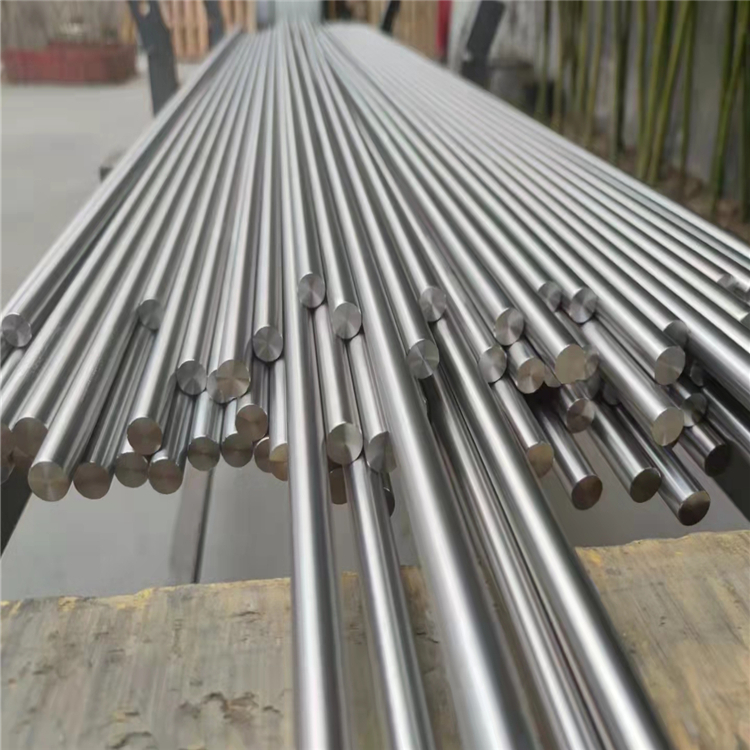
It is a dual-phase alloy with excellent comprehensive properties, good microstructure stability, and excellent toughness, ductility, and high-temperature deformation resistance. It is suitable for hot-forming processing and can be hardened and aged to strengthen the alloy. The strength after heat treatment is approximately 50% to 99.9% higher than that of the annealed state. It has high high-temperature strength, allowing for long-term operation at temperatures between 400℃ and 500℃, with its thermal stability ranking below that of alpha titanium alloys.
The most commonly used titanium alloys are α titanium alloy and α+β titanium alloy; α titanium alloy has good machinability, followed by α+β titanium alloy, and β titanium alloy has the poorest. The alpha titanium alloy is designated as TA, the beta titanium alloy as TB, and the α+β titanium alloy as TC.
Titanium alloys can be categorized by their applications into heat-resistant alloys, high-strength alloys, corrosion-resistant alloys (such as titanium-molybdenum, titanium-palladium alloys), low-temperature alloys, and special function alloys (including titanium-iron hydrogen storage materials and titanium-nickel shape-memory alloys).
Heat Treatment: Titanium alloys can achieve different phase compositions and structures through adjusting the heat treatment process. It is generally believed that fine equiaxed structures possess good plasticity, thermal stability, and fatigue strength; acicular structures exhibit higher ultimate strength, creep strength, and fracture toughness; and the mixed equiaxed and acicular structures offer a better comprehensive performance.
