


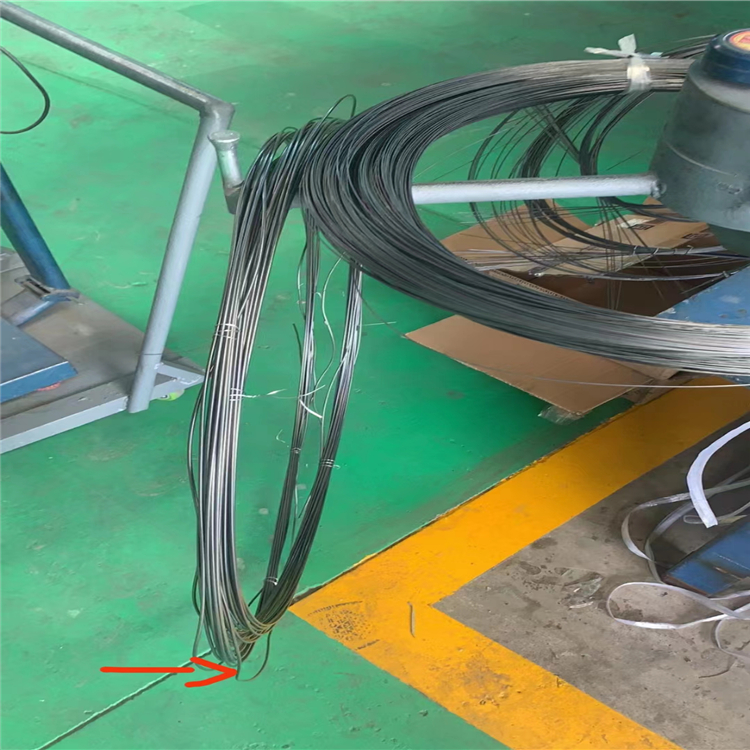
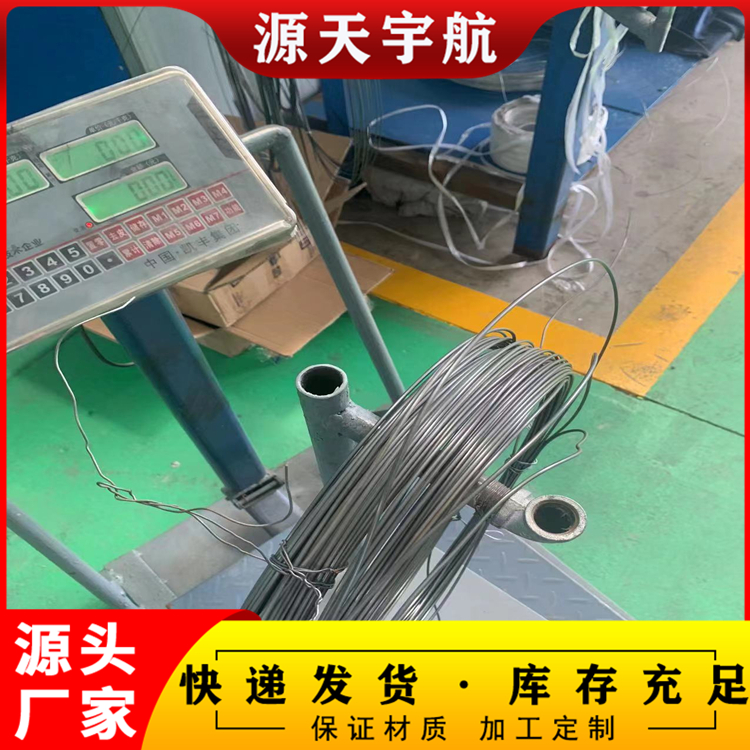
Shape Memory Properties (Shape Memory) - Shape memory is the ability of a material to return to its original shape after being deformed when cooled from above the Af temperature to below the Mf temperature, forming martensite. By deforming the martensite below the Mf temperature and then heating it below the Af temperature, accompanied by a reverse phase transformation, the material automatically recovers its shape from the parent phase. In essence, the shape memory effect is a thermally-induced phase transformation process in nickel-titanium alloys.
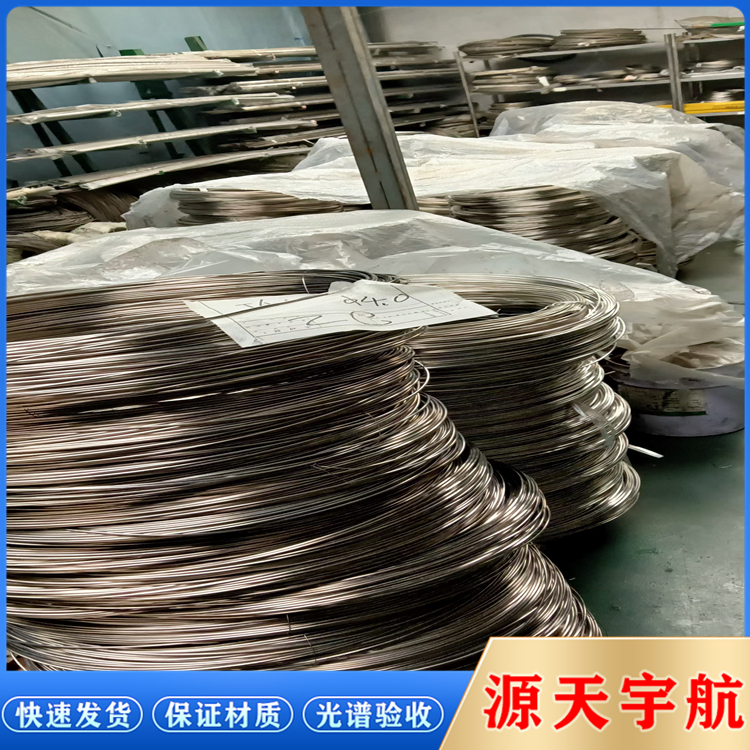
2. Superelasticity Superelasticity refers to the phenomenon where a sample, under the action of external force, undergoes a strain that is far greater than its elastic limit, and upon unloading, the strain can automatically recover. This occurs because, in the parent phase, the application of external stress induces a stress-induced martensite phase transition, resulting in an alloy that exhibits mechanical behavior different from that of ordinary materials. Its elastic limit is significantly greater than that of ordinary materials and does not follow Hooke's Law. Unlike shape memory characteristics, superelasticity does not involve heat. In summary, superelasticity is the property where stress does not increase with strain within a certain deformation range, and it can be divided into linear superelasticity and nonlinear superelasticity. The former has a stress-strain curve where stress is approximately linearly related to strain. Nonlinear superelasticity is the result of stress-induced martensite phase transition and its reverse during loading and unloading within a certain temperature range above Af, hence it is also known as phase transformation pseudo-elasticity. The phase transformation pseudo-elasticity of nickel-titanium alloys can reach about 8%. The superelasticity of nickel-titanium alloys can change with the conditions of heat treatment; when the wire is heated above 400°C, superelasticity begins to decrease.
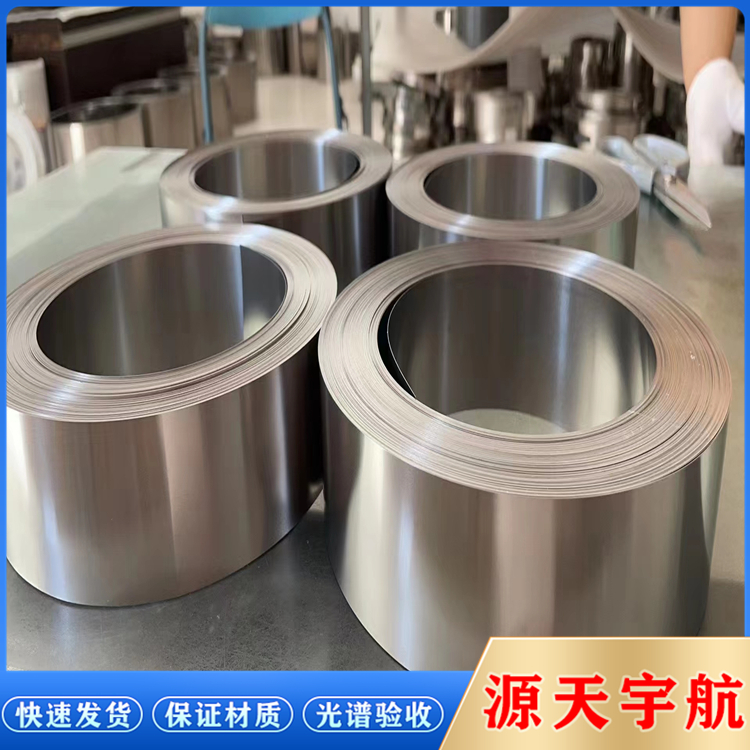
Shape-memory alloy springs composed of copper, zinc, and aluminum (referred to as CZA alloy), pre-formed into a shape (200cm) at their characteristic temperature (Tm) of 65℃ to 85℃ (determined by the material formula), "remember" the shape after being heat-treated for a few minutes to half an hour. Regardless of the shape change at room temperature, e.g., a nickel-titanium shape-memory alloy spring compressed to 45 cm will revert to its original shape once the temperature is raised to Tm. For example, a nickel-titanium shape-memory alloy decorative flower is in an open form at the characteristic temperature of 65℃ to 85℃, and takes on a closed bud shape at room temperature. When heated with hot air or other methods to reach Tm, the metal flower will automatically bloom back to its original beautiful form, with an action angle of up to 180℃, which is quite fascinating!

Alloy materials typically have a high-temperature phase called "Austenite," and the structure formed after cooling and phase transformation is known as "Martensite." Scientists speculate that although there is no visible change at this point, the crystalline states differ during heating and cooling. At a specific temperature, the arrangement of metal atoms undergoes a sudden change, and this change in crystal structure is often reversible, referred to as "phase transformation." For example, a memory alloy containing 50% Ti and 50% Ni has both rhombic and cubic crystal structures. At a particular temperature, these two crystal structures can transform into each other, and the shape changes accordingly. Subsequent research has also found that in addition to nickel-titanium alloys, over twenty other alloys such as copper-zinc, gold-cadmium, and nickel-aluminum also possess memory functions, with nickel-titanium alloys being particularly strong in this regard. Author: Shanghai Bingzhen Special Alloy Co., Ltd. https://www.bilibili.com/read/cv8973492 Source: bilibili
