

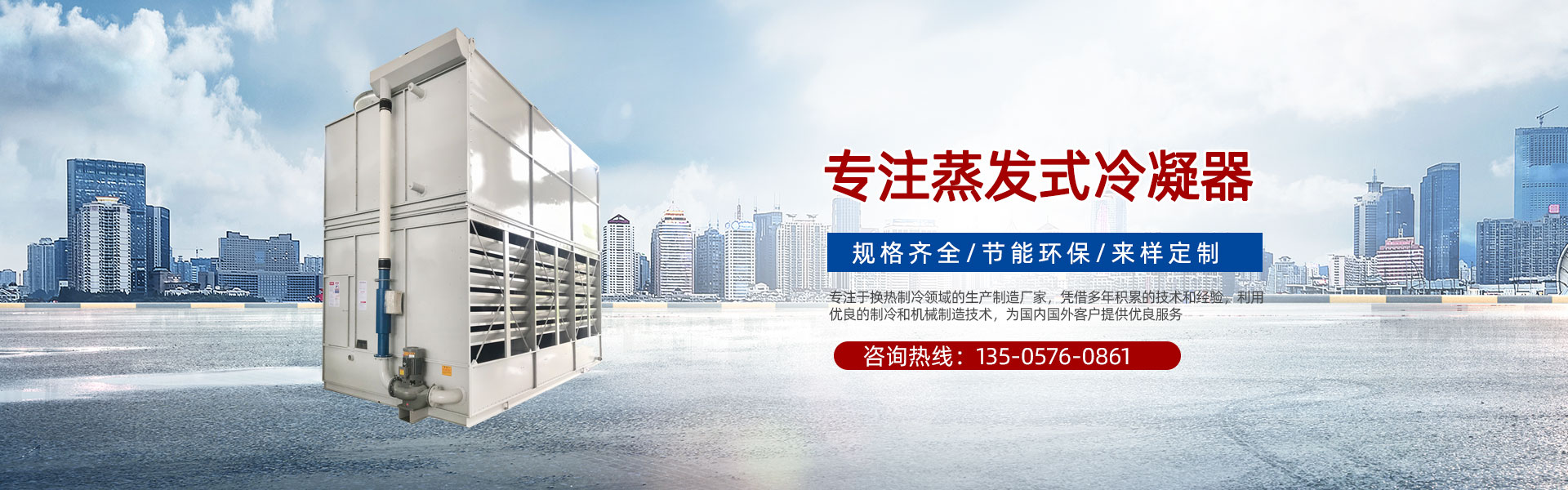
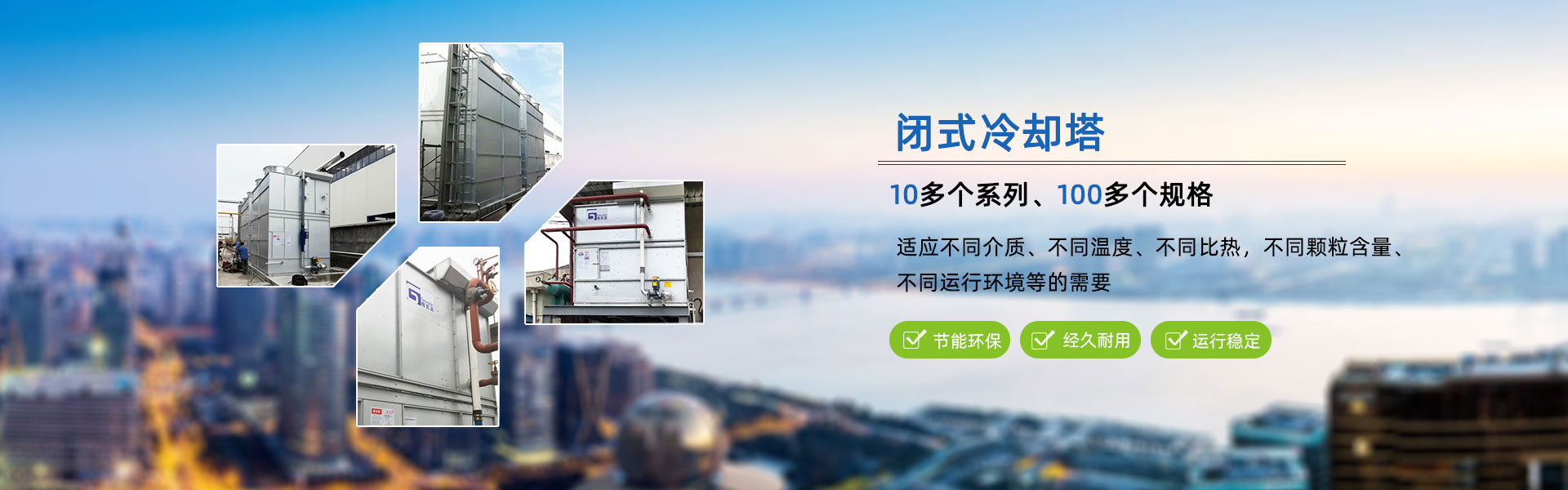

The primary heat exchange device in refrigeration systems is the evaporative condenser, also known as a cooling (condenser) or evaporative cooling. It is mainly used in coal, chemical metallurgy, food, and cold storage cooling, primarily consisting of condenser coils, boxes, heat exchange plates, water collectors, fans, and more.
Evaporative condensers generally offer numerous advantages. For instance, their system operation costs are lower than those of other systems, helping to save costs and effectively reduce the number of fans.
Since the evaporative condenser has so many advantages, what are its characteristics? I will answer them one by one. The explanation will mainly focus on two aspects: technology and product.
I. Technical Features
Our facility now predominantly utilizes advanced large water spray nozzles, which minimize surface scaling, ensure no clogs, maximize wall coverage, enhance heat exchange coefficients, and effectively improve the efficiency of the evaporative condensers.
2. Currently employing a single heat exchange design and induced draft counter-current, the recirculation of saturated warm and moist air is reduced to a low level.
II. Product Features
Firstly, we suspect that the fan coil requires the use of longer special seamless steel pipes and must undergo strict standard air pressure tests in water.
2. Select low-noise, efficient, and long-throw axial fans to greatly minimize the return of hot air.
3. The condenser housing should be made of galvanized steel plate, or preferably, stainless steel plate, if electrostatic powder coating is used.
