

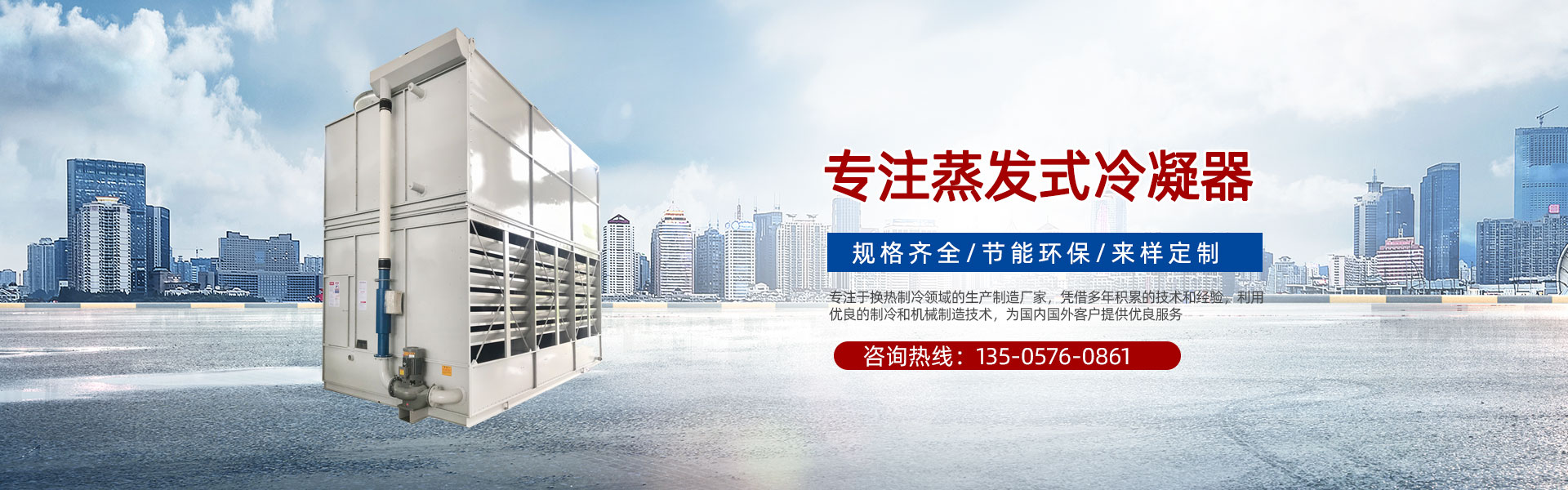
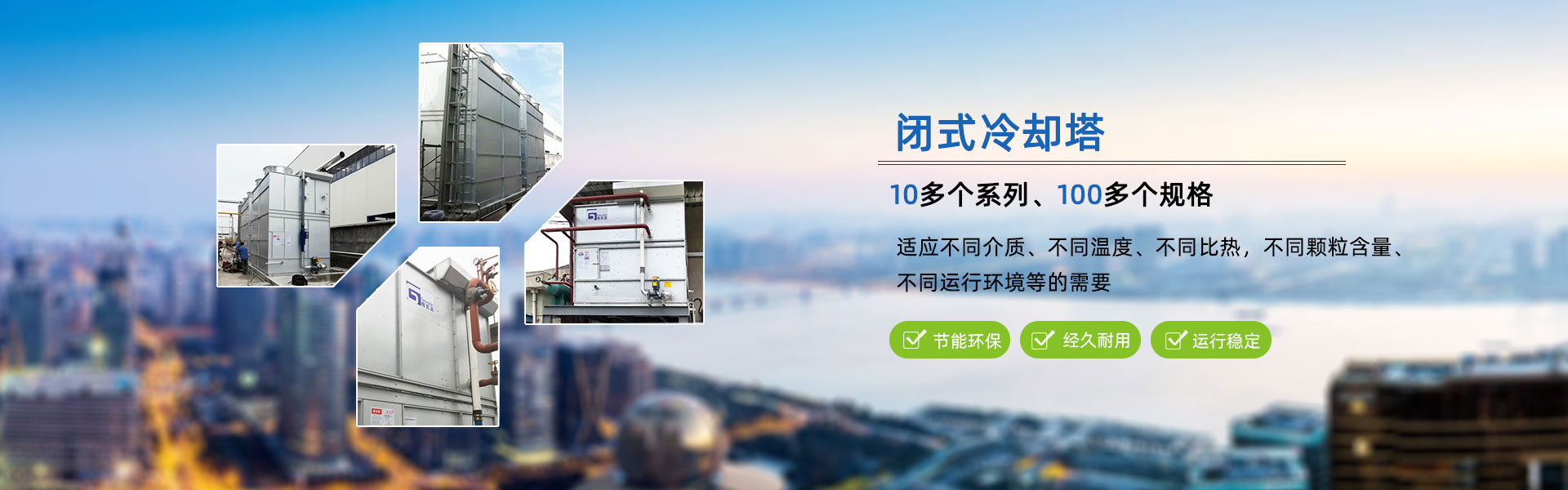

The evaporative condenser is a heat exchange device consisting of a fan, condenser coils, heat exchange fins, and a housing. Widely used in the refrigeration industry, it is essential to consider these points when selecting a condenser:
The appropriate evaporative condenser should meet the following requirements: 1. Ensure that the cooling system's specifications and performance meet production requirements, with sufficient strength and a reliable production structure; 2. Widely used in production processes, with convenient installation and construction; 3. Economically reasonable.
When choosing between these two scenarios, it's often a trade-off between price and quality for evaporative condensers. However, during actual production, to enhance the equipment's production quality and durability, better materials may be added or used, which in turn increases production costs to some extent, directly raising the product price.
Currently, the evaluation methods for evaporative condensers mainly include: 1. Evaluation based on the cooling water temperature; 2. Actual measurement based on the cooling water temperature.
Furthermore, some often overlooked points include:
The condensation temperature and the wet bulb temperature of the incoming air should be correctly selected.
Research reveals that, according to the evaporative condenser standards established by the Ministry of Mechanical Industry in 1982, the condensation temperature is 35°C and the wet bulb temperature of the incoming air is 27°C.
2. Selection of ventilation volume.
Airflow Ratio is the ratio of airflow to cooling capacity. Ventilation volume is related to the wet bulb temperature of the air. The larger the airflow, the higher the wet bulb temperature of the incoming air. However, for energy-saving considerations, both indoor and outdoor airflow volumes are often smaller.
3. Water supply options.
The distribution of water is the ratio of spray flow rate to cooling capacity. The water distribution should ensure that water enters the heated surface to wet it, as excess water will only increase pump power and water flight loss. According to the evaporative condenser standards set by the Ministry of Mechanical Industry in 1982, the water distribution per kilogram of water should not exceed 0.043 m³/1000 kJ.
