

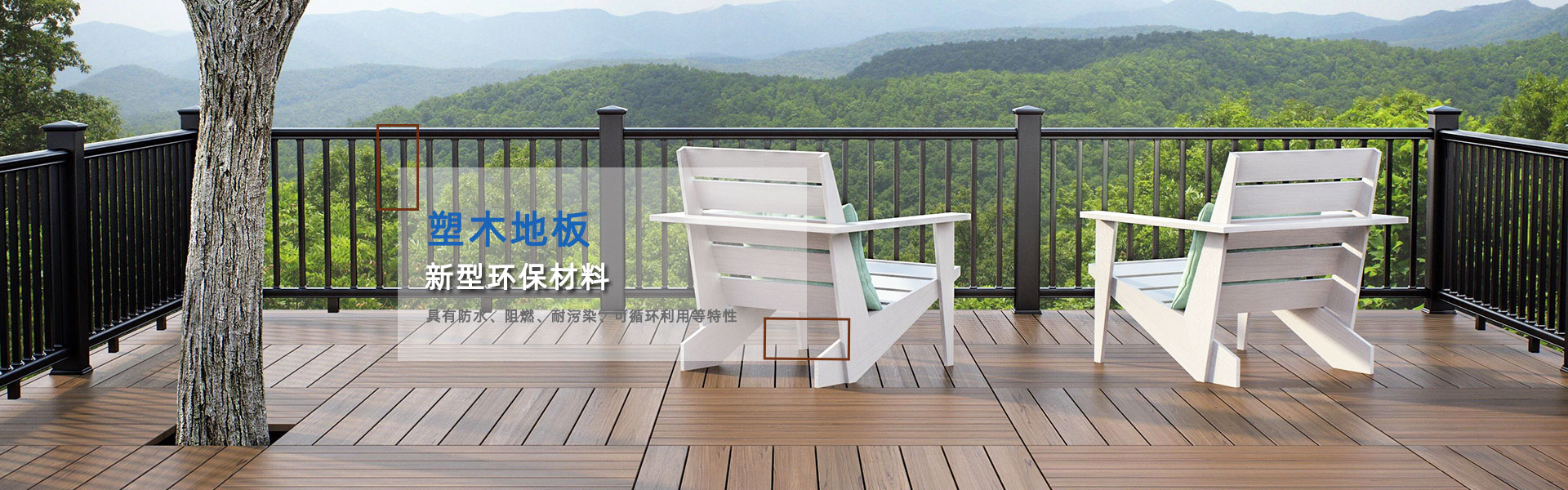


As living standards continue to rise, the use of outdoor flooring is no longer limited to public spaces; many residential balconies also require it. How do you choose the right and suitable outdoor flooring? Let's take a look together.
Firstly, selection should always be based on budget. The domestic outdoor flooring market prices vary greatly due to the different formulas, processes, and cross-section shapes of the manufacturers. Consequently, each product has its unique characteristics. Of course, it's not uncommon for some manufacturers to mix good with bad. If your budget allows, we typically opt for solid outdoor flooring, as it offers better quality and durability. If your budget is tight, choosing hollow flooring can significantly reduce costs.
Of course, the choice of outdoor flooring also depends on the region it's used in. For instance, in southern regions with smaller temperature differences between seasons but higher humidity, solid outdoor flooring is recommended. In northern regions where there are larger temperature fluctuations between day and night or winter and summer, but lower humidity, round-hole hollow outdoor flooring is suggested.
Foot traffic volume is also a factor to consider when choosing outdoor flooring. If your outdoor flooring is installed in areas with low foot traffic, such as rooftops or patios, a square hollow design is sufficient. However, if your flooring is to be placed in highly frequented public recreational areas, please opt for a more wear and weather-resistant co-extruded type.
No matter the cool tones or warm hues, the colors you see can affect your mood and the design style. There is a wide range of options for outdoor flooring, including color, texture, thickness, width, and length, which can also be customized. Therefore, it's essential to consult with a professional designer or a WPC (Wood Plastic Composite) expert before purchasing outdoor flooring to avoid any significant discrepancies between the actual installation and the design.
Note that for both square hole and round hole outdoor flooring, it is crucial to seal the cross-sectional holes during installation to prevent insects or moisture from entering.
