
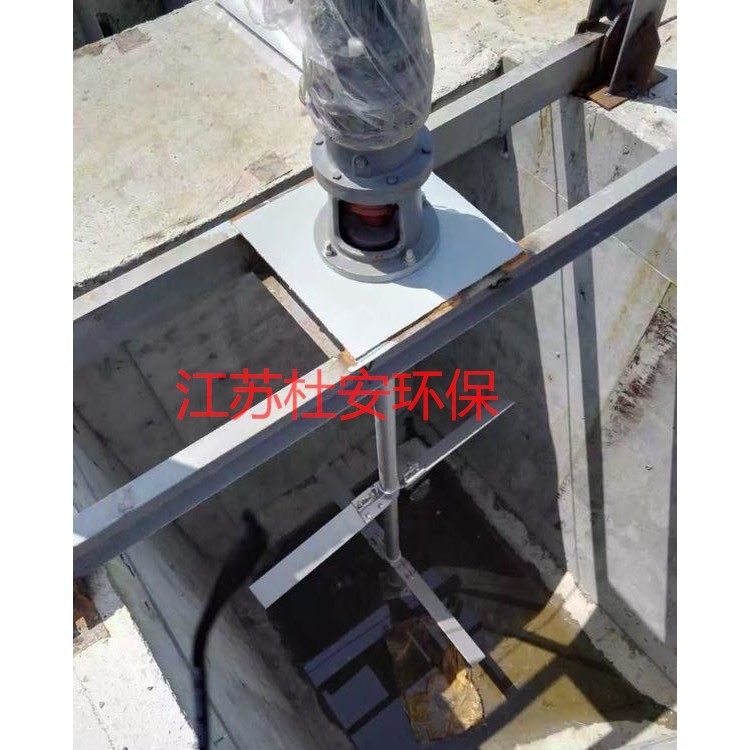
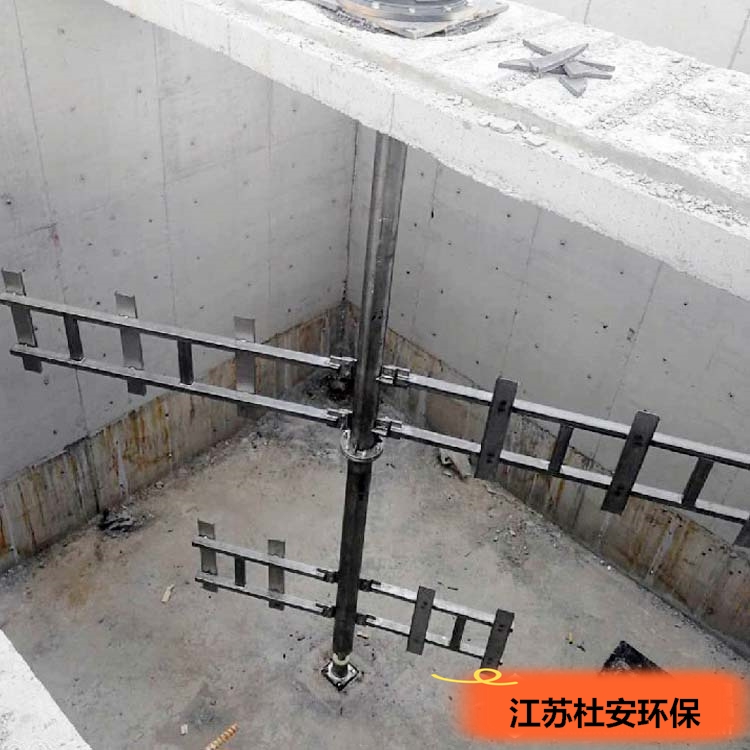
Duwan Environmental絮凝Mixers, Anchor Frame Mixers ProductsPerformance Description:
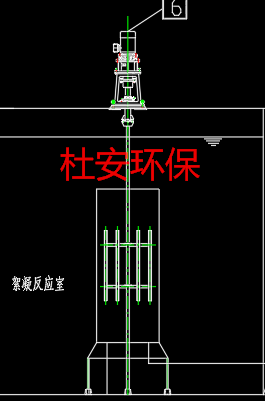
Simple construction, reliable operation, no clogging, easy maintenance. Meets the requirements of floc formation, enabling different mixing strengths at various stages of the process to adapt to changes in water volume and temperature. Low head loss, simple pool structure, and convenient energy combination. With stepless speed control, mixing intensity can be adjusted according to water volume, raw water turbidity, and dosage of chemicals to achieve satisfactory floc formation and save on chemical usage.
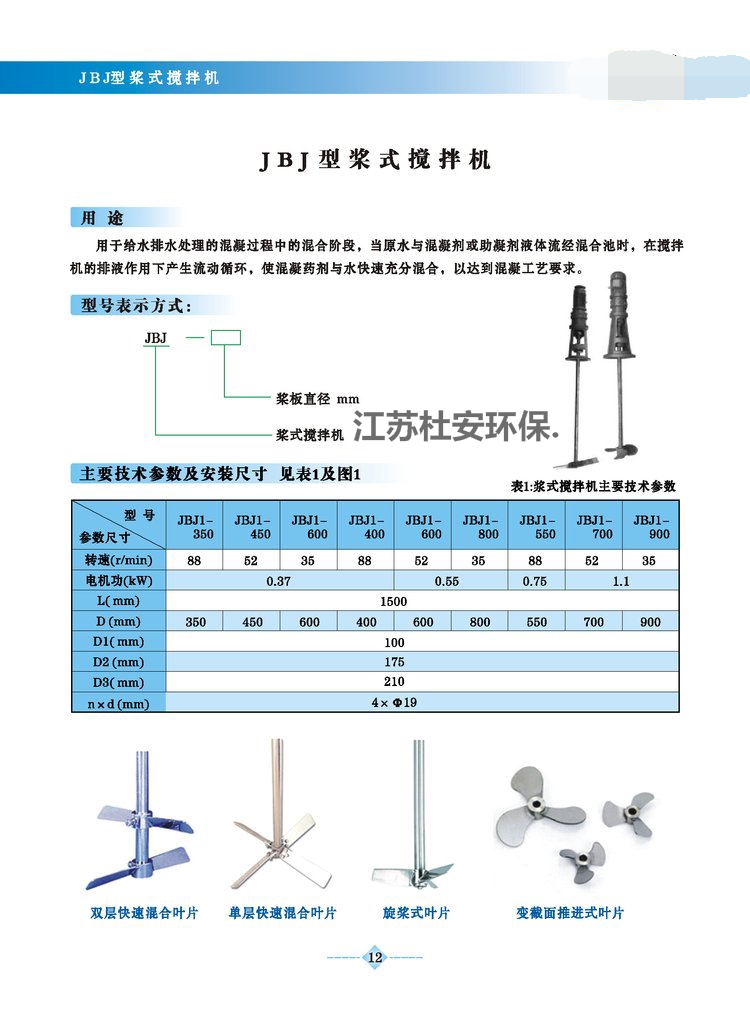
Application:
Primarily used for dissolving and mixing chemicals at water treatment and wastewater treatment plants.
Model Representation Method
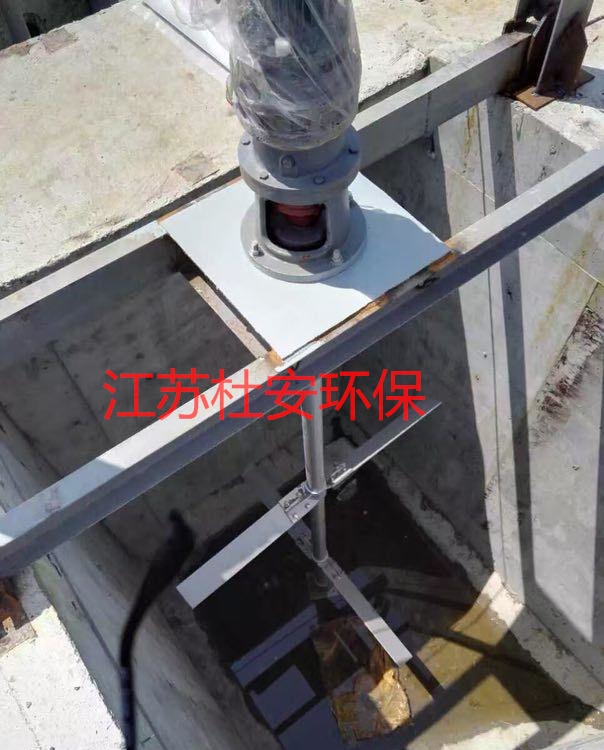
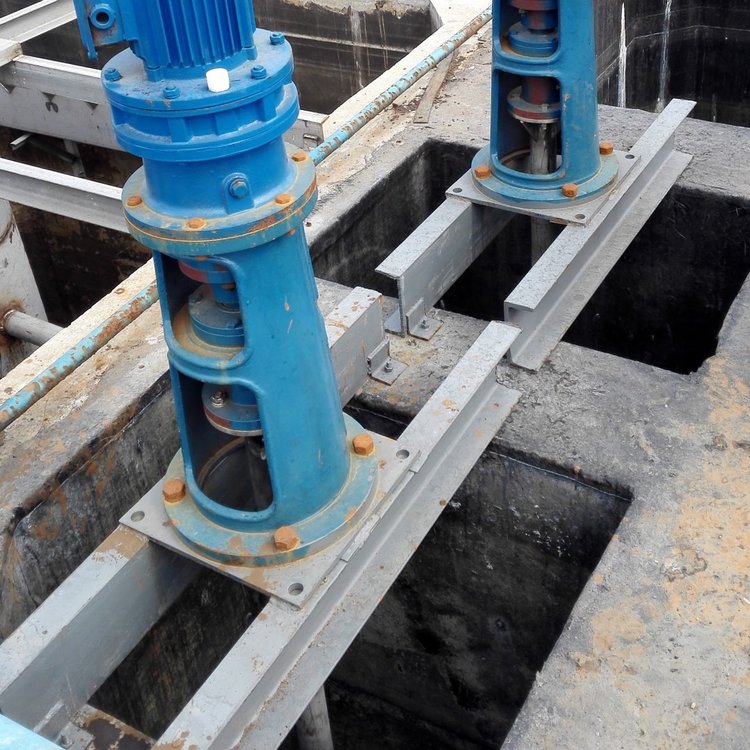
Frame-type mixerMachineDiameter is larger, typically taken as the internal diameter of the reactorFebruary 2nd to October 10th, 5 to 10 rpm. The frame-type stirrer has a smaller gap with the reactor wall, which is conducive to the heat transfer process. At high speeds, the liquid propelled by the stirrer blades removes the stationary layer from the reactor wall; at low speeds, the scraper-type stirrer promotes excellent heat conduction. This type of stirrer is commonly used for heat transfer, crystallization operations, and stirring of high-viscosity liquids, high-concentration sludges, and settling sludges.
Frame mixers are selected based on the physical properties, capacity, and mixing purposes of different media, playing a significant role in accelerating the rate of chemical reactions and enhancing production efficiency. Frame mixers are generally used for mixing paste-like materials.
The frame type mixer can be considered a variation of the paddle mixer, featuring a more robust structure and higher capacity for mixing materials. When the bottom shape of such mixers resembles the bottom shape of a reactor, they are typically referred to as anchor mixers. Frame mixers have a larger diameter, usually around 2/3 to 9/10 of the reactor's inner diameter, operating at 50 to 70 rpm. For low-viscosity liquids, the ratio of the impeller diameter to the tank diameter for anchor blades is 0.7 to 0.9, while for high-viscosity liquids, it is 0.8 to 0.95, with a typical speed range of 10 to 50 rpm. The frame mixer has a smaller gap with the reactor wall, which facilitates the heat transfer process. At high speeds, the mixer blades can pull the liquid from the stationary layer off the reactor wall; at low speeds, mixers with scrapers can achieve good heat conduction. These mixers are commonly used for heat transfer, crystallization operations, and mixing of high-viscosity liquids, high-concentration sludges, and settling sludges.
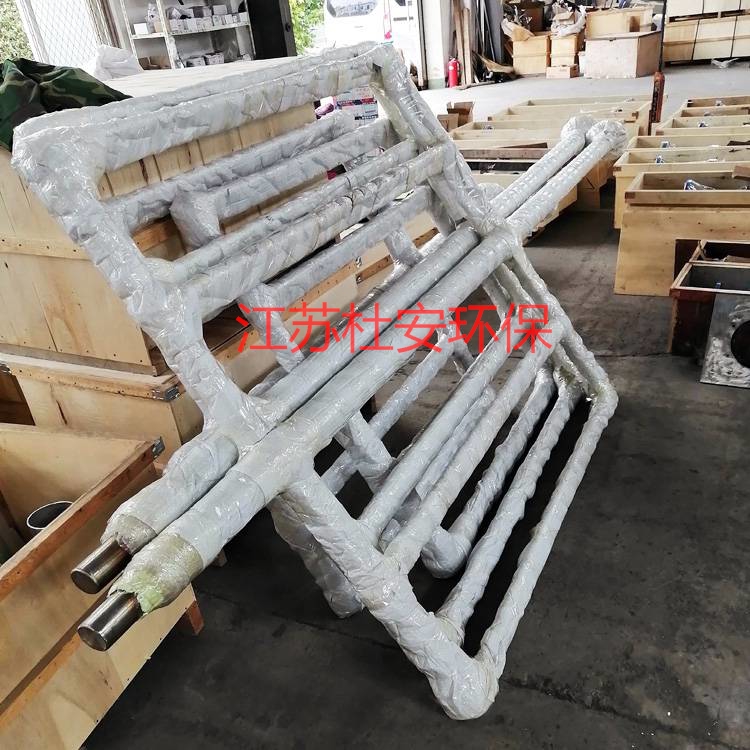
Anchor and frame mixers belong to the same category, collectively known as anchor-frame mixers. To increase the mixing range and remove residue or liquid layers from the tank wall, the outer contour of the anchor-frame mixer should be close to the inner wall of the mixing tank. The bottom shape, adapted to the tank's bottom contour, can be elliptical, conical, and so on. To expand the mixing range for high-viscosity materials and enhance the rigidity of the impeller, additional vertical blades and crossbeams are often added to the anchor and frame mixers, resulting in a variety of structural shapes for the anchor-frame mixers.
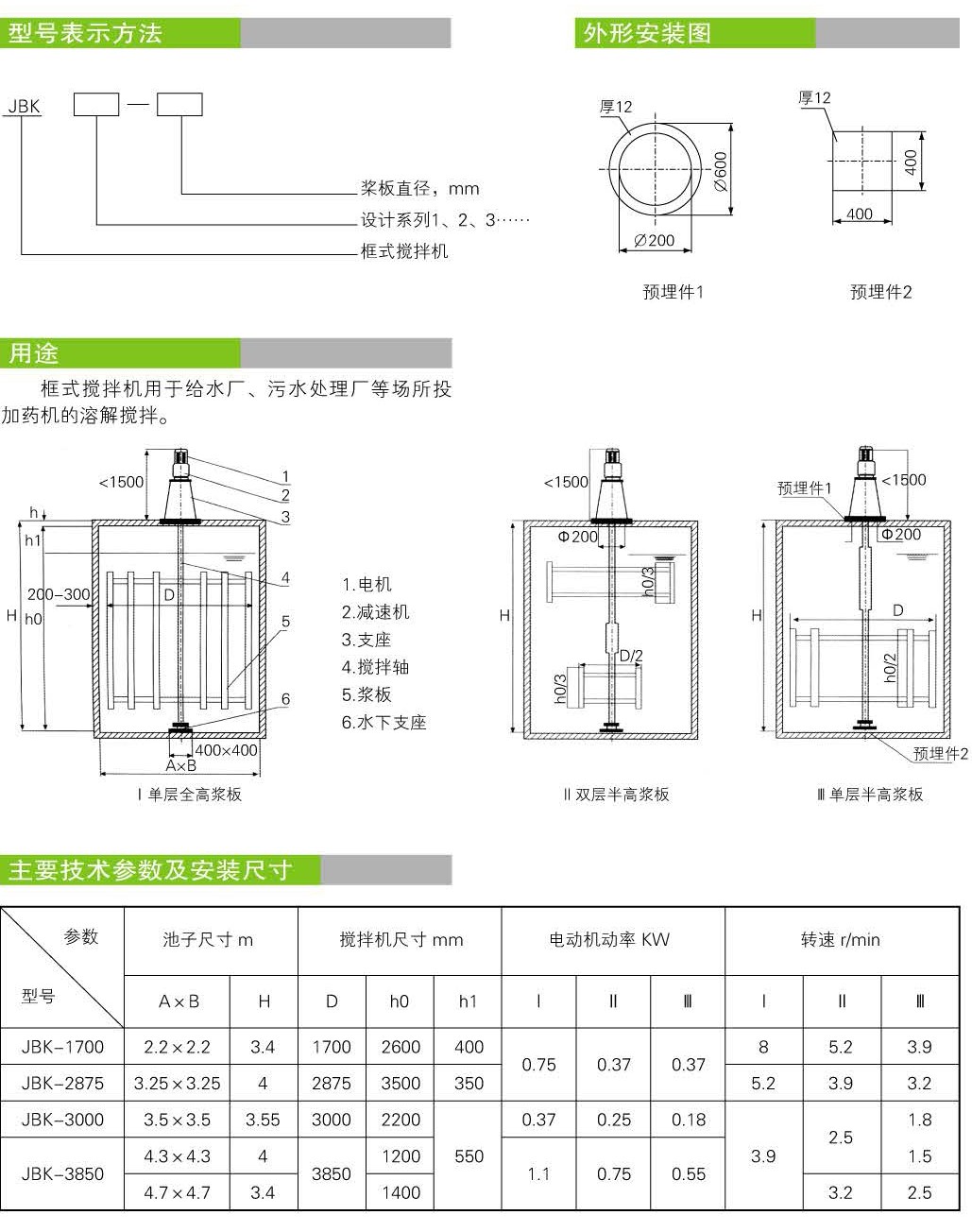
Model Specifications | Pond dimensionsm | Blender dimensionsmm | Motor EfficiencyKW | RPMr/min | |||||||
A×B | H | D | h0 | h1 | Ⅰ | Ⅱ | Ⅲ | Ⅰ | Ⅱ | Ⅲ | |
JBK-1700 | 2.2×2.2 | 3.4 | 1700 | 2600 | 400 | 0.75 | 0.37 | 0.37 | 8 | 5.2 | 3.9 |
JBK-2875 | 3.25×3.25 | 4 | 2875 | 3500 | 350 | 5.2 | 3.9 | 3.2 | |||
JBK-3000 | 3.5×3.5 | 3.55 | 3000 | 2200 | 550 | 0.37 | 0.25 | 0.18 | 3.9 | 2.5 | 1.8 |
JBK-3580 | 4.3×4.3 | 4 | 3580 | 1200 | 1.1 | 0.75 | 0.55 | 1.5 | |||
4.7×4.7 | 3.4 | 1400 | 3.2 | 2.5 | |||||||
Duwan Environmental絮凝Mixers, Anchor Frame Mixers with Matching EquipmentBasic Requirements for Control Boxes
A.2.1On-siteThe electrical components within the control box should meet the rated breaking capacity for the primary elements.≥50kAThe requirements state that all electrical control systems within the box must operate safely, be reliable in their actions, and the switches, buttons, and indicator gauges should meet the requirements for remote operation./On-site control requirements.
A.2.2ElectronicsComponent Requirements:
Molded Case Circuit Breaker: DomesticChint or othersBreakdown capability50kA;
Miniature circuit breakers: Domestic-madeChint or others;
Contactor: Made in ChinaChint or others;
Thermal relay: Made in ChinaChint or others;
Start/Stop button and indicator light: Made in ChinaChint or others;
Terminal Block: DomesticChint or others。
Selection of all electrical componentsAll are from Zhejiang Normal or other brands
A.2.3All Local Control Boxes/Cabinet used304Stainless steel construction, thickness not less than2mm, and box/The cabinet door features a stainless steel handle.
A.2.4The box door locks should be uniformly selected with corrosion-resistant and sturdy alloy locks, the outer lock should be a keyed lock, and the inner lock should be a convenient lock. The keys for the same type of lock should be identical. The control box panel must also be covered with a sealed cover that has an observation hole to cover the indicator lights and buttons, etc., and can be locked to prevent moisture from rain from affecting the components. Silicone rubber sealing rings are used.
A.2.5Protection grade of the control box:Indoor height not less thanIP54Outdoor not less thanIP56。