
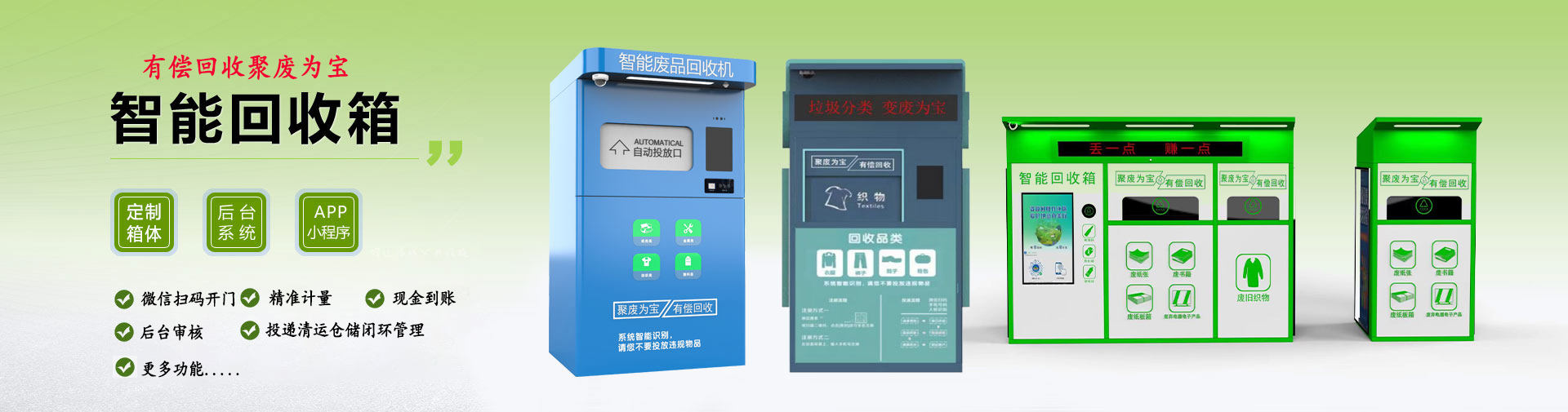

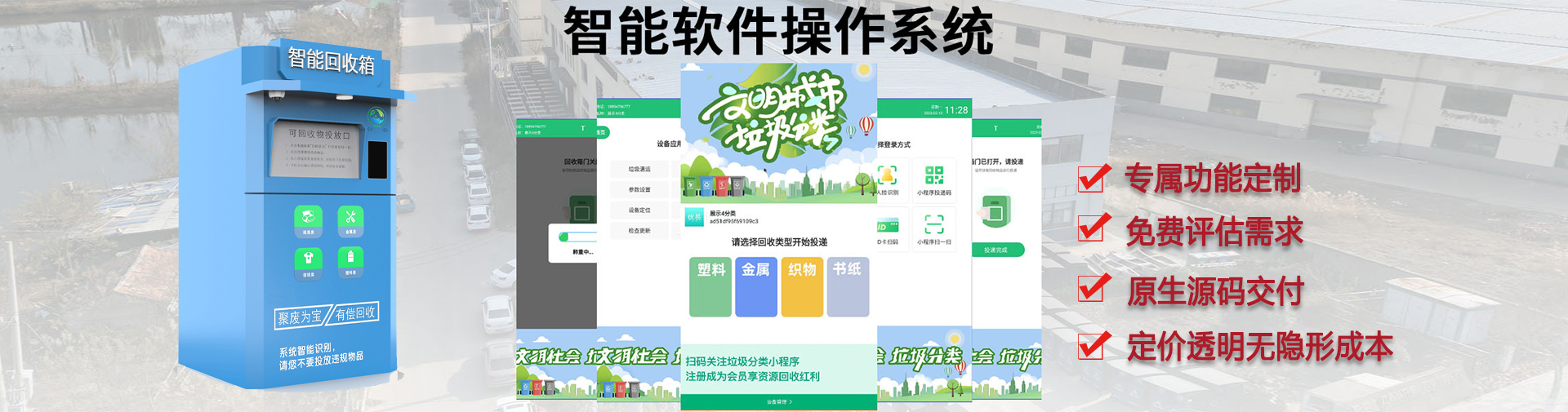


As environmental awareness continues to grow, urban waste is meticulously categorized. Waste management symbolizes a city's civilization development, which is why we often see numerous large waste sorting bins in urban areas. Typically, domestic waste is transported here for unified processing. The design style of these waste sorting bins is standardized, so let's take a look at the design standards for intelligent waste sorting bins next.
Residential waste sorting bins should adhere to the current national standards and requirements for community waste house design during infrastructure construction. The collection of household waste should meet the waste sorting treatment criteria, with sorting collection methods corresponding to sorting treatment methods. Specific collection points should be convenient for citizens to promote and beautify the urban ecological environment.
Waste Sorting Bins
Design Principles:
Waste sorting bins must adhere to the current national standards, regulations, and requirements for their design. The collection of domestic waste should meet the standards for the handling and collection of domestic waste generated from residential and practical work, and the methods of sorting domestic waste should be consistent with the sorting treatment methods. The specific location of the domestic waste collection points should be fixed, ensuring convenience for citizens, without affecting the city's sanitation and landscape environment, and facilitating classification promotion and waste collection. Architectural Design:
1. Total Area Standard: The size of waste classification bins should be proportionate to the specific conditions of the community. They should be set based on overall planning population, average waste generation per person, and the capacity of waste transfer stations. The average daily waste generation per person can be designed at ~/person·day, with the total area not suitable to be less than 6 square meters. At the same time, to minimize the impact on residents, the odor should be kept away from residential areas, and the distance between residential buildings should not be less than 10 meters.
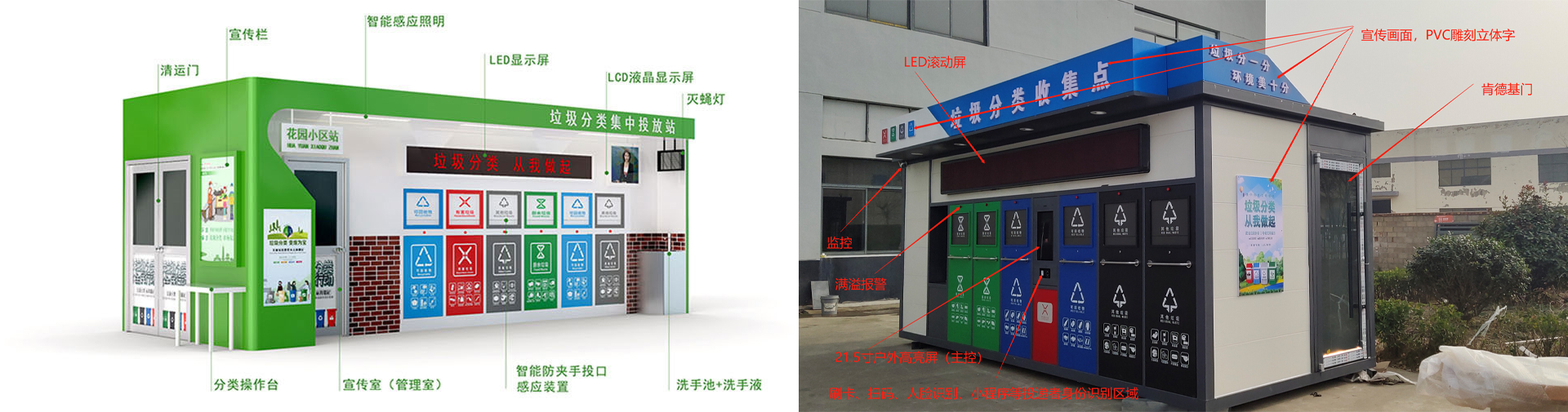
2. Features: Sorting operation area, small vehicle and handcart waste loading/unloading zone, bucket washing area, temporary storage area for conversion buckets, management room, tool room.
3. Location Setting: The specific location should be selected to avoid main traffic flow directions and be mindful of the influence of summer winds. Choose the downwind direction of the dominant wind, and suggest building in a concealed yet convenient location for garbage trucks to access (positioned at the intersection of the community's edge and the municipal road, doors should open directly to the community perimeter and within the community; the road width from the perimeter to the garbage room should be no less than 3 meters wide). Surrounding areas should be planted with tall trees and greenery.
