



Metal Arch Corrugated Roof Design, Manufacturing, and Installation Technology
The application of space steel structures like trusses and shells in China has been leading in both the number of projects and the total floor area covered internationally. However, these structures often have their shortcomings. Firstly, the manufacturing and installation process is complex, and the construction period is lengthy. Secondly, the self-weight of the roof waterproofing and perimeter structures of these structures are factors that制约 the overall project cost. Although theoretically, these space structures require less steel and have a lighter weight, poor resolution of the aforementioned issues can lead to suboptimal overall economic benefits for the projects.
Architectural arches fully utilize the material's potential by uniformly distributing forces across their entire cross-section, thereby saving materials and achieving a good balance between structural reliability and economy. In terms of building structures, arch shapes such as block arch roofs, reinforced concrete arch shells, and various types of arch lattices are widely recognized and accepted by architects and structural engineers. In the 1950s, some international structural engineers were inspired by the structural patterns of plant epidermis and developed a new type of roof structure: the metal arch corrugated roof. This structure is cost-effective, quick to construct, and performs well, attracting more and more researchers. The introduction of computer numerical control has further simplified the design and production process. However, research and the development of molding machines for this structure are primarily carried out by a few companies in the West, which is highly不利 to the development and further promotion of metal roofs.
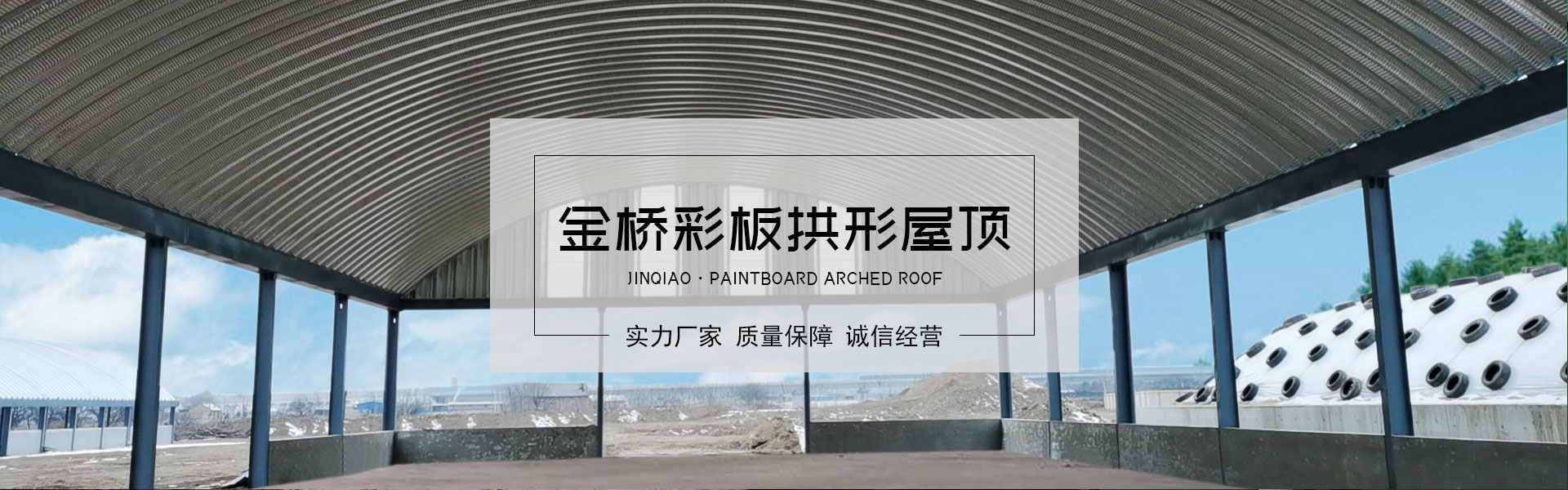
The roof is formed by continuously cold-rolling colored galvanized steel sheets through a metal roof forming machine into straight groove panels and arched groove panels with transverse corrugations. These panels are then connected into a single unit using an automatic edge sealing machine and hoisted into position on the roof joists. The metal roof forming machine set is the equipment used to manufacture the roof, consisting of a metal roof forming machine and an automatic edge sealing machine. This roof design represents a departure from traditional boarding structures (the structure of roof panels and trusses), integrating the function of the force ring into one, maximizing material usage, and achieving a unified structure of safety and economy.
The metal roof profiling machine utilizes hydraulic transmission, with dimensions of 4×8×3m and a self-weight of 6t, allowing it to be transported by truck to any construction site for production. The automatic edge seaming machine connects two adjacent trough plates, weighing only 35kg, featuring a lightweight structure, and can quickly bond the edges of several trough plates into a cohesive unit, ensuring airtight and waterproof integrity. The MMR-178 model is capable of rolling and forming colored galvanized steel coil with thicknesses of 0.8~35mm and widths of 9mm.
Insulation for the roof can be achieved through the application of spray polyurethane foam indoors or the use of adhered composite silicate. Different thicknesses of polyurethane or composite silicate can meet various insulation requirements. Due to its low weight of 2~26kg/m2, the roof has a low load level over the entire surface, thus requiring minimal load on the substructure. Additionally, the connection between the roof and the substructure is not complicated. The substructure (pillars, doors, windows, etc.) can be arranged according to standard modules. As long as there are pre-buried parts or reserved slots in the top girder of the columns, the roof can be connected to the substructure through these pre-buried parts or reserved slots.
