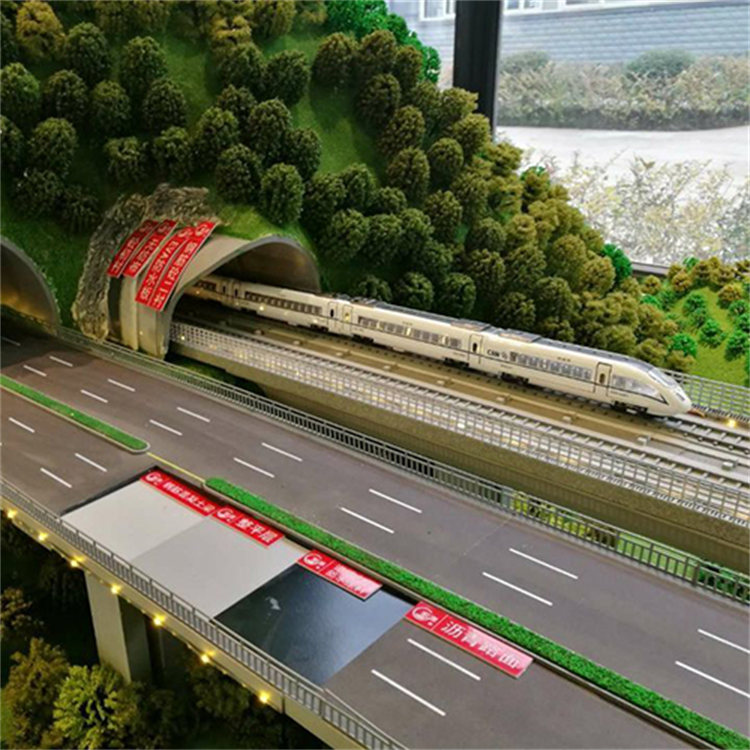
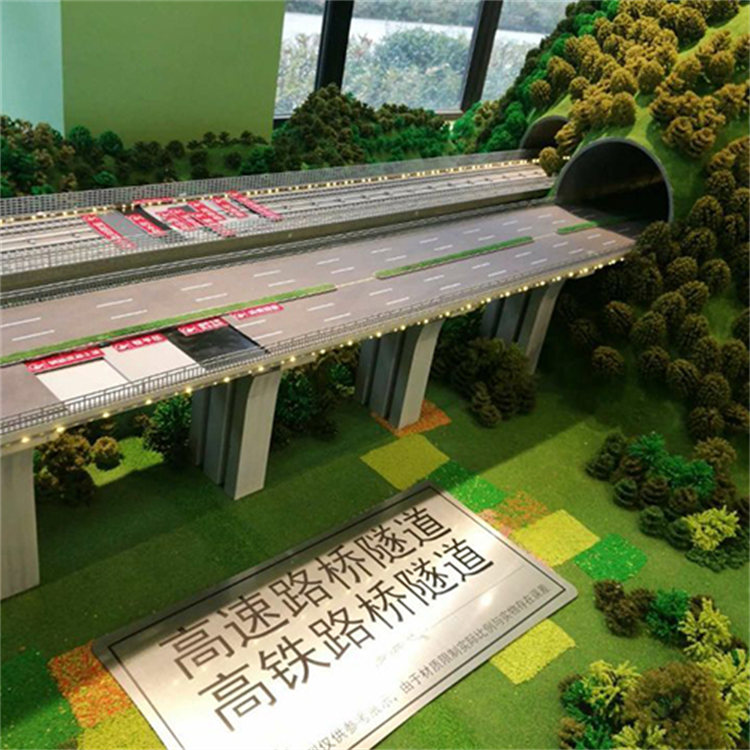
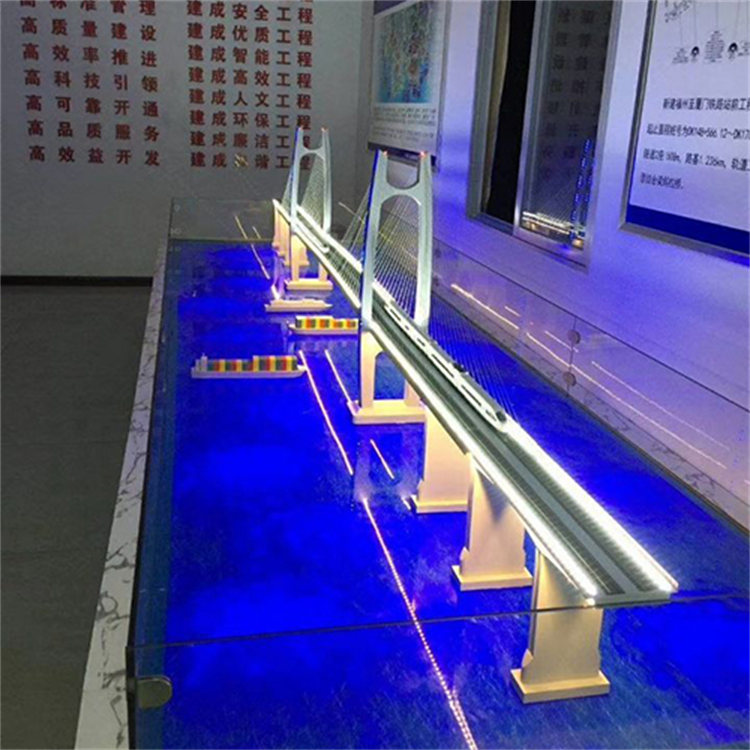
Bridges, especially elevated bridges, differ from rail models as they are three-dimensional rather than flat. To create an interwoven sense of depth, color gradients, contour lines, and shapes are primarily used, with two main methods: the three-dimensional and flat modeling techniques. The flat method is commonly used when the bridge is an accessory. To showcase the bridge itself, the three-dimensional method is generally preferred as it clearly demonstrates the size and elevation of the bridge. The specific methods are as follows:
1. Hierarchical Representation: Utilize contour lines to depict the height, dimensions, and levels of the bridge. During painting, the color gradient transitions from light to dark from top to bottom, creating a shadow effect for a more realistic visual appearance.
2. Width Representation: During the production of bridges, visual errors can be utilized to emphasize width differences. It is not necessary to shrink proportionally; instead, certain widths can be intentionally exaggerated to create a distinguishable sense of width variation in the visual appearance of the bridge.
3. Perspective Representation: Since we usually view models from above, the green belts and guardrails on both sides of the bridge should be made taller to ensure they are visible.
4. Fixed Model: Once the model is completed, it must be securely fastened to the base platform. Therefore, the gluing process can be done in sections, ensuring each segment is not overly long, and reinforcing the joints for stability.