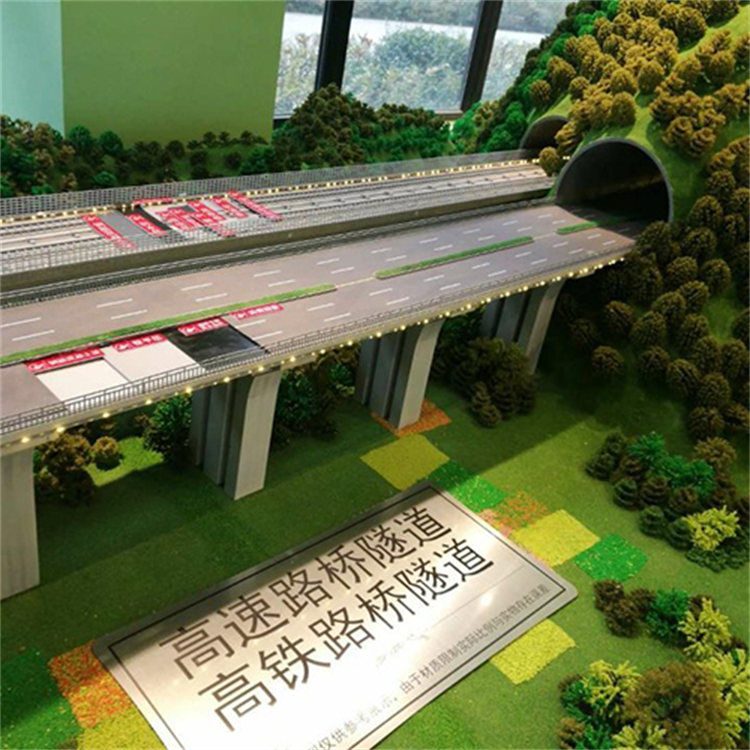
Bridges, particularly flyover models, differ from railways as they are three-dimensional rather than flat. Thus, an interlaced sense of depth is achieved primarily through varying shades, contour lines, and shapes. The methods are categorized into three-dimensional and two-dimensional techniques. The two-dimensional method is typically used when bridges are part of an accessory. To showcase the bridge itself, the three-dimensional method is generally employed, allowing for a clear display of its size and elevation. Specific methods are as follows:
1. Hierarchical Representation: Display the height, dimensions, and levels of the bridge using contour lines. During painting, the colors transition from light to dark from top to bottom, and shadows are created for a more realistic visual effect.
2. Width Perception: During the construction of a bridge, visual errors can be utilized to represent the width, without the need for proportional scaling. Instead, certain widths can be intentionally exaggerated to create a distinguishable sense of width visually.
3. Perspective Representation: Since we usually view models from above, the green belts and guardrails on both sides of the bridge should be made taller to ensure they are not obscured.
4. Fixed Model: The completed model must be securely fastened to the base platform. Therefore, the adhesive application can be done in sections, ensuring each segment is not overly long, and reinforcing the joints for stability.