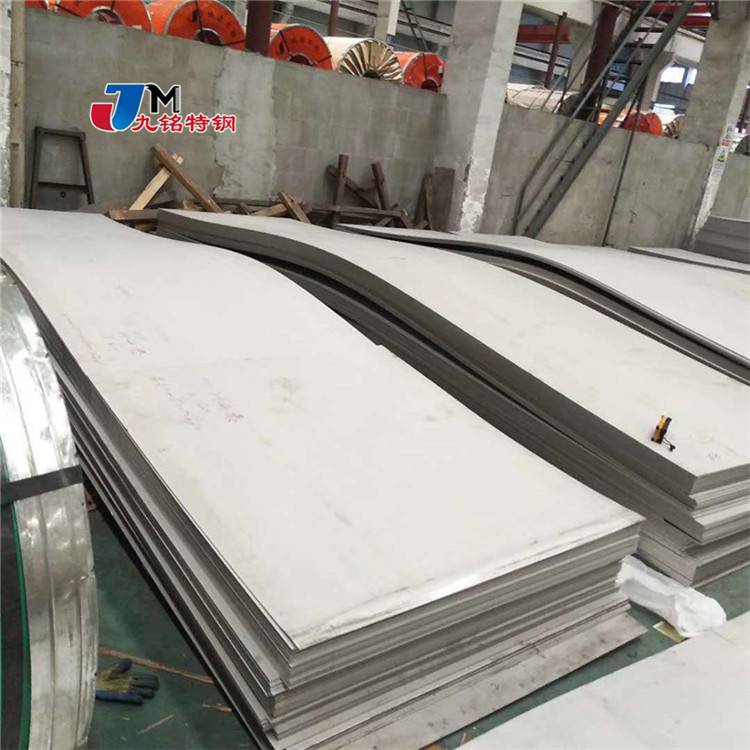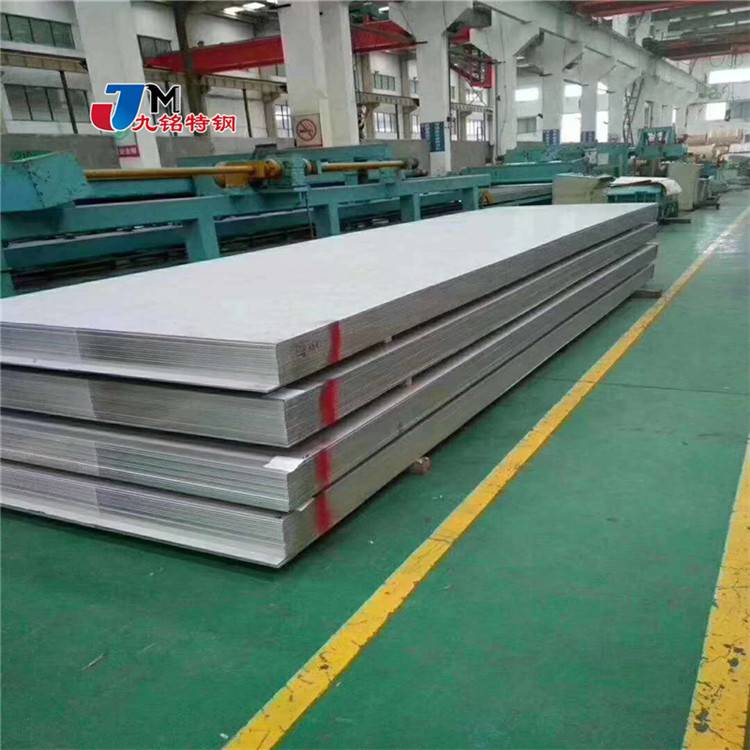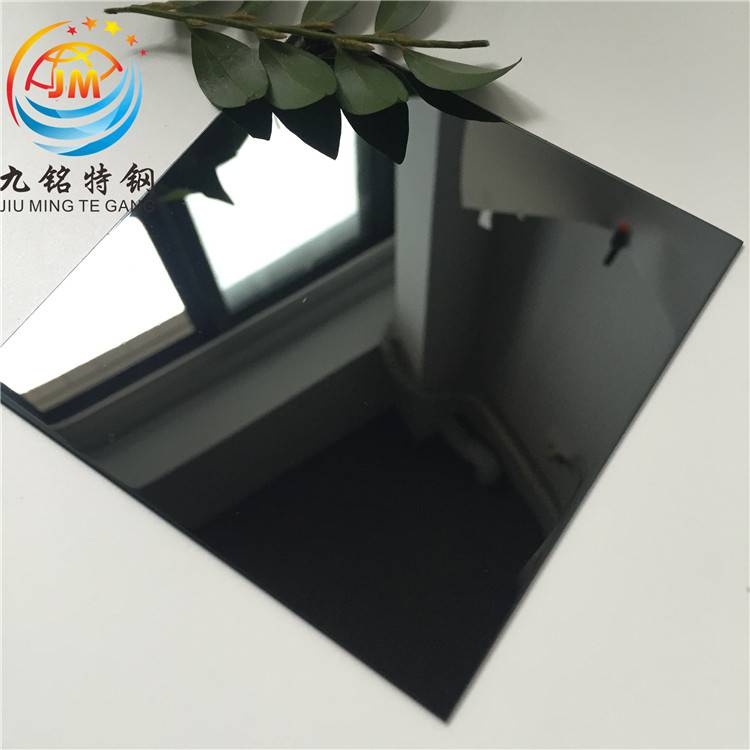
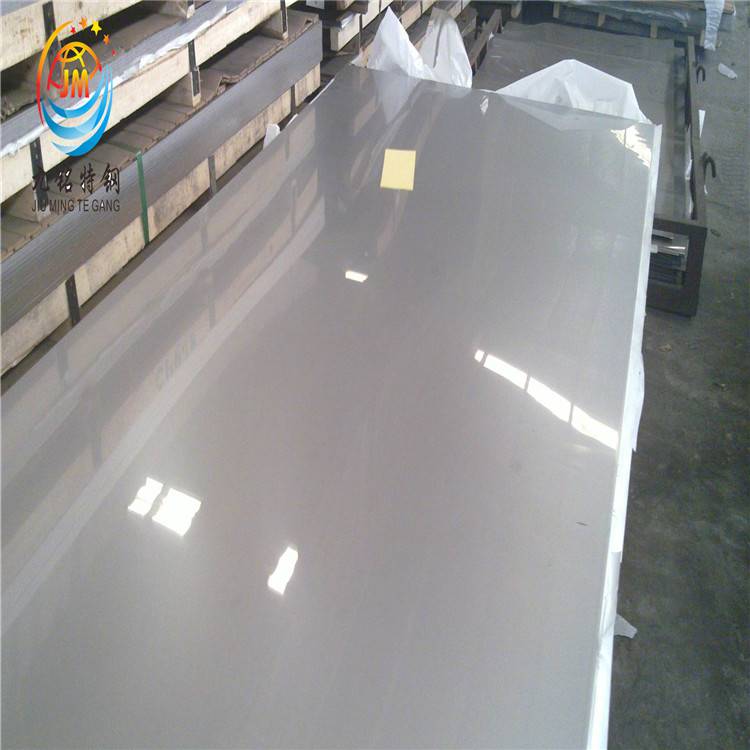
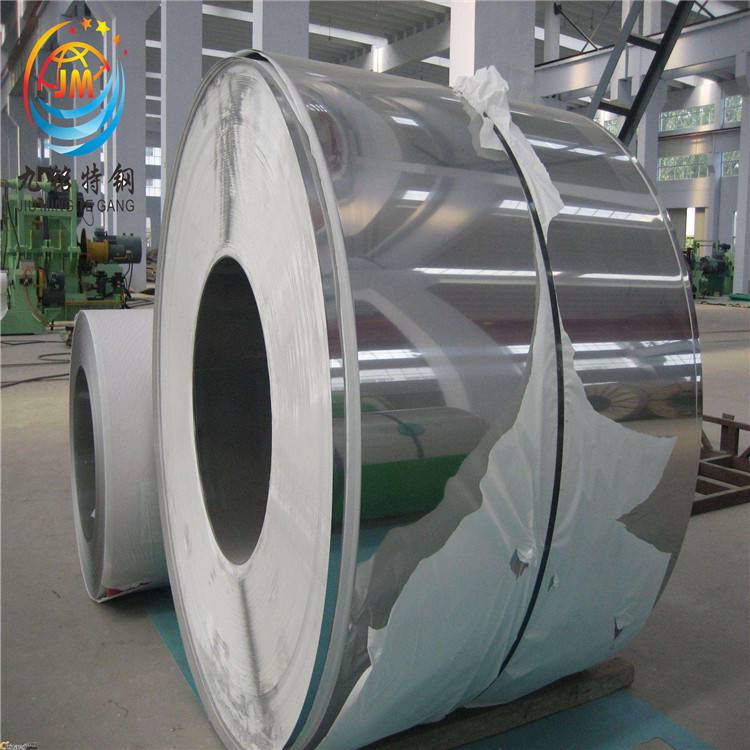
Jiangsu Jiuming 420 Stainless Steel Sheet, In Stock 30Cr13 Stainless Steel Sheet, Available for Deep Processing Factory
Stainless Steel Plates - These plates feature a smooth surface, high plasticity, toughness, and mechanical strength, and are resistant to corrosion from gases, solutions, and other media. They are an alloy steel that is not prone to rust, but it is not completely rust-proof. 304 Stainless Steel Plates - 304L stainless steel plates have significantly lower carbon content than 304. 304L outperforms 304 in terms of resistance to pitting corrosion at welding points and other treated areas. Chemical Composition - 304 Stainless Steel Grade: 0Cr18Ni9 (0Cr19Ni9) 06Cr19Ni9 S30408. Chemical Composition: C: ≤0.08, Si: ≤1.0, Mn: ≤2.0, Cr: 18.0-20.0, Ni: 8.0-10.5, S: ≤0.03, P: ≤0.035, N≤0.1. Basic Information - Divided into hot-rolled and cold-rolled types, and categorized into 5 groups based on the steel's microstructure: Austenitic, Austenitic-Ferritic, Ferritic, Martensitic, and Precipitation Hardening. They are required to withstand corrosion from various substances like alkali, iron, nitric acid, nitric-hydrofluoric acid, copper, etc., and are used in industries such as chemicals, food processing, papermaking, oil, atomic energy, as well as in construction, kitchenware, tableware, vehicles, and various home appliance components. Stainless steel plates have a smooth surface, high plasticity, toughness, and mechanical strength, and are resistant to corrosion from gases, solutions, and other media. They are an alloy steel that is not prone to rust, but it is not completely rust-proof. Stainless Steel Plates - Available in hot-rolled and cold-rolled types, including thin cold plates with thicknesses of 0.02-4mm and medium-thick plates with thicknesses of 4.5-100mm. To ensure that the mechanical properties such as yield strength, tensile strength, elongation, and hardness of various stainless steel plates meet the requirements, the plates must undergo heat treatment processes such as annealing, solution treatment, and aging treatment before delivery. The corrosion resistance of stainless steel mainly depends on its alloy composition (chromium, nickel, titanium, silicon, aluminum, etc.) and internal microstructure, with the primary role played by the chromium element. Chromium has high chemical stability and can form a passive film on the steel surface, isolating the metal from the outside and protecting the plate from oxidation, enhancing its corrosion resistance. When the passive film is damaged, the corrosion resistance decreases.
。


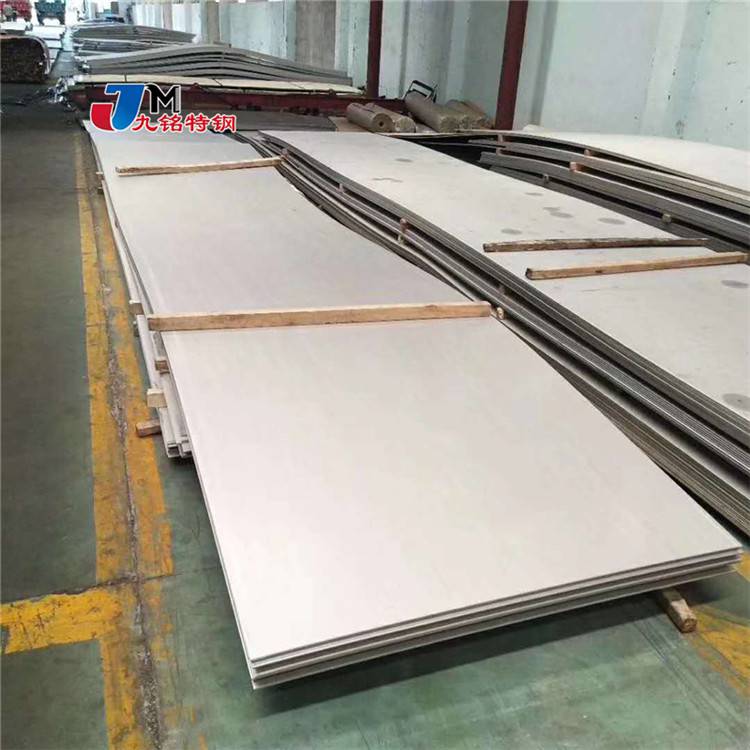
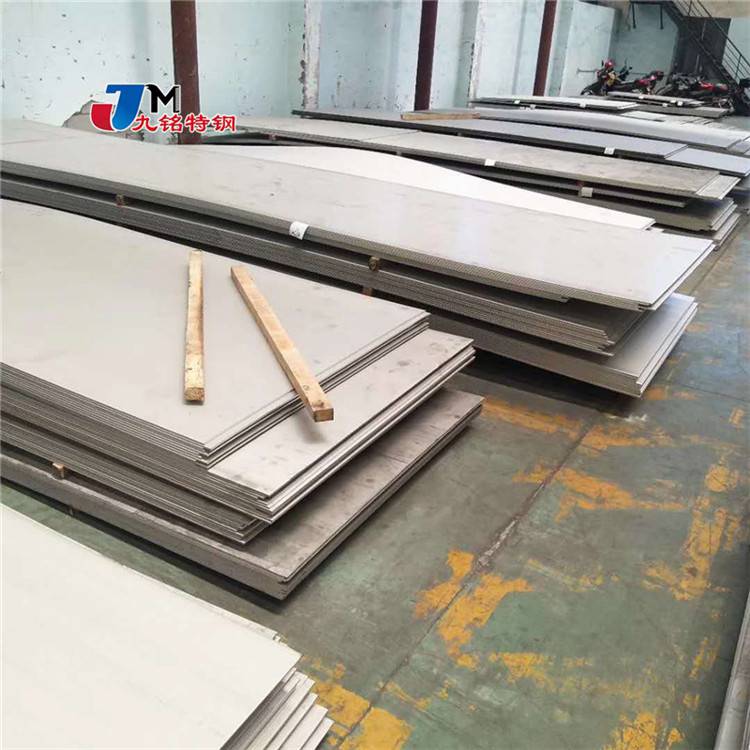
Stainless Steel Plate Introduction: Stainless steel plates are categorized into two types based on production method: hot rolled and cold rolled, including thin plates with thickness ranging from 0.5 to 4 millimeters and thick plates from 4.5 to 35 millimeters. They are divided into five categories according to the organizational characteristics of the steel: Austenitic, Austenitic-Ferritic, Ferritic, Martensitic, and Precipitation Hardening. These plates are required to withstand corrosion from various substances such as grass, iron, nitric acid, nitric-hydrofluoric acid, copper, methyl, ethyl, and more. They are used in industries such as chemicals, food processing, papermaking, petroleum, nuclear energy, as well as construction, kitchenware, tableware, vehicles, and various home appliance components. To ensure that the mechanical properties like yield strength, tensile strength, elongation, and hardness of various stainless steel plates meet the requirements, heat treatments such as annealing, solution treatment, and aging treatment must be performed before delivery. The corrosion resistance of stainless steel primarily depends on its alloy composition (chromium, nickel, titanium, silicon, aluminum, etc.) and its internal microstructure, with chromium playing a key role. Chromium has high chemical stability and can form a passive film on the steel surface, isolating the metal from the outside world and protecting the plate from oxidation, thereby enhancing its corrosion resistance. The corrosion resistance decreases after the passive film is damaged.
Categories: Editor, Sorted by Thickness (1) Thin Plate (2) Medium Plate (3) Thick Plate (4) Extra Thick Plate; Sorted by Production Method (1) Hot Rolled Steel Plate (2) Cold Rolled Steel Plate; Sorted by Surface Characteristics (1) Galvanized Plate (Hot Dipped Galvanized, Electro-Galvanized) (2) Tinplate (3) Composite Plate (4) Color Coated Steel Plate; Sorted by Application (1) Bridge Steel Plate (2) Boiler Steel Plate (3) Shipbuilding Steel Plate (4) Armor Plate (5) Automotive Steel Plate (6) Roofing Steel Plate (7) Structural Steel Plate (8) Electrical Steel Plate (Silicon Steel Sheet) (9) Spring Steel Plate (10) Others. Two, Common and Mechanical Structural Steel Plates, Common Japanese Grades: JIS Series 1. The grade of Japanese steel (JIS series) is mainly composed of three parts to indicate the material, such as: S (Steel) indicates steel, F (Ferrum) indicates iron; the second part indicates different shapes, types, and applications, such as P (Plate) indicates plate, T (Tube) indicates tube, K (Kogu) indicates tool; the third part indicates a feature number, usually tensile strength. For example: SS400—a S indicates steel, the second S indicates “structure”, 400 indicates the minimum tensile strength of 400MPa, the whole indicating general-purpose hot-rolled steel plate and strip. 2. SPHC——The first S is the abbreviation for steel (Steel), P for plate (Plate), H for heat (Heat), C for commercial (Commercial), indicating general-purpose hot-rolled steel plate and strip.


China Branding: (1) Cold Rolled Non-Oriented Silicon Steel Strip (Sheet) Method: DW + 100 times Iron Loss Value (Unit weight iron loss value at a magnetic flux peak of 1.5T under 50Hz frequency and sine wave form) + 100 times Thickness Value. For example, DW470-50 indicates a cold rolled non-oriented silicon steel with an iron loss value of 4.7w/kg and a thickness of 0.5mm, currently labeled as 50W470. (2) Cold Rolled Oriented Silicon Steel Strip (Sheet) Method: DQ + 100 times Iron Loss Value (Unit weight iron loss value at a magnetic flux peak of 1.7T under 50Hz frequency and sine wave form) + 100 times Thickness Value. Sometimes, Iron Loss Value is followed by G to indicate high magnetic flux. For example, DQ133-30 indicates a cold rolled oriented silicon steel strip (sheet) with an iron loss value of 1.33 and a thickness of 0.3mm, currently labeled as 30Q133. (3) Hot Rolled Silicon Steel Sheet Hot Rolled Silicon Steel Sheet is denoted by DR, divided into Low Silicon Steel (Si content ≤2.8%) and High Silicon Steel (Si content > 2.8%) based on the amount of silicon content. Method: DR + 100 times Iron Loss Value (Unit weight iron loss value at a magnetic flux peak of 1.5T during 50Hz magnetic saturation and sine wave form) + 100 times Thickness Value. For example, DR510-50 indicates a hot rolled silicon steel sheet with an iron loss value of 5.1 and a thickness of 0.5mm. Branding for hot rolled silicon steel thin plates used in household appliances is represented by JDR + Iron Loss Value + Thickness Value, such as JDR540-50. Japan Branding: (1) Cold Rolled Non-Oriented Silicon Steel Strip: Nominal Thickness (100 times the expanded value) + Code A + Iron Loss Guarantee Value (Iron loss value expanded by 100 times at a frequency of 50Hz and magnetic flux density of 1.5T). For example, 50A470 indicates a cold rolled non-oriented silicon steel strip with a thickness of 0.5mm and an iron loss guarantee value of ≤ 4.7. (2) Cold Rolled Oriented Silicon Steel Strip: Nominal Thickness (100 times the expanded value) + Code G: Indicates general material, P: Indicates high orientation material + Iron Loss Guarantee Value (Iron loss value expanded by 100 times at a frequency of 50Hz and magnetic flux density of 1.7T). For example, 30G130 indicates a cold rolled oriented silicon steel strip with a thickness of 0.3mm and an iron loss guarantee value of ≤1.3.