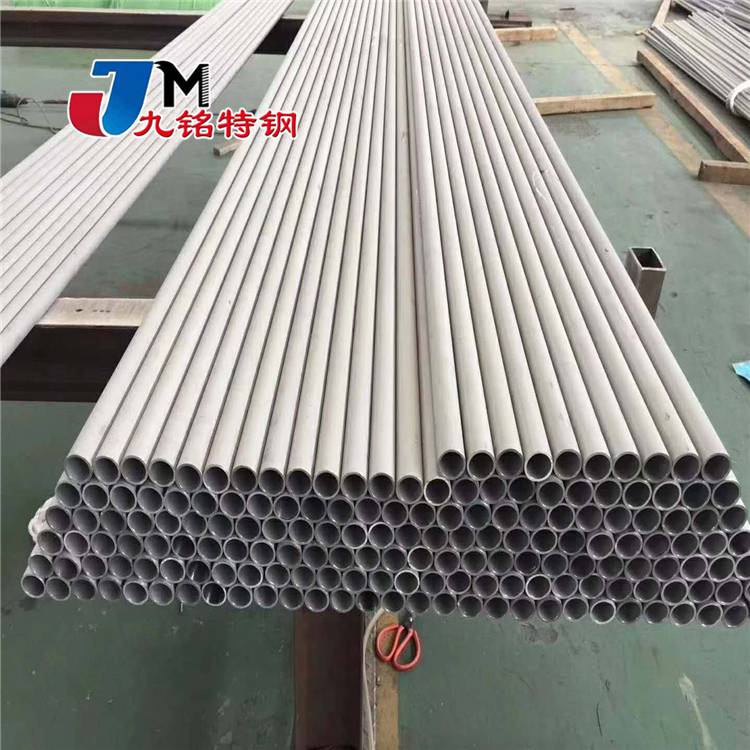
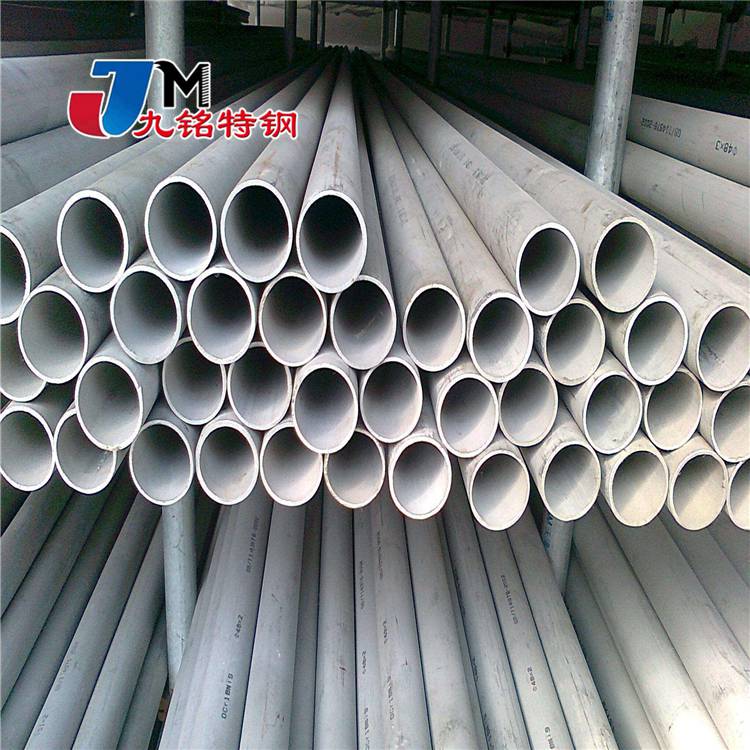
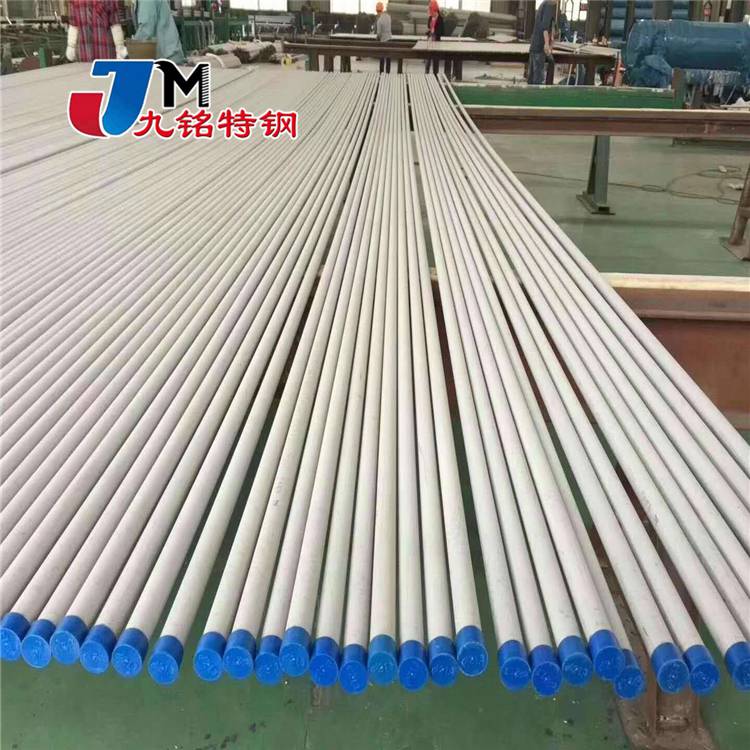
Chuzhou 0Cr18Ni9Ti Seamless Pipe, Jiuming Special Steel, TP321, 06Cr18Ni10Ti Stainless Steel Pipe In Stock
321 alloy stainless steel excels in high-temperature environments due to its superior mechanical properties. Compared to 304 alloy, 321 alloy stainless steel offers better ductility and stress-crack resistance. Additionally, 304L can also be used for...SensitivityChemical action and intergranular corrosion.
General Attributes
Alloy 321 (UNS S32100) is a stable stainless steel. It maintains excellent intergranular corrosion resistance under conditions of carbide precipitation of chromium at temperatures ranging from 800-1500°F (427-816°C). Due to the addition of titanium in its composition, the 321 alloy can still retain stability during the formation of carbides. The 347 alloy, on the other hand, maintains its stability through the addition of niobium and tantalum.
321 and 347 alloys are commonly used for long-term operations in high-temperature environments ranging from 800-1500°F (427-816°C). If the application involves only welding or short-term heating, 304L can be used instead.
High-temperature operations of alloys 321 and 347 are also attributed to their excellent mechanical properties. Compared to 304 and 304L, 321 and 347 exhibit superior stress-rupture and creep resistance. This allows these stable alloys to withstand pressure at slightly higher temperatures, in compliance with the American Society of Mechanical Engineers' boiler codes and pressure vessel specifications. Therefore, alloys 321 and 347 are... Temperatures up to 1500°F (816°C) can be achieved, whereas 304 and 304L are limited to 800°F (426°C).
SUS321 stainless steel
SUS321 Stainless Steel
321 and Alloy 347 also have high carbon content varieties, with UNS numbers of S32109 and S34709 respectively.
Robust 321 and alloy 347 stainless steelSensitivityCorrosion resistance and intergranular corrosion resistance are indicated in the table below (Tested copper-copper-16% (ASTM A262, Practice E)). Prior to testing, the annealed samples from the steel mill were subjected to a 1050°F (566°C) isothermal heat treatment for 48 hours.

Stress corrosion cracking
Alloy 321 and 347 austenitic stainless steels are susceptible to stress corrosion cracking in halides, similar to alloy 304 stainless steel. This is due to their similar nickel content. Conditions leading to stress corrosion cracking include: (1) exposure to halide ions (usually chlorides), (2) residual tensile stress, and (3) environmental temperatures above 120°F (49°C). Cold deformation during forming operations or thermal cycles encountered during welding can induce stress. Stress-relieving heat treatment after annealing or cold deformation may reduce stress levels. Stable alloys 321 and 347 are suitable for environments where stress may cause intergranular corrosion in unstable alloys.
321 and 347 are particularly useful in environments where unstable austenitic stainless steels (such as alloy 304) are subjected to continuous stress corrosion. Unstable austenitic stainless steels, when exposed to sensitizing temperatures, will form chromium carbide precipitates at grain boundaries. When cooled to room temperature in a sulfur-containing environment, sulfides (typically hydrogen sulfide) react with moisture and oxygen to form a corrosive precipitate that sensitizes the grain boundaries. Under conditions of stress and intergranular corrosion, multiphase stress corrosion cracking occurs in refining environments where sulfides are普遍 present. Stable alloys 321 and 347 are effective due to their performance in heating operation environmentsSensitiveAlleviates intergranular stress corrosion cracking. Should be used under thermal stability conditions if the operating environment may cause sensitization.
Pitting corrosion/Crevice corrosion
Stable alloys 321 and 347 exhibit similar pitting and crevice corrosion resistance in chloride-containing environments to stainless steel 304 or 304L, as they have similar chromium content. Generally, for both unstable and stable alloys, the chloride content limit in water environments is one hundred parts per million, especially when crevice corrosion is present. Higher chloride ion concentrations can lead to crevice and pitting corrosion. Under harsh conditions with higher chloride content, lower pH, and/or higher temperatures, consider using molybdenum-containing alloys like 316. Stable alloys 321 and 347 passed a 100-hour 5% salt spray test (ASTM B117) without rust formation or discoloration. However, exposing these alloys to marine salt spray may result in pitting, crevice corrosion, and severe discoloration. It is not recommended to expose alloys 321 and 347 to marine environments.