


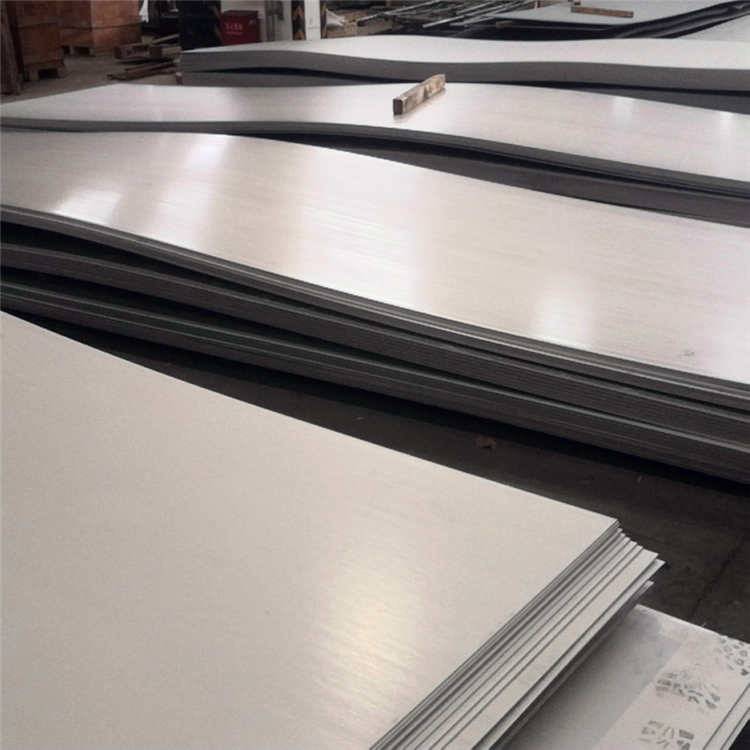
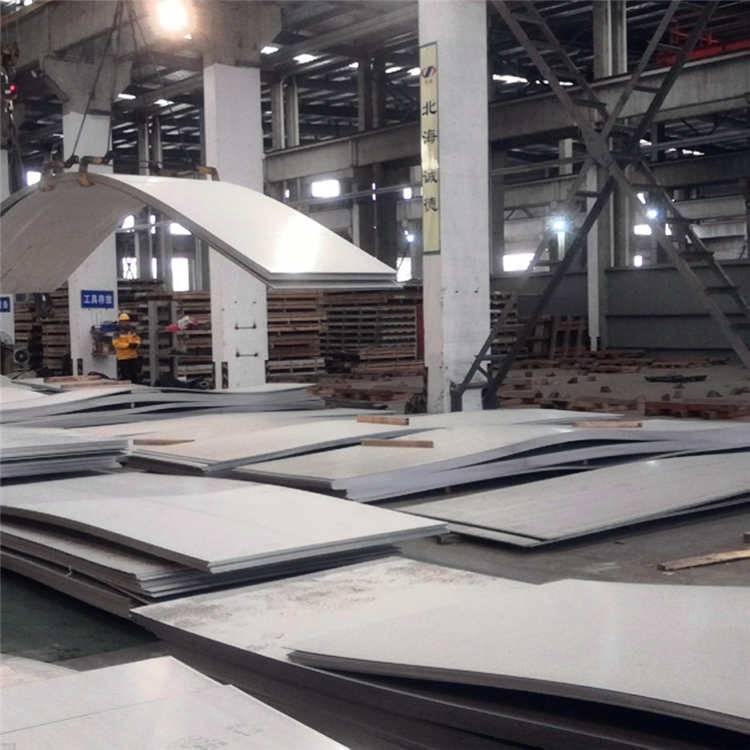
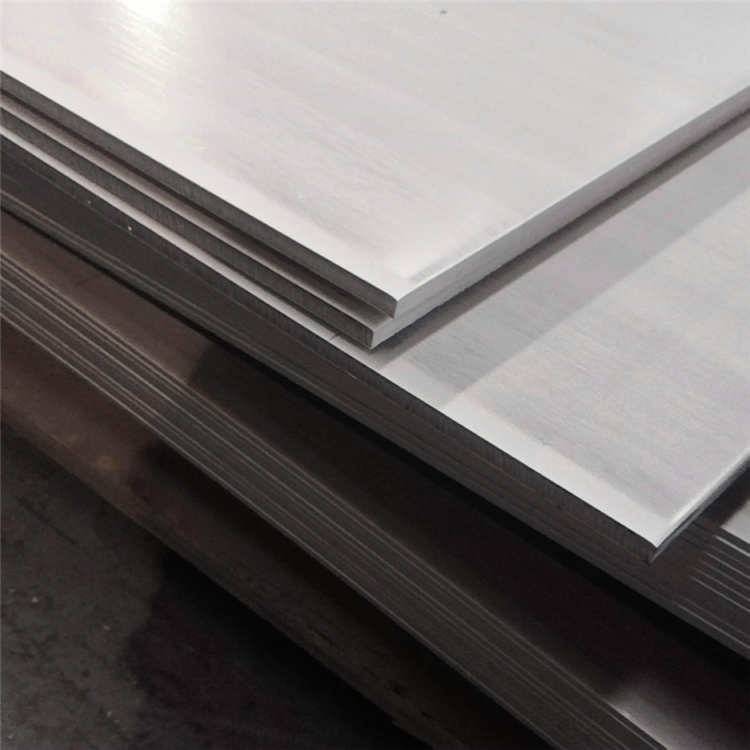
Jiangsu Jiuming 0cr21AL6 Brushed Stainless Steel Sheet, Laser Cutting 0cr21AL6 Stainless Steel Sheet, Custom Made Processing
Iron-chromium-aluminum alloy is a crucial electrical heat-resistant alloy. Due to the high content of Cr and Al in its composition, a dense oxide film forms on the alloy surface at high temperatures, extending the service life of the alloy material. A high AL content also increases resistivity, allowing for efficient conversion of electrical energy into heat, thereby saving on electrical heat materials. Additionally, the price of iron-chromium-aluminum alloy is approximately 30% cheaper than that of nickel-based electrical heat-resistant alloys and stainless steel-based alloys. This excellent high-temperature oxidation resistance (up to 1400℃) and high resistivity (up to 1.6) along with its affordability make it suitable for extensive use. The preparation of iron-chromium-aluminum alloy into micrometer-sized metal fibers enables applications in high-temperature gas filtration, burners, and gas seals, etc.

Alpha Titanium Alloy - It is a single-phase alloy composed of alpha phase solid solutions. It remains in the alpha phase under both general temperatures and higher practical application temperatures, offering stable structure and superior wear resistance compared to pure titanium, as well as strong anti-oxidation capabilities. At temperatures between 500°C and 600°C, it maintains its strength and anti-creep properties, but cannot be heat treated for strengthening, and its room temperature strength is not high.
Beta titanium alloy is a monophase alloy composed of beta phase solid solutions. Titanium alloy knives exhibit high strength without heat treatment, and further strengthening is achieved through quenching and aging, with room temperature strength reaching up to 1372 to 1666 MPa. However, it has poor thermal stability and is not suitable for use at high temperatures.
Alpha-Beta Titanium Alloy: It is a two-phase alloy with excellent comprehensive properties, good microstructure stability, and excellent toughness, ductility, and high-temperature deformation properties. It can be processed well by heat and pressure, and can be hardened and aged to enhance the strength of the alloy. Titanium alloy weapons. The strength after heat treatment is approximately 50% to 60% higher than that of the annealed state; it has high high-temperature strength and can operate continuously at temperatures between 400°C to 500°C, with its thermal stability being slightly lower than that of alpha titanium alloys. Among the three types of titanium alloys, alpha and alpha+beta are commonly used; the machinability of alpha titanium is better, followed by alpha+beta, and worst for beta titanium. The alpha titanium alloy is designated as TA, the beta titanium alloy as TB, and the alpha+beta titanium alloy as TC.


Titanium alloys can be categorized by application into heat-resistant alloys, high-strength alloys, corrosion-resistant alloys (such as titanium-molybdenum, titanium-palladium alloys, etc.), low-temperature alloys, and special function alloys (like titanium-iron hydrogen storage materials and titanium-nickel shape-memory alloys). The composition and properties of typical alloys are listed in the table. Heat treatment: Titanium alloys can achieve different phase compositions and structures through heat treatment processes. Generally, fine equiaxed structures exhibit better ductility, thermal stability, and fatigue strength; acicular structures have higher tensile strength, creep resistance, and toughness; and a mixture of equiaxed and acicular structures offers a good combination of comprehensive properties.
High-Temperature Titanium Alloy
The high-temperature titanium alloy developed most recently is Ti-6Al-4V, with a service temperature of 300-350°C. Subsequently, alloys like IMI550 and BT3-1, with service temperatures reaching 400°C, and alloys such as IMI679, IMI685, Ti-6246, and Ti-6242, with service temperatures of 450-500°C, were developed. High-temperature titanium alloys that have been successfully applied in military and civilian aircraft engines include the UK's IMI829 and IMI834 alloys; the US's Ti-1100 alloy; and Russia's BT18Y and BT36 alloys. Table 7 lists the service temperatures of some high-temperature titanium alloys [26].
In recent years, the development of high-temperature titanium alloys has focused on the use of rapid solidification/powder metallurgy techniques, along with fiber or particle-reinforced composite materials, which can elevate the service temperature of titanium alloys to above 650℃ [1, 27, 29, 31]. McDonnell Douglas Corporation successfully developed a high-purity, high-density titanium alloy using rapid solidification/powder metallurgy techniques, with its strength at 760℃ comparable to that of titanium alloys used at room temperature [26].
Titanium aluminum compound
Compared to conventional titanium alloys, the intermetallic compounds Ti3Al (α2) and TiAl (γ) based on titanium-aluminum compounds offer superior high-temperature properties (operating temperatures of 816 and 982°C), excellent resistance to oxidation and creep, and a lightweight nature (with a density just half that of nickel-based high-temperature alloys). These advantages make them competitive materials for aeroengine and aircraft structural components [26].
Two Ti3Al-based titanium alloys, Ti-21Nb-14Al and Ti-24Al-14Nb-0.5Mo, have begun mass production in the U.S. Other developed Ti3Al-based titanium alloys include Ti-24Al-11Nb, Ti25Al-17Nb-1Mo, and Ti-25Al-10Nb-3V-1Mo, among others [29]. Titanium alloys based on TiAl (γ) are of interest with a composition range of Ti-(46-52)Al-(1-10)M (at.%), where M represents at least one of the elements v, Cr, Mn, Nb, Mo, and W. Titanium alloys based on TiAl3, such as the Ti-65Al-10Ni alloy [1], are beginning to attract attention.


High strength and high toughness β-type
Beta titanium alloy, originally developed by the American Crucible Company in the mid-1950s as the B120VCA alloy (Ti-13v-11Cr-3Al), boasts excellent cold and hot working properties. It is easy to forge, can be rolled and welded, and achieves high mechanical properties, good environmental resistance, and a good combination of strength and fracture toughness through solid solution-aging treatment. Representative high-strength, high-toughness beta titanium alloys include the following [26, 30]:
Ti1023 (Ti-10v-2Fe-#al), this alloy has comparable properties to the commonly used high-strength structural steel 30CrMnSiA in aircraft components, and possesses excellent forging characteristics.
Ti153 (Ti-15V-3Cr-3Al-3Sn), this alloy boasts superior cold working properties compared to industrial pure titanium, with the tensile strength at room temperature after aging exceeding 1000 MPa.
β21S (Ti-15Mo-3Al-2.7Nb-0.2Si) is an oxidation-resistant, ultra-high-strength titanium alloy developed by Timet's division of the U.S. Titanium Metal Company. It boasts excellent oxidation resistance and processing properties, both cold and hot, and can be made into foil as thin as 0.064mm.
NKK's successfully developed SP-700 (Ti-4.5Al-3V-2Mo-2Fe) titanium alloy boasts high strength and an ultra-plastic elongation of up to 2000%. Its superplastic forming temperature is 140°C lower than that of Ti-6Al-4V, allowing it to replace Ti-6Al-4V alloy for manufacturing various aerospace components using superplastic forming-diffusion bonding (SPF/DB) technology.
The BT-22 (TI-5v-5Mo-1Cr-5Al) developed in Russia boasts a tensile strength exceeding 1105 MPA.
Flame-retardant titanium alloy
Regular titanium alloys tend to ignite under certain conditions, which largely limits their application. In response to this, various countries have conducted research on flame-retardant titanium alloys and achieved certain breakthroughs. The Alloy c developed in the United States (also known as Ti-1720) has a nominal composition of 50Ti-35V-15Cr (by mass percentage) and is a flame-retardant titanium alloy that is insensitive to sustained combustion, having been used in the F119 engine. BTT-1 and BTT-3 are flame-retardant titanium alloys developed in Russia, both of which are Ti-Cu-Al series alloys with excellent thermal deformation process properties, suitable for manufacturing complex components [26].
Titanium alloy


Lightweight, high-strength, and with excellent biocompatibility, it is an ideal metal material for use in implants and other applications within the human body. The Ti-6Al-4v ELI alloy is still in use within the field. However, this alloy can release trace amounts of vanadium and aluminum ions, which decrease its cellular compatibility and may pose health risks to the human body—a concern that has long been addressed by the industry. The United States began researching aluminum- and vanadium-free, biocompatible titanium alloys in the mid-1980s, using them in orthopedics. Japan, the United Kingdom, and others have also conducted extensive research in this area, achieving some new advancements. For instance, Japan has developed a series of α+β titanium alloys with excellent biocompatibility, including Ti-15Zr-4Nb-4Ta-0.2Pd, Ti-15Zr-4Nb-aTa-0.2Pd-0.20~0.05N, Ti-15Sn-4Nb-2Ta-0.2Pd, and Ti-15Sn-4Nb-2Ta-0.2Pd-0.20, which have superior corrosion, fatigue, and anti-corrosion properties compared to Ti-6Al-4v ELI. Compared to α+β titanium alloys, β titanium alloys offer higher strength levels, better cutting properties, and toughness, making them more suitable for use as implants. In the United States, five β titanium alloys have been recommended for the field, including TMZFTM (TI-12Mo-^Zr-2Fe), Ti-13Nb-13Zr, Timetal 21SRx (TI-15Mo-2.5Nb-0.2Si), Tiadyne 1610 (Ti-16Nb-9.5Hf), and Ti-15Mo. It is estimated that in the near future, such high-strength, low-modulus, formable, and corrosion-resistant titanium alloys are likely to replace the currently used Ti-6Al-4V ELI alloys.


