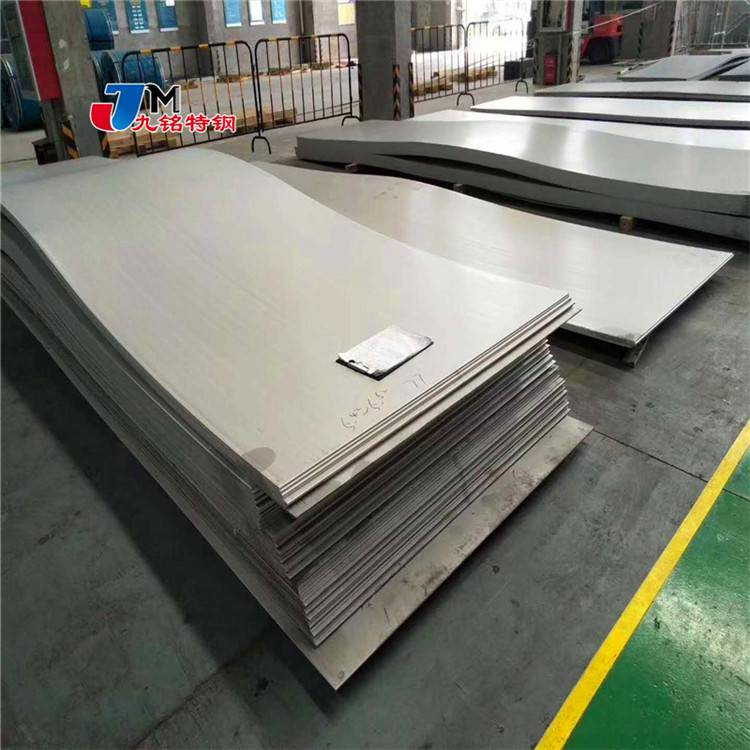
Jiangsu Jiuming High-Impact Resistant S32205 Stainless Steel Plate, S32205 Stainless Steel Plate, In Stock for Immediate Shipment
2520 Stainless Steel is an abbreviation for a standard in China's stainless steel specifications. Old Mark: 0Cr25Ni20 (GB/T3280-1992), New Mark: 06Cr25Ni20 (GB/T20878-2007), Unified Digital Code: S31008 (GB/T20878-2007). It boasts excellent oxidation resistance, corrosion resistance, and high-temperature performance due to its high nickel (Ni) and chromium (Cr) content. Used primarily in the production of high-temperature pipes for electric heating furnaces, the addition of carbon to the austenitic stainless steel increases its strength due to solid solution strengthening. The chemical composition of the austenitic stainless steel is based on chromium and nickel, with added molybdenum, tungsten, niobium, and titanium, among others. Its face-centered cubic structure provides high strength and creep resistance at high temperatures. The 2520 stainless steel materials include plates, bars, pipes, angle bars, flat bars, round bars, stainless steel plates, bars, and pipes, capable of long-term operation at temperatures up to 1250 degrees Celsius.
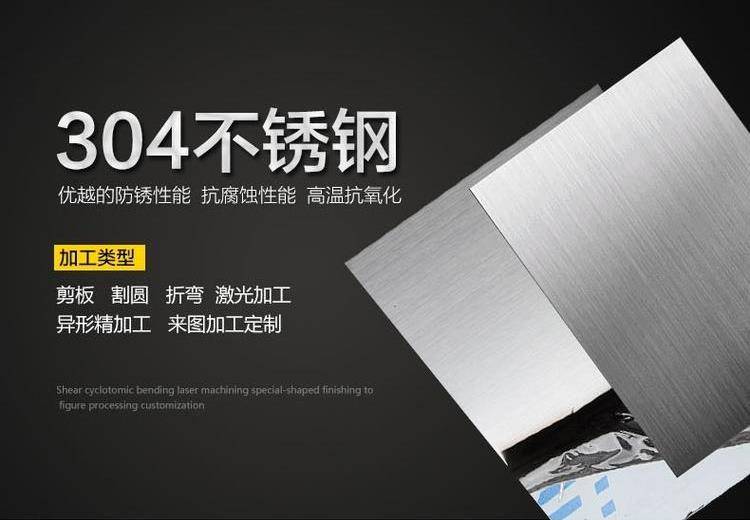

310S Stainless Steel Description: 310S (0Cr25Ni20/0Cr25Ni20Si2), heat-resistant stainless steel, with a density of 8.0 grams/cubic centimeter. 310S is an austenitic chromium-nickel stainless steel, known for its excellent oxidation and corrosion resistance. Due to its high percentage of chromium and nickel, it boasts high creep strength, enabling continuous operation at high temperatures and exhibiting good high-temperature resistance. Grade: 0Cr25Ni20, US Grade: 310S, also known as 2520, dual-phase stainless steel, used for the manufacture of heat-resistant furnace tubes.
Main Applications: 310S stainless steel is suitable for manufacturing various furnace components, with working temperatures up to 1200°C and continuous use temperatures of 1150°C. The 310S stainless steel tube is a hollow long strip of steel, widely used as pipeline for conveying fluids such as oil, natural gas, water, coal gas, steam, etc. Additionally, it is lighter in weight while maintaining the same bending and torsional strength, making it also ideal for manufacturing mechanical parts and engineering structures. It is also commonly used in the production of various conventional weapons, gun barrels, and shells.
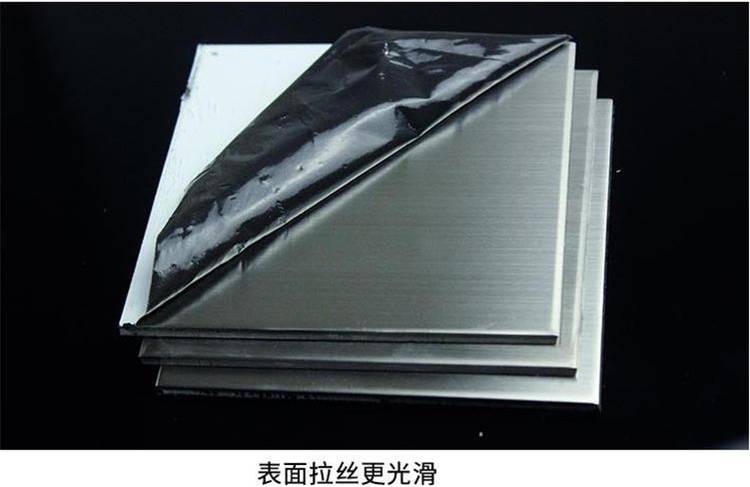
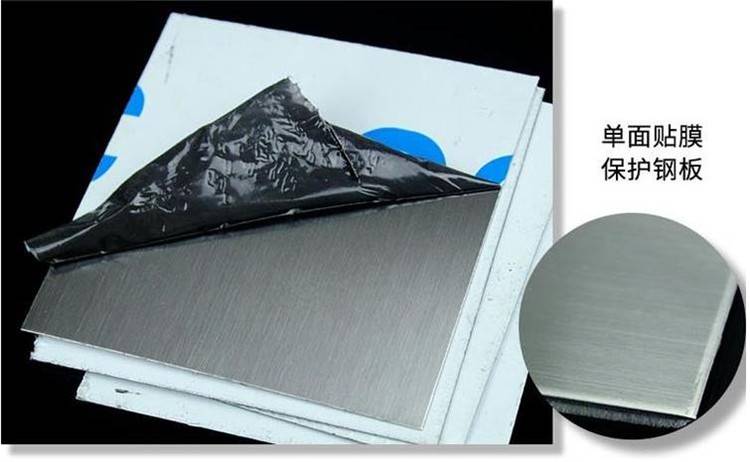
Stainless steel billets, sourced typically from steel mill orders, overseas imports, or the handling of excess inventory, vary in origin and thus require different identification methods.
1. To differentiate between imported or mill-ordered stainless steel, the 2520 grade typically only requires verification of the quality certificate from the importer or mill, as well as checking the markings on the steel or packaging.
The Quality Certificate confirms and guarantees the inspection results of the batch of products from the supplier. Therefore, the 2520 stainless steel quality certificate not only states the material name, specifications, quantity delivered, weight, and delivery status, but also must provide the full inspection results for all guaranteed items.
Similarly, for ease of management and to prevent confusion and accidents resulting from disorganization, manufacturers mark their materials or packaging with symbols such as brand, batch number, condition, specifications, quantity, and manufacturer's code. The marked symbols should be consistent with the content of the quality certificate. The most common marking methods include the following three: coloring (applying a color to indicate the brand at specified material locations), printing (engraving or spray-printing at specified material locations to indicate the brand, specifications, furnace number, etc., commonly used on thick steel plates or large and medium-sized shapes), and tagging (hanging tags with brand, batch number, specifications, quantity, etc. on bundled or boxed materials).
Identifiers for stainless steel materials are typically in the form of printing and tags.
2. Social overstocked and surplus stainless steel materials. Depending on the duration of overstocking and the quality of storage, there are generally two situations:
Firstly, the overstocked inventory has not been stored for a long duration, and the storage conditions are excellent. The handling unit not only retains the original quality certificates or copies but also the markings on the steel or packaging are complete and clear. For the identification of this stainless steel, it is similarly sufficient to cross-check the markings on the steel or packaging against the quality certificates.
Another type has a longer accumulation period, with imperfect storage, lacking quality certificates, and the markings on the steel or packaging are faint or have fallen off. To identify such stainless steel materials, it is mainly necessary to conduct in-depth investigations and consult the original documents with the handling units. Generally, the steel numbers are marked on the original documents. If there is no record of the steel number, local price information at that time must be reviewed to determine the steel number based on price. This is a relatively effective method to determine the steel number, but it is often prone to misattribution. Therefore, it is essential to master the identification methods for the physical materials.
Identification of 2520 stainless steel involves determining its type without knowing the specific steel grade, by assessing the inherent physical and chemical properties of the goods (including whole materials, surplus materials, and scrap, etc.), using simple tools and senses to ascertain whether it is stainless steel and which specific category it belongs to.
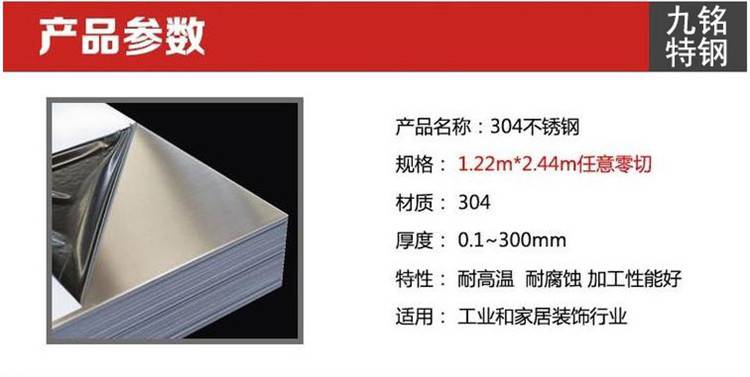
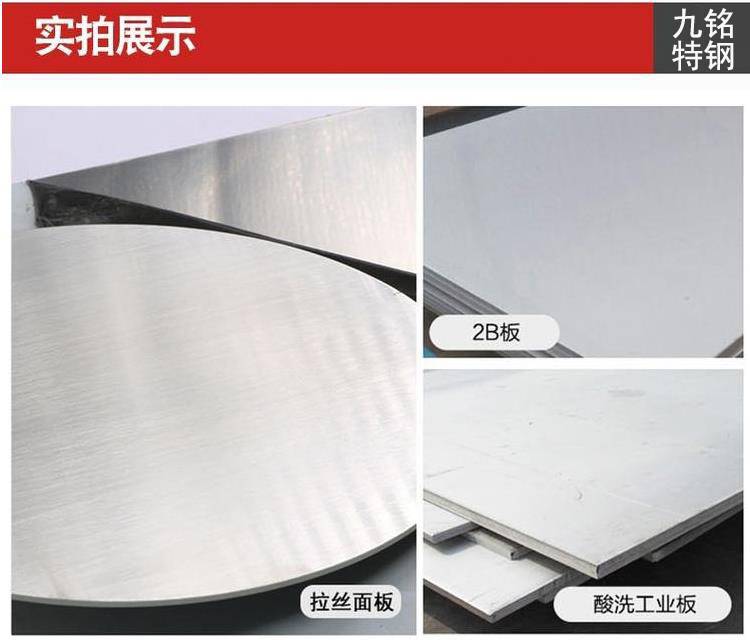

It should be noted that sensory differentiation cannot distinguish specific steel grades; it can only basically differentiate between three major categories: chromium stainless steel, chromium-nickel stainless steel, and chromium-manganese-nitrogen stainless steel. The method of identification is as follows:
Identification of 2520 stainless steel color:
Polished stainless steel, with a silver-white, glossy surface: chromium-nickel stainless has a silvery, jade-like color; chromium stainless is white with a faintly gray sheen; chromium-manganese-nitrogen stainless has a color similar to chromium-nickel but slightly lighter. Unpolished stainless steel surface colors: chromium-nickel steel is brownish-white, chromium steel is brownish-black, and chromium-manganese-nitrogen is black (these colors refer to heavily oxidized hues). Cold-rolled, unannealed chromium-nickel stainless steel has a silver-white, reflective surface.
2520 Stainless Steel Identification with a Magnet:
Magnetism can generally differentiate between two types of stainless steel. Chromium stainless steel is attracted to magnets in any state; chromium-nickel stainless steel is typically non-magnetic in the annealed state, but can become magnetic after cold working; however, high manganese steel with high manganese content is non-magnetic. The magnetic properties of chromium-nickel-nitrogen stainless steel are even more complex: some are non-magnetic, some are magnetic, and some are non-magnetic in the longitudinal direction but magnetic in the transverse direction. Therefore, while magnets can basically distinguish between chromium stainless steel and chromium-nickel stainless steel, they cannot accurately differentiate certain special steel grades, nor can they distinguish specific steel grades.
Stainless Steel 2520 Copper Identification:
Remove the oxide layer from the 2520 stainless steel bar, place a drop of water on it, and wipe with a copper cloth. If it does not change color after wiping, it is typically stainless steel; if it turns purple-red, it is usually high-manganese steel without magnetic properties. If it has magnetic properties, it is generally plain steel or low-alloy steel.
For steel grades with special properties, we need to employ the following three methods for identification.
2520 Stainless Steel Brushed Identification:
The flame testing method involves grinding stainless steel on an abrasive wheel and observing the sparks. If the sparks are stream-like and feature more and denser nodes, it indicates high-manganese steel or manganese-nitrogen steel with a high manganese content. If there are no nodes, it is chromium steel or chromium-nickel stainless steel.