


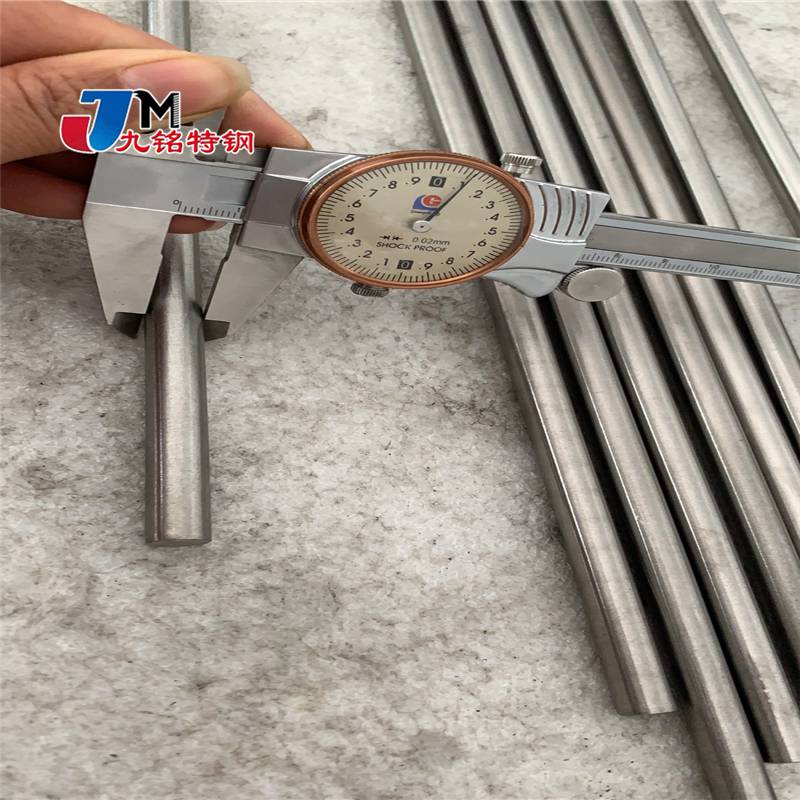
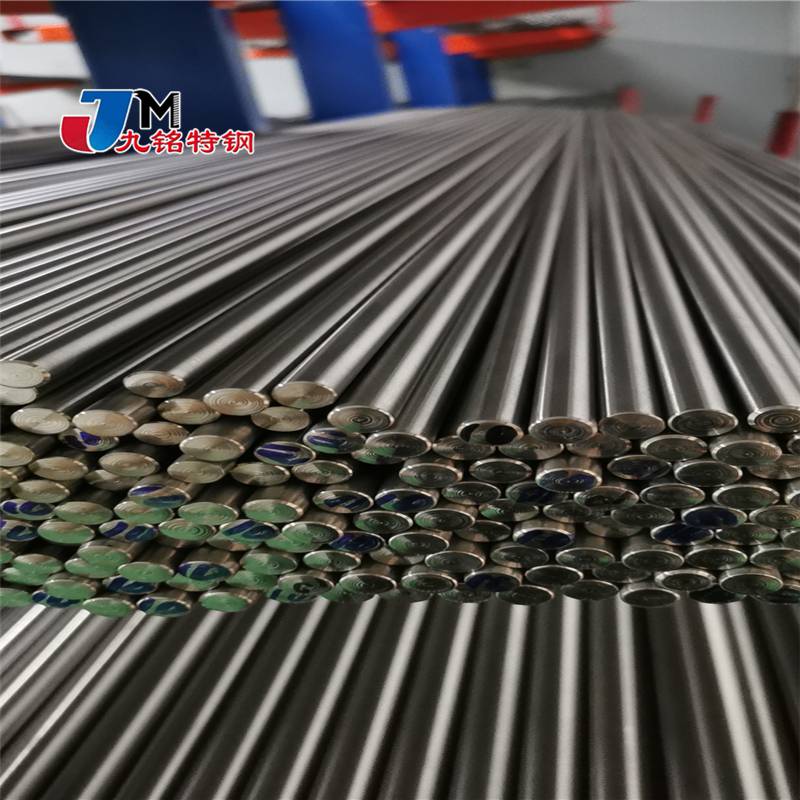
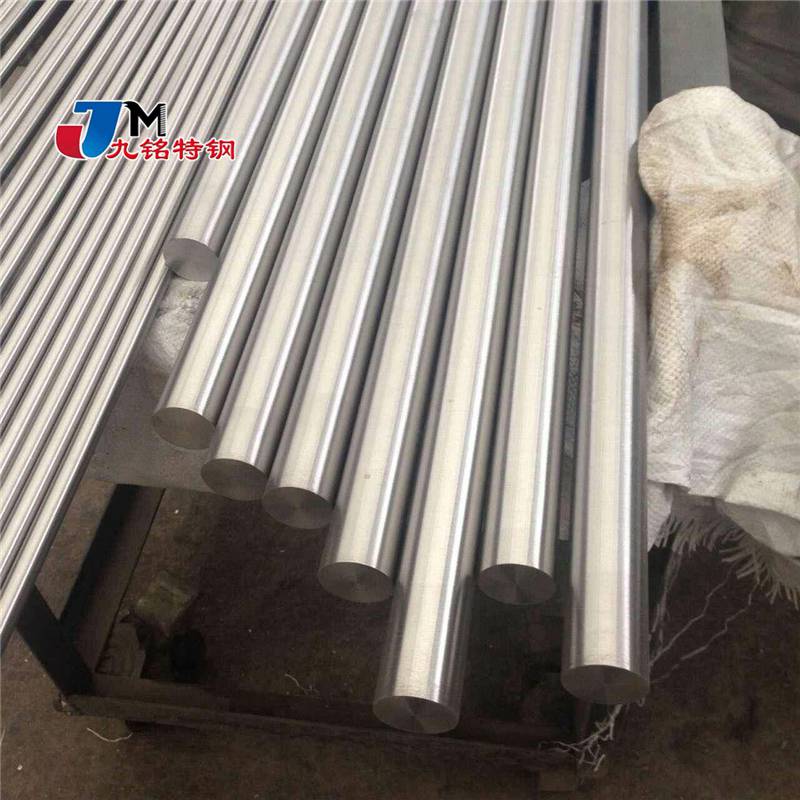
Nitronic 60 alloy offers finished product specifications as follows:
Nitronic 60 alloy bars, Nitronic 60 forged rods, Nitronic 60 alloy plates, Nitronic 60 seamless tubes, Nitronic 60 strip, Nitronic 60 coil, Nitronic 60 wire rope, Nitronic 60 flat strips, Nitronic 60 round bars, Nitronic 60 thick plates, Nitronic 60 polished rods, Nitronic 60 round steel, Nitronic 60 round cakes, Nitronic 60 welding wire, etc., available for customization.
Nitronic 60, also known as N60 or Alloy 218, is a high-wear-resistant austenitic stainless steel; the number 218 refers to its UNS number S21800. Nitronic 60 is an exceptional corrosion-resistant alloy with excellent toughness at low temperatures and outstanding corrosion resistance, capable of preventing galling. It combines high strength with excellent resistance to high-temperature oxidation. This steel also boasts superior resistance to high-temperature oxidation and low-temperature impact toughness. Its wear resistance is one of its key features. At 600°C, it exhibits similar wear resistance to Inconel 718 and has erosion resistance, making it a viable substitute for cobalt-containing wear-resistant alloys compared to other austenitic and duplex stainless steels.
Density: 8.0 g/cm³.
Nitronic 60 chemical composition:
C:≤0.10
MN:7.00- 9.00
S:≤0.03
Si:3.50- 4.50
Cr:16.00- 18.00
Ni:8.00- 9.00
N:0.08- .18
Performance Features
Maintains excellent wear resistance at gradient ascending temperatures; 4% silicon content and 8% manganese content effectively inhibit wear and surface erosion.
Below 982°C, it maintains excellent strength and similar oxidation resistance to 309 stainless steel.
Typically, the corrosion resistance falls between 304 and 316 stainless steel, with superior chloride pitting resistance to 316.
Room temperature yield strength is nearly twice that of Type 304 and 316.
Application Fields
Compared to cobalt and high-nickel alloys, Nitronic 60 stainless steel offers corrosion and wear resistance at a significantly lower cost. It also boasts excellent resistance to high-temperature oxidation and low-temperature impact. Suitable for various types of fasteners, bolts, rolling bearings, and pump components that require high strength and wear resistance.
We enhance strength through cold working and grain structure stretching, rather than by heat treatment. We are considering yield strengths of 90 to 180 ksi, which are for new-type shaft sleeves, replacing beryllium copper alloys in fighter jets.
Nitronic 60 is highly wear-resistant. It is used as gears, drive systems, and even hubs. "When you have an open gear, due to the extreme temperatures of outer space, no lubricant will work. It has to be a dry product, which is where the wear-resistant stainless steel comes into play.
A feature of the Nitronic grade is its austenitic stability. Typically, Nitronic grades have a higher manganese content. While most stainless steel grades are primarily iron, the addition of chromium and nickel creates a non-magnetic austenitic structure. When most stainless steels are worked after annealing or even after accidental knocks, this structure forms ferrite particles that respond to magnets. "If you're using this material in demining, austenitic stability is a plus. Nitronic can be used in place of standard stainless steel even at low temperatures when users do not expect changes in permeability. It does not exhibit different magnetic characteristics at extreme temperatures. Even after accidental knocks, it maintains consistency.
Magnetism is crucial in the next nuclear reactor or naval electromagnetic railgun. "I thought we would see a significant increase in other uses for superconducting non-magnetic environments. Once we master magnetism, we can achieve safer nuclear energy, just like the sun. In the future, as this technology evolves, it is one of the important areas to watch."
My process differs from cold drawing. All other tests are completed by pulling a cold billet through a die. My machine has four dies that press it to the center, examining the strength: I have central penetration force, mechanical force moving towards the center. My cold working furnace is achieving results not found in any mechanical engineering textbook. My yield strength is 50,000 psi.
Heat Treatment
Nitronic 60 cannot be hardened through heat treatment. The annealing temperature for Nitronic 60 is 1066°C, followed by water quenching.
Low-temperature resistance to scratching
Scratch-resistant feature for use in heating environments
The valve cores made of Nitronic 60 are suitable for use in heating environments. The valve stems and gaskets for the control butterfly valves, made from various austenitic stainless steels, only the Nitronic 60 can operate smoothly throughout the entire working temperature range, while others exhibit abrasion between 427-816°C.
Wear-resistant feature for heating environments
Compared to cobalt alloys and nickel-based wear-resistant alloys, Nitronic 60 has a lower hardness, but it still maintains excellent wear resistance in elevated temperature environments. Nitronic 60's wear resistance comes from the oxide thin layer formed on its surface and its high strain-hardening capability. In normal ambient conditions, Nitronic 60 also exhibits good resistance to metal-to-metal wear.
Micro-motion wear
High load, fine sliding amplitude (40μm), such as the fine sliding vibration of vibration parts, can lead to micro-motion wear. At 600°C, Nitronic 60's resistance to micro-motion wear is comparable to that of the 718 alloy.
Porous Corrosion
Nitronic 60 exhibits superior resistance to pitting corrosion compared to other austenitic stainless steels and high-strength dual-phase stainless steels, approaching that of cobalt-based alloys. Cobalt-based alloys are known for their strong resistance to pitting corrosion.
Field-proven, Nitronic 60 can be successfully used as the wear ring for vertical centrifugal pumps. Sometimes, a combination of Nitronic 50 and 60 can replace cobalt alloys, providing excellent wear and corrosion resistance.
Corrosion-resistant
Nitronic 60's corrosion resistance falls between 304 and 316, but in practice, abrasion wear is the primary issue in a friction system, leading to dimensional changes before corrosion sets in. Therefore, the primary consideration for design engineers is wear resistance. Although Nitronic 60's corrosion resistance is not as good as 316, it offers superior resistance to chloride pitting, stress corrosion cracking, and crevice corrosion under laboratory conditions.
Sea corrosion
Simultaneously immerse the Nitronic 60, 304, and 316 test rods in still seawater at room temperature for 6 months. Nitronic 60 exhibits better resistance to pitting corrosion than 304, and slightly better than 316. Physical properties
Resistance: 98.2 microhm-cm
Elastic Modulus: 26.2 x 10^6 psi
Poisson's ratio: 0.298
Processing capabilities
Due to the metallurgical characteristics of Nitronic 60, it is not easy to machine. It is recommended to use coated hard alloy blades. The cutting speed for Nitronic 60 is approximately half that of 304 material.
Current Specifications:
Nitronic 60 conditions: forged, cast, annealed, solution treated, aged, etc.
2. Nitronic 60 surface finishes: Black skin, polished, buffed, washed.
3. Nitronic 60 Size Specifications: Nominal Size, Tolerance Range, Fixed Length, Unfixed Length, Standard Size
4. Nitronic 60 Quality Standards: GB, HB, GJB, AMS, GB/T, ASTM, ASME, JIS, JS, DIN, EN, and others.
5. Nitronic 60 Product Categories: Bars | Tubes | Strips | Wires | Flanges | Plates | Rings | Discs | Forgings | Welding Wires, available for production as per customer requirements.
6. Nitronic 60 order quantity;
7. Delivery time for Nitronic 60.


