
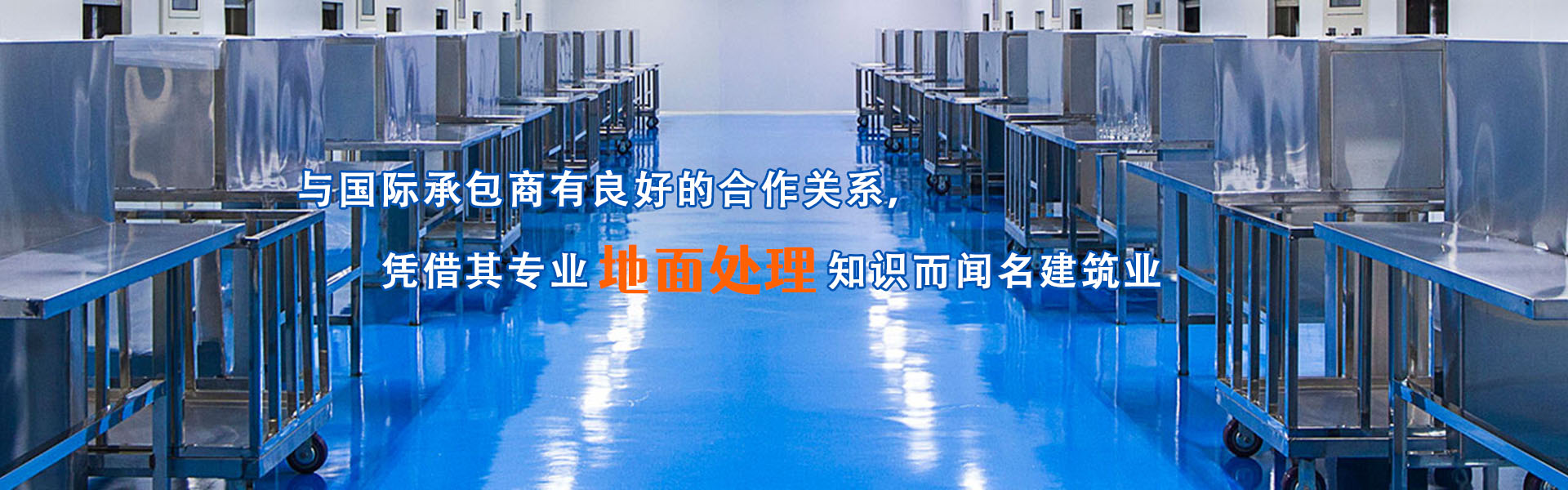

Epoxy flooring is a high-strength, wear-resistant, and aesthetically pleasing flooring option that boasts seamless surfaces, solid texture, excellent chemical resistance, corrosion and dust resistance, ease of maintenance, and low maintenance costs. It is widely used in the flooring industry in Wuhan. However, improper handling during installation can lead to various issues. What problems can arise during the construction of epoxy flooring, and how can they be addressed? Let's find out:
1. Floor Seepage Color Issue
Color bleeding refers to the phenomenon where the base layer of a coating is渗透 into the topcoat layer, causing the topcoat to change color when another color of paint is applied over it. The main reasons for color bleeding are: 1. The primer is not dry, 2. The color difference between the primer and the topcoat, 3. Lack of primer or the base material contains colored substances, 4. The primer contains organic pigments.
2. Issue of the epoxy floor paint surface being too patterned
The issue refers to the uneven coloration on the coating surface, which manifests as spots, stripes, and a chaotic mix of hues. The primary cause is due to insufficient mixing of the coating material during the application process, uneven application, and the deterioration of the coating components.
Surface Whitening Issue of Floor Paint
After the construction work is completed, a whitening phenomenon appears on the surface coating. The reasons include: excessive humidity in the air or low temperatures, which cause condensation of water vapor on the coating, leading to the precipitation of amines in the hardener, resulting in a white mist accumulating on the surface.
4. Floor Paint Wrinkling and Fish-Eye Issue
Wrinkles occur during the drying process of the coating film due to the difference in drying rates between the inner and outer layers, causing the surface to急剧 contract and pull upwards, resulting in a wrinkled or irregular linear appearance on the coating surface. Fish eyes are phenomena where, after the application of the coating, some parts of the coating film are affected by foreign matter present on or mixed into the coated surface, leading to uneven adhesion of the coating and the appearance of shrinkage showing the coated surface. Circles or needle-like small holes resembling the pores of leather are formed on the coating after application due to the rapid evaporation of solvents, leaving insufficient time for the paint liquid to replenish.
5. Cracking and pinhole issues with epoxy flooring
The wrinkling of the coating surface is mainly caused by the uneven drying speed of the inner and outer layers of the paint, leading to the surface shrinking and peeling. Pinholes are formed due to a large number of air bubbles produced in the paint during the mixing of the hardener and paint, as a result of stirring. These bubbles continuously escape during the curing process, leaving marks on the coating surface and forming pinholes.
6.环氧地板 Ringed Mountain Hole Issue
Inconsistency in the compactness of the base or insufficient distribution of the filler can lead to circular holes in the ground that resemble non-stick surfaces, which we refer to as "circular mountain holes." The solution is to thoroughly inspect the base before construction, address any issues carefully, and then proceed with applying the epoxy floor paint. Choose fillers with good dispersion and strengthen the management of material quality.
7. Roughness and cracking issues with epoxy flooring
Surface roughness refers to the appearance of particles of varying sizes on the surface, primarily caused by undissolved impurities in the flooring paint and external dust. Surface cracking is due to quality issues with raw materials and construction, leading to reduced adhesion of the paint layer. Under the influence of external forces, this results in peeling and cracking.
8. Issue of epoxy flooring delamination and insufficient丰满度
The peeling off is due to the floor cracking losing its original adhesion to the base material, which, under the action of external forces, causes the coating to peel off in small sections or in whole sheets from the surface: exposed substrate and insufficient fullness are mostly issues with raw materials and construction methods. In summary, to achieve high-quality epoxy floor paint, it is essential to choose good materials and employ professional construction teams, as professionalism is the guarantee of quality.
9. Slow curing of epoxy floor paint
Slower curing is a phenomenon where the curing reaction of the epoxy resin material slows down significantly at very low temperatures (10°C). Construction is prohibited below 5°C. This issue is greatly related to viscosity; the lower the temperature, the higher the viscosity, making it more difficult to work with. Extended curing times can lead to contamination of the coating with dust, sand particles, and other debris, potentially delaying the project timeline. Additionally, adding solvents at the construction site can also cause slower curing, as the evaporation of solvents can carry away some heat, cooling the coating.

