
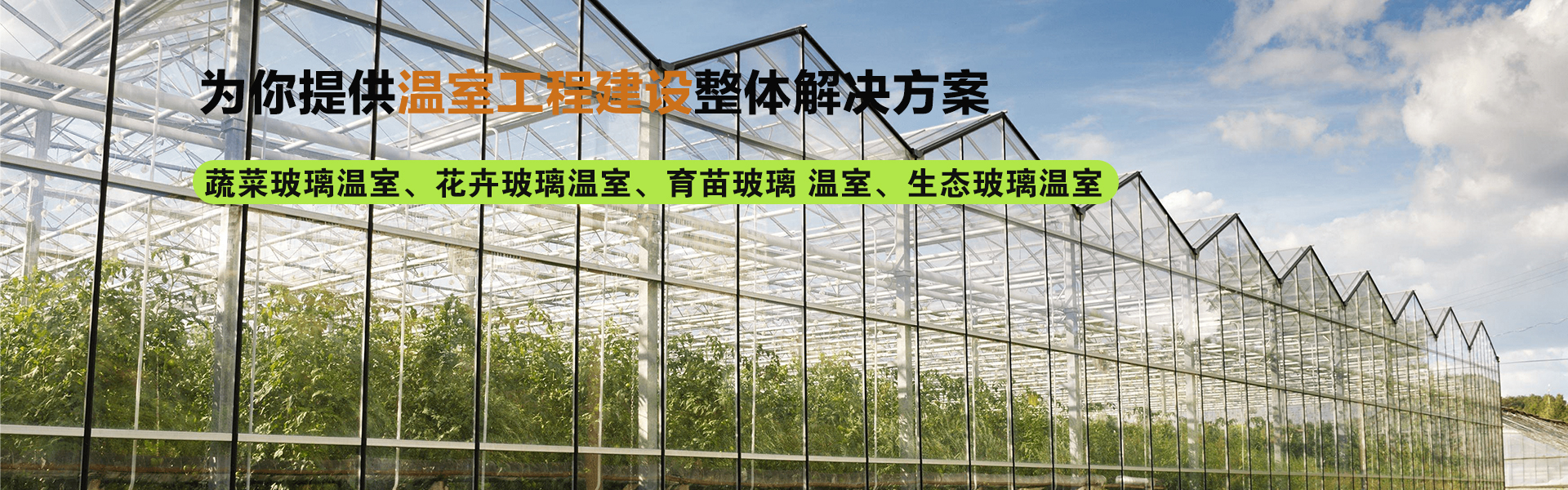
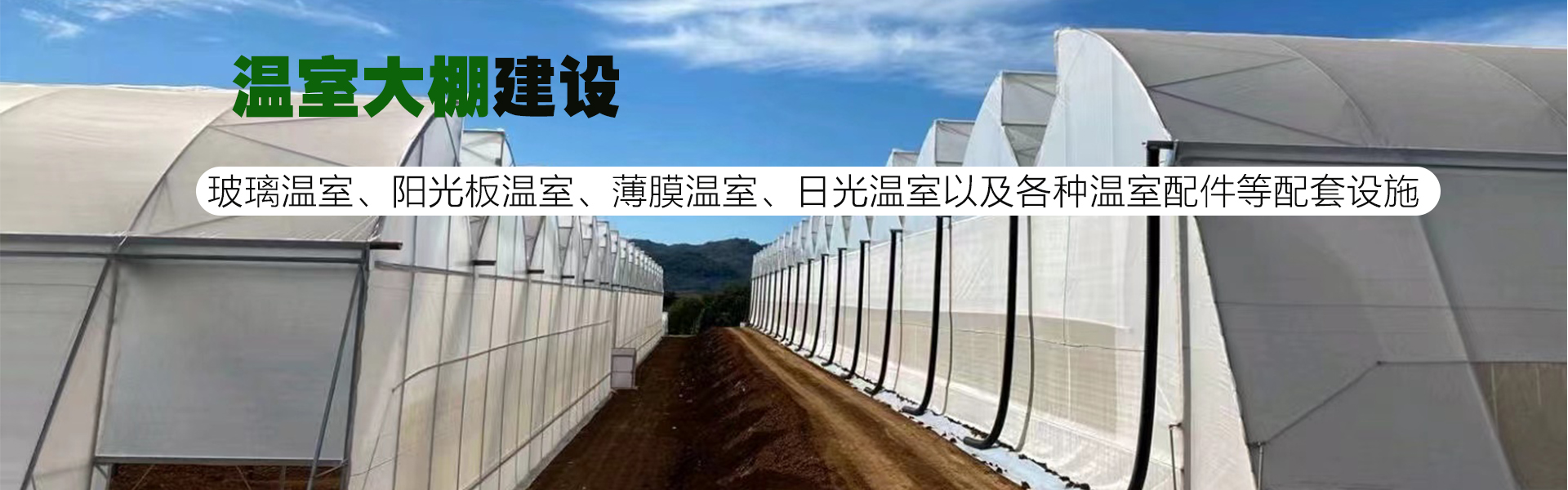

Before the rainy season arrives, protective measures against wind should be taken for flower greenhouses, including windbreaks. Additionally, due to the lower density of support points on the ceiling's waist section compared to the roof, stability is slightly compromised, and thus, it should also be reinforced.
If greenhouses are built as close as possible to windbreaks on the leeward side, the pressure caused by strong winds on the greenhouse's front can be reduced; if they are constructed on the leeward side, the negative pressure uplift effect of strong winds can be minimized. In strong wind conditions, the gas exchange rate between the inside and outside of the greenhouse is related to its airtightness and wind speed. Attention should be paid to prevent the occurrence of low temperature and low humidity disasters.
To construct a continuous greenhouse structure with high wind resistance, the wind load on the greenhouse should be considered in the design. Wind resistance is positively correlated with the stability of the greenhouse, which is closely related to the surface curvature, frame material, height-to-span ratio, and length-to-span ratio of the greenhouse.
The connecting shed can utilize the triangular stability principle. Temporary lines, supports, or scaffold materials can be added between scaffolds and between scaffolds and the ground. Open the ventilation ports and shed doors on the leeward side, or roll up the leeward side of the greenhouse film from bottom to top, either partially or entirely, to reduce the negative pressure area caused by strong winds and prevent being blown away.
When the continuous height around the greenhouse is not less than the strength of the middle greenhouse, it can be appropriately reduced to enhance the overall wind resistance of the greenhouse. Additionally, damaged membranes, ventilation openings, and greenhouse doors should be repaired promptly to prevent further damage.
