
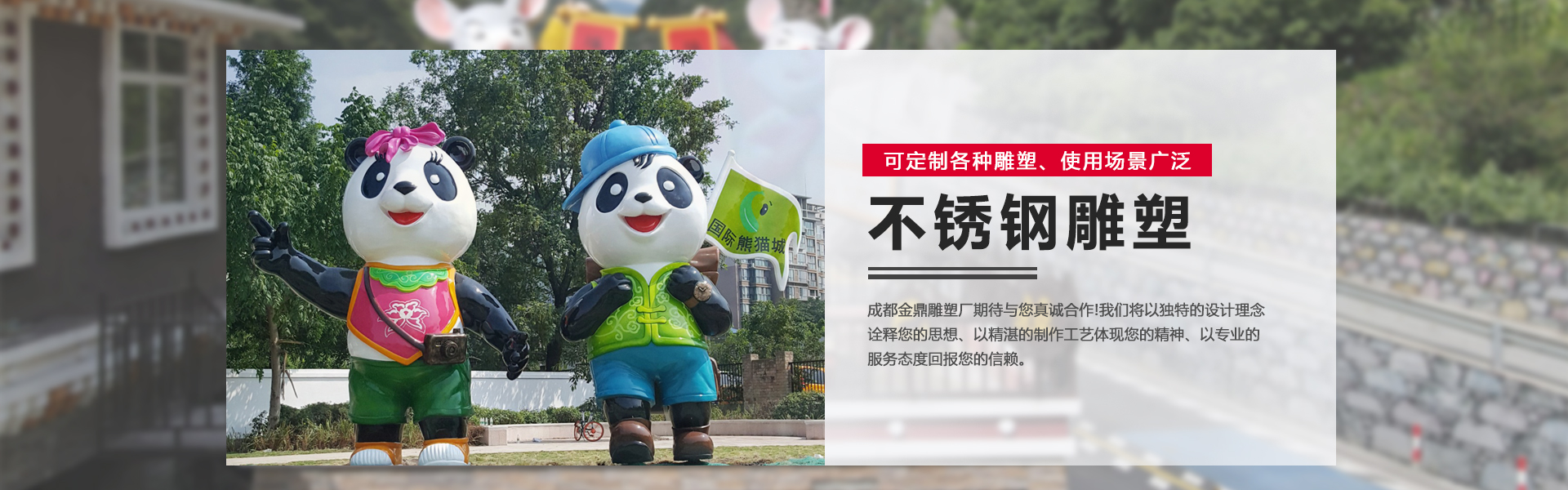
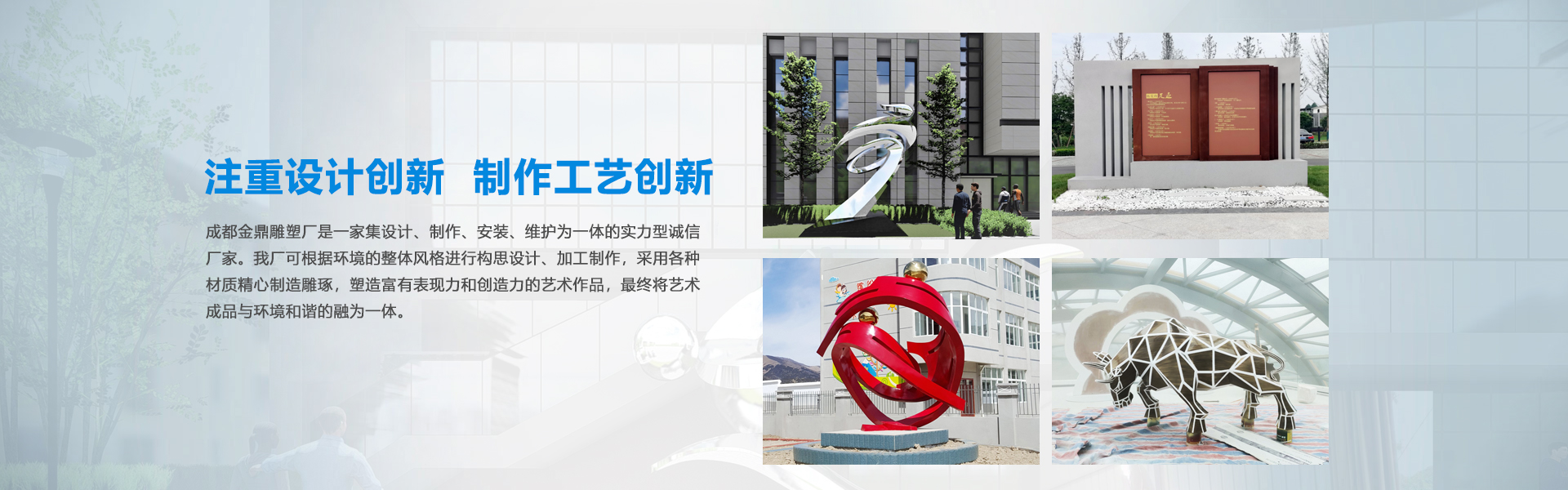

Urban sculptures, placed in public spaces of the city, help alleviate the congestion, crowding, and rigidity caused by dense concentrations of buildings. In a cityscape dominated by towering skyscrapers and crisscrossing roads, they often contribute to a sense of balance, especially in open areas.
Stainless Steel SculptureUrban sculptures primarily serve as decorations and beautifications for cities, enhancing their landscapes and enriching the spiritual enjoyment of city dwellers. As integral components of a city, they are commonly found in public spaces, existing independently or integrated with buildings. The themes for urban sculptures are broader than those for glass fiber sculptures, encompassing everything related to the city's geographical features, historical evolution, folklore, and customs.
It is primarily used for urban decoration and beautification, adding to the city's landscape and enriching the spiritual enjoyment of city residents due to its presence. Therefore, the establishment of a city sculpture factory is very serious and cautious, usually ordered by administrative departments such as the city hall or the national government, with their subordinate art or sculpture organizations responsible for planning and implementation. This is typically achieved through tenders or by specifically inviting one or several sculptors to create the artwork. As part of the city's composition, city sculptures are generally located in public spaces such as roads, bridges, squares, stations, docks, theaters, parks, green areas, and government offices. They can exist independently or be integrated with buildings.
The latter is typically integrated as part of a building, such as high-rise buildings, grand halls, and spiritual strongholds of public architecture, featuring bas-relief decorations. It also includes monuments situated at street intersections or squares, thus requiring collaboration with architects to complete.
The color and function of sculptures.
(1) The sculpture's coloration.
The luster of a sculpture refers to its surface texture, the visual perception of color, and the sensation of light, i.e., the feeling of color and light. "Landscape Pavilion Color" can be monochromatic or polychromatic, including the color of the sculpture's material or the color of the coating. "Luster" is the light sensation of the sculpture's material surface texture and color under the action of light.
(2) Sculpture's color tones.
The coloration of sculptures transcends objective perception and is a matter of subjective experience. On the surface, the coloration of landscape pergolas embodies the sculptural sense of color, such as in monochromatic works where a rich array of color effects can still be perceived. On a deeper level, the coloration of sculptures represents the aesthetic emotions they evoke in people. For instance, some sculptures have bright colorations, while others have dim ones. Typically, the term "hue" is used to describe this sense of coloration.
