
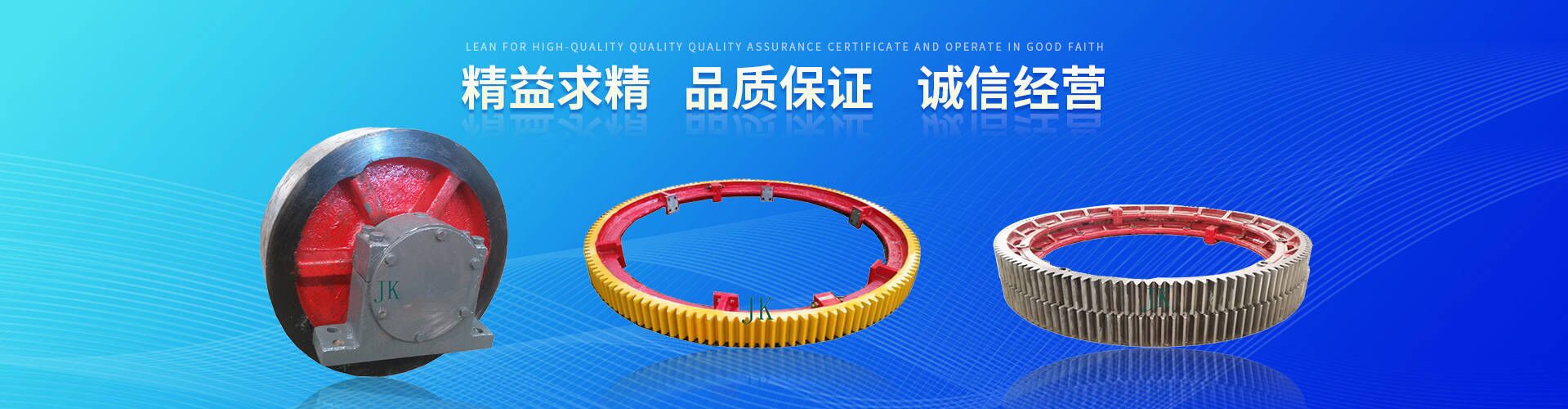

Gears are something we're all familiar with, but how much do we really know about large gears? Today, let's delve into the details of large gears from the manufacturer's perspective. Large gears, also known as large gear rings, are primarily made of materials like ZG35CrMo and ZG35. Typically, for large gear manufacturers, the diameter of the gears they produce starts at 1.8 meters and the weight exceeds 0.5 tons, which is suitable for their processing.
Large gears are used in rotary kilns, ball mills, and drying machines and serve as their main components. Due to the long-term operation of large gears, their quality significantly impacts the balance and stability of the kiln's transmission system. Therefore, stringent requirements are placed on them. Manufacturers produce large gears according to customer specifications for dimensions and parameters. At this point, large gear processing factories use simulation software to design the casting process and then issue it to the workshop. The workshop strictly sets production requirements for each production process, ensuring quality control at every stage. During production, key processes affecting quality are heat treated, with stable heat treatment procedures established. For instance, with high carbon content, it is not advisable to use excessively high annealing temperatures and extended holding times, as this could cause carbon precipitation on the surface of the large gear, leading to reduced hardness. Typically, the process is changed to slow heating, with the temperature gradually increasing from 810-860°C after 4 hours, holding for 6 hours, and then cooling in a ventilated atmosphere.
Ensure proper alignment of the large gear with the drying cylinder body during installation, which is crucial for the normal operation of the equipment and to minimize wear on the large gear.
